



IBM Researchers Measure Energy Levels of Individual Molecules on Insulating Layers Using Atomic Force Microscopy
In a breakthrough published today in Nature Nanotechnology, IBM scientists have, for the first time, quantified the energy levels of a single molecule placed on an insulating surface. This milestone brings us one step closer to realizing practical single‑molecule electronic devices.
Background
Since the 1980s, the atomic force microscope (AFM) has enabled scientists to detect forces on the order of piconewtons between a sharp tip and a sample. In 2009, IBM and collaborators demonstrated that non‑contact AFM could determine the charge state of individual atoms on a surface. Building on that work, the current study extends the technique to single molecules on insulating layers, overcoming a long‑standing challenge in the field.
Methodology
The team grew ultrathin multilayers of sodium chloride (NaCl) – a common salt – on a metallic substrate. This architecture isolates the molecule from the conductive metal, allowing its charge state to remain stable. Using the AFM tip, the researchers applied a finely tuned voltage while recording the minute forces exerted as single electrons tunneled between the tip and the molecule.
By measuring the time required for an electron to hop onto or off the molecule in both directions, the scientists extracted the energy required for each charge‑state transition. The resulting reorganization energy – the amount of energy the system must expend to accommodate a change in charge – was measured for the first time on a single molecule in this configuration.
Key Findings
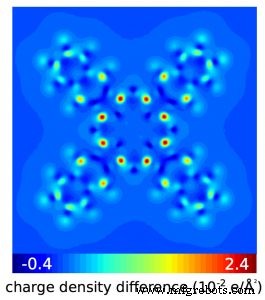
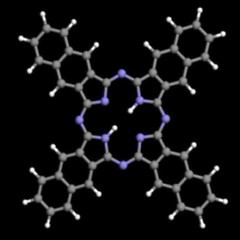
The study focused on a single naphthalocyanine (NPc) molecule. The AFM’s force sensitivity reached the zeptoampere (10–21 A) regime, enabling the detection of a single electron every few seconds. This unprecedented sensitivity allowed the team to determine energy levels for both electron addition and removal processes, a capability previously lacking in single‑molecule studies.
"The ability to measure energy levels in both directions was missing before," said IBM physicist Leo Gross. "Our AFM method now lets us map the full charge‑state landscape of a molecule on an insulator.
"The change in atomic positions induced by charging significantly alters the energy levels, potentially tuning electron transfer rates by several orders of magnitude," added Shadi Fatayer, the study’s first author.
Implications
These findings have broad implications for the design of nanoscale electronic components, including defect characterization in semiconductor chips, photovoltaic devices, and organic semiconductors. By understanding how individual molecules interact with insulating environments, engineers can better predict and control charge transport at the ultimate scale of device fabrication.
Reorganization energy upon charging a single molecule on an insulator measured by atomic force microscopy, Shadi Fatayer, Bruno Schuler, Wolfram Steurer, Ivan Scivetti, Jascha Repp, Leo Gross, Mats Persson, and Gerhard Meyer, DOI: 10.1038/s41565-018-0087-1
Nanomaterials
- The 10‑Second Indicator That Reveals Your Maintenance Program’s Health
- IBM Engineers Develop Nanoscopic Thermometer, Enabling Precise Temperature Mapping of Quantum Devices
- Harnessing Twisted 2D Materials to Revolutionize Electronics
- IBM Nanoscientists Store a Data Bit on a Single Atom—A Breakthrough in Ultra‑Miniaturized Memory
- IBM and Warwick Scientists Capture First High‑Resolution Image of Triangulene, a Highly Reactive Triangular Molecule
- IBM Scientists Measure Thermal Conductance of Single-Atom Gold Contacts at Room Temperature
- Measuring the Magnetic Signature of a Single Atom’s Nucleus
- Powering the Future: Innovative Energy Management for Manufacturers
- Leveraging IoT for Accurate Measurement of Corrosive Liquid Levels
- Assessing Your Company’s Digital Maturity: A Proven Framework