



IBM Researchers Demonstrate Groundbreaking Rocking Brownian Motors for Precise Nanoparticle Separation
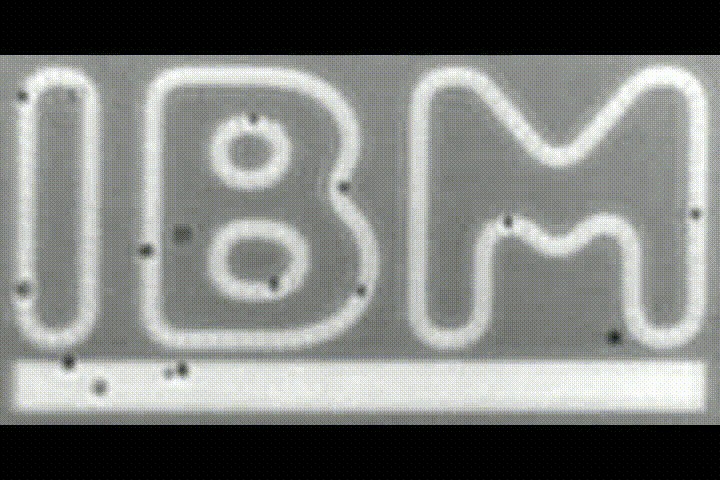
Today, IBM Research announced the first real‑world demonstration of a rocking Brownian motor for nanoparticles, published in the peer‑reviewed journal Science. The device guides nanoscale particles along engineered racetracks, enabling researchers to separate nanoparticle populations with unprecedented precision. These findings hold promise for lab‑on‑a‑chip applications across material science, environmental science, and biochemistry.
No More Fairy Tales
Do you recall the Grimm tale of Cinderella, who had to sift through peas and lentils? Imagine instead a suspension of 60‑nanometer and 100‑nanometer particles—thousands of times smaller than a human hair’s diameter. Prior separation methods required bulky filters or complex machinery, unsuitable for portable lab‑on‑a‑chip devices.
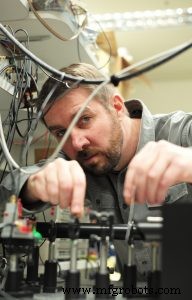
IBM scientist Dr. Armin Knoll with the experiment’s set‑up in his lab in Switzerland.
Rocking Brownian Motor
In nature, molecular motors—tiny walkers that ferry cargo along microtubules—achieve this with minimal fuel. They exploit Brownian motion, the random jitter of particles caused by collisions with water molecules, a phenomenon first quantitatively described by Albert Einstein in 1905.
A Brownian motor harnesses this randomness, converting it into directed work by employing an asymmetric ratchet. An oscillating external force nudges particles against the ratchet teeth, allowing easier passage in one direction while blocking reverse motion—effectively steering the particles.
Building a New Device for Particle Separation
We began with a thermally actuated silicon tip featuring a sharp apex, carving a 3‑dimensional landscape into a polymer layer via thermal scanning probe lithography—an approach that once produced the world’s smallest magazine cover in 2014.
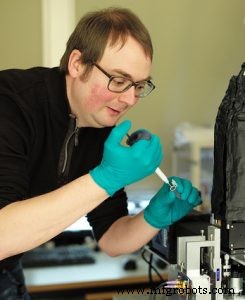
IBM researcher Dr. Christian Schwemmer prepares a water droplet containing 60 nm and 100 nm gold spheres.
To discriminate between two particle sizes, we integrated two opposing ratchets with distinct tooth geometries. A droplet of 60‑nm and 100‑nm gold spheres was placed atop the structure, then covered with a thin glass plate, leaving a minimal gap. Electrostatic interactions kept the particles at maximum distance from the glass and teeth. Because larger particles less frequently engage the larger teeth, they moved in opposite directions—60‑nm spheres rock right, 100‑nm spheres move left—within seconds.
Our accompanying model, published alongside the paper, predicts that the device can separate particles from 5 nm to 100 nm, with a radial difference as small as 1 nm. Experimental data align perfectly with theory, confirming no hidden effects.
Applications Across Fields
The compact design consumes only 5 V and operates without pressure or flow, making it ideal for lab‑on‑chip platforms that analyze tiny volumes of DNA, proteins, quantum dots, and other nanoparticles. It could also support sensor arrays detecting ultra‑small contaminants in drinking water, benefiting material science, biochemistry, and environmental research.
IBM’s expertise in nanostructure fabrication and microfluidics underpins this breakthrough; the device’s performance hinges on the precision of a single lithographic step.
Nanofluidic Rocking Brownian Motors, Michael J. Skaug, Christian Schwemmer, Stefan Fringes, Colin D. Rawlings, Armin W. Knoll, DOI: 10.1126/science.aal3271
Nanomaterials
- Enhancing DC Motor Performance with Tungsten‑Copper Alloys
- IBM Engineers Develop Nanoscopic Thermometer, Enabling Precise Temperature Mapping of Quantum Devices
- IBM Zurich Lab Earns Dual Honors: Kavli Laureates Symposium & EPS Historic Site Designation
- IBM Showcases Seven Breakthroughs for Chips Beyond 7nm at SPIE
- IBM and Warwick Scientists Capture First High‑Resolution Image of Triangulene, a Highly Reactive Triangular Molecule
- IBM Scientists Measure Thermal Conductance of Single-Atom Gold Contacts at Room Temperature
- Gold Nanoparticles as Advanced Chemosensors: Enhancing Electrochemical Detection
- Nanoparticle-Based Cancer Therapy: Advances, Mechanisms, and Clinical Translation
- Precise Cable Size Calculation for LT & HT Motors: Safety, Efficiency, and Cost Savings
- Motor vs. Actuator: How to Pick the Best for Industrial Systems