



Caracol Unveils Robotic-Mounted 3D Printer to Expand Additive Manufacturing Scale
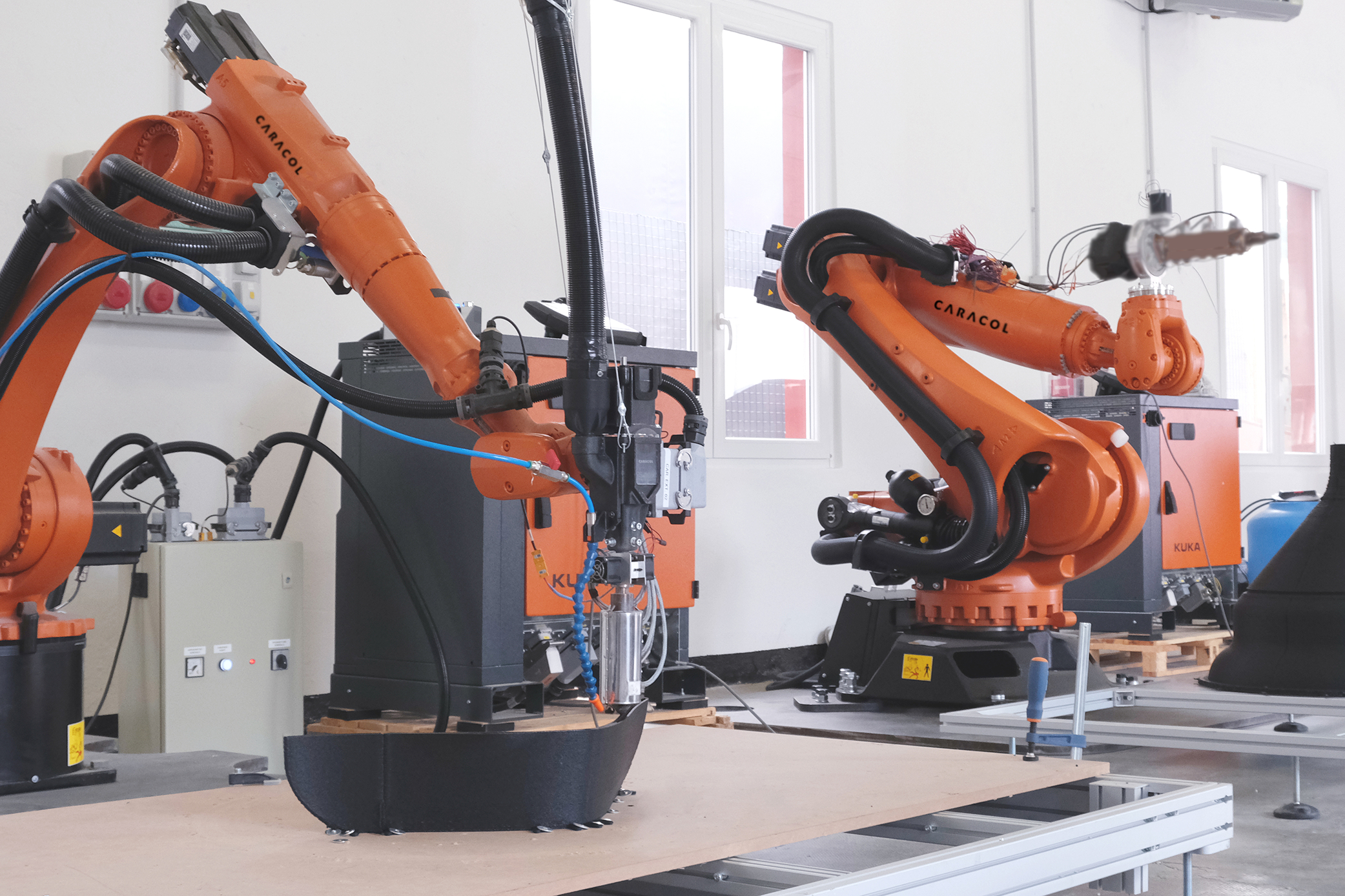
Caracol (Lomazzo, Italy) is a startup large-scale additive manufacturing (AM) specialist founded in 2017 with the goal of scaling up 3D printing for high-performance industrial applications. “Our mission is to work on increasingly extreme and advanced applications, in advanced sectors such as aerospace and automotive. We believe that large scale is the key to push additive manufacturing as a technology, way beyond what is possible today,” explains Violetta Nespolo, chief marketing and strategy officer at Caracol.
She adds, “We started by working with existing printers, and seeing what we could do to expand the scale of what was possible. We found robotic arms give the maximum flexibility to print large, complex parts.”
After its initial research phase, Caracol ultimately developed and patented an extrusion-based 3D printing system, including design and print management software, to mount on Kuka robotic arms. Currently, the system can print parts up to four meters wide — though Nespolo says it could print up to 10 meters wide with the addition of a trolley or rail system if needed.
The system is compatible with a range of polymers such as polyamide (PA), polyphenylene sulfide (PPS) and polypropylene (PP), unreinforced or reinforced with up to 40% carbon or glass fiber. “We’re able to use a very broad range of materials beyond traditional 3D printing filaments, including the same type of pellets used in injection molding, which allows us to use composites with a higher percentage of fiber compared to traditional 3D printing filaments,” Nespolo says.
Today, Caracol offers clients a full range of design, engineering, prototyping and short- or medium-series production runs at its Italy facility. In addition to its patented large-scale system, the company also has capabilities for printing with FDM and SLA printers of various sizes.
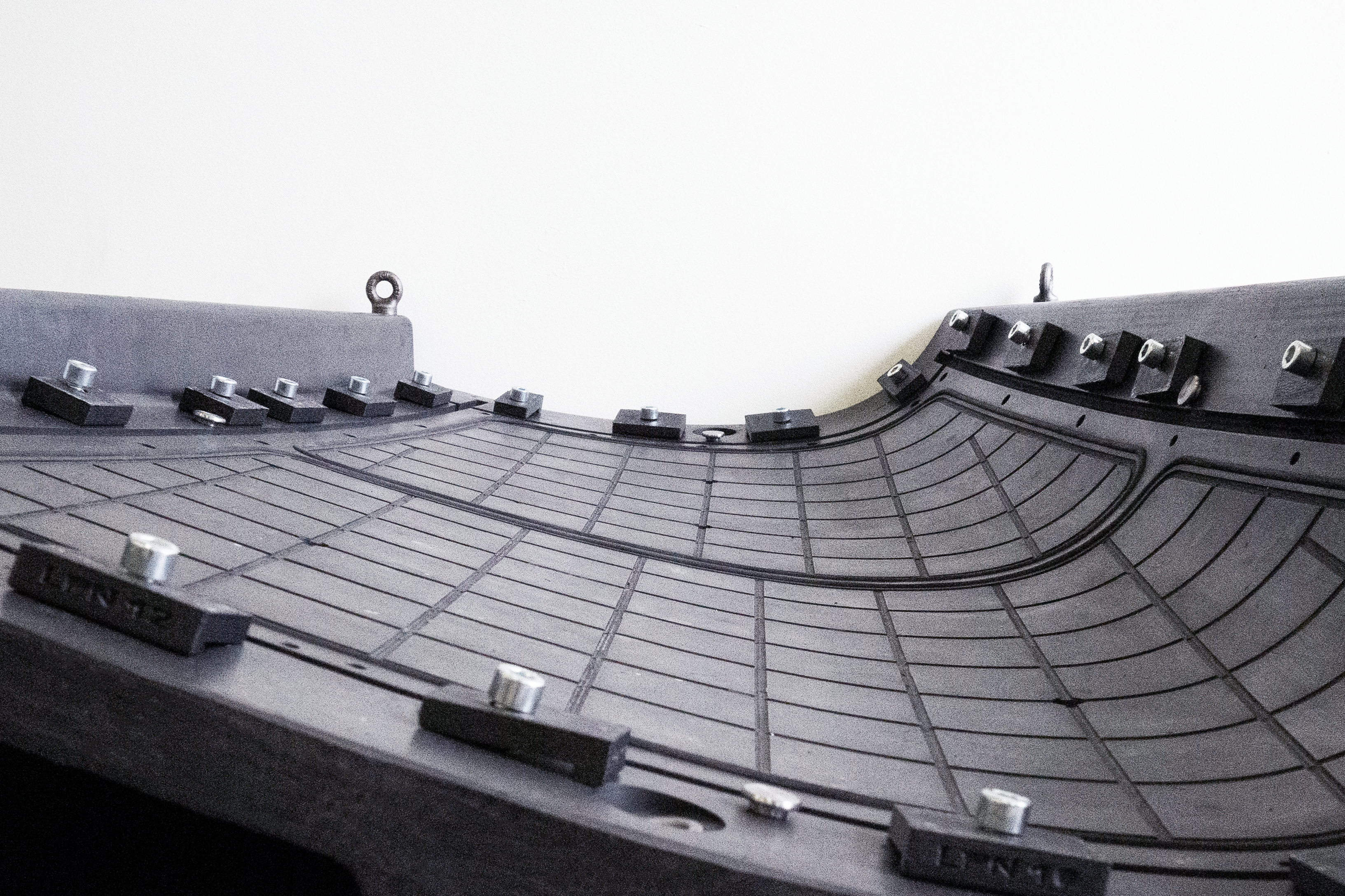
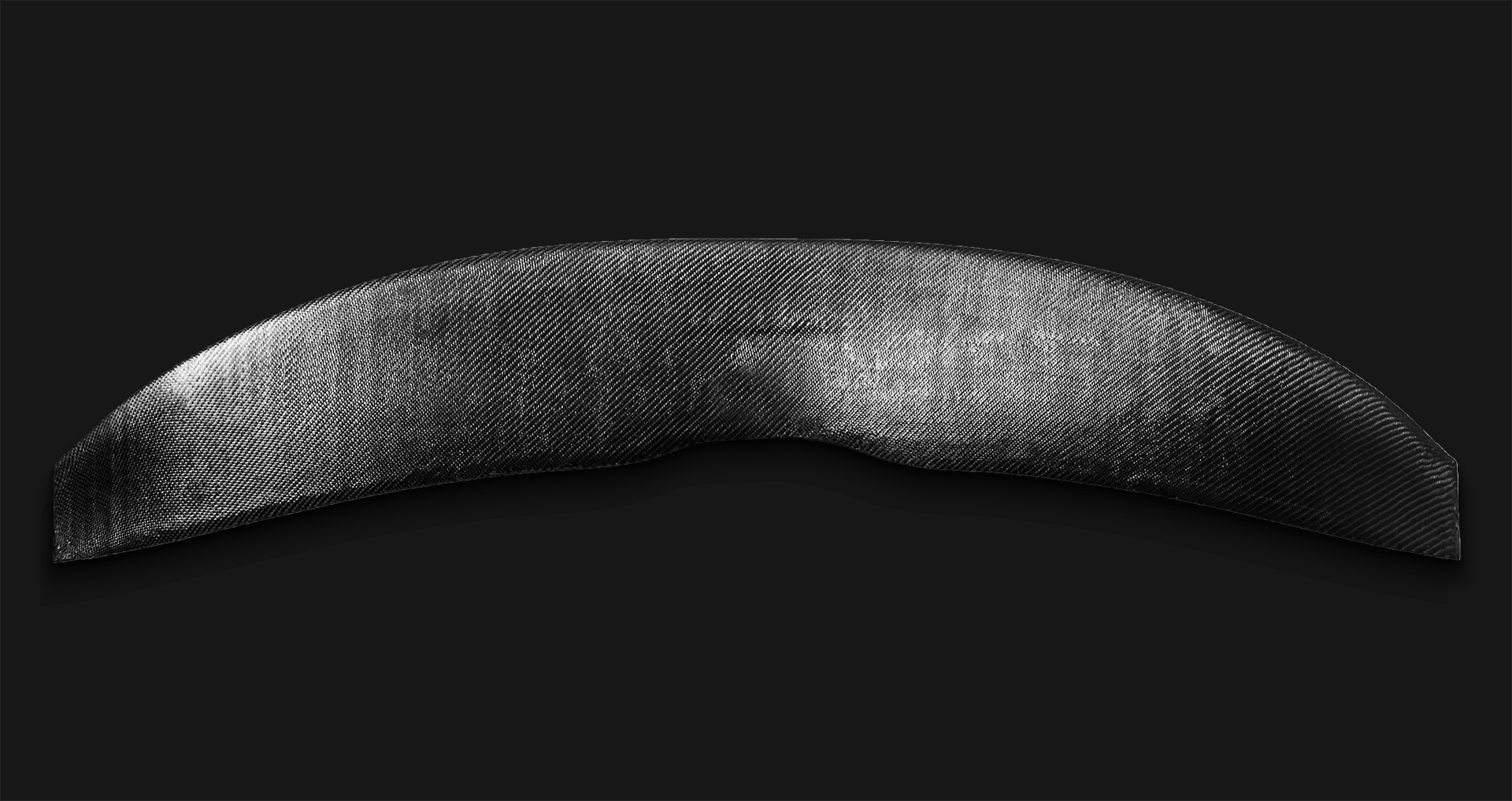
The company produces a variety of prototype parts for automotive and other industries, but one of its main focuses currently is large-scale aerospace tooling, Nespolo says. For example, Caracol recently built a large-scale, additively manufactured tool for airplane belly fairings panels, printed in a single piece and then CNC machined to achieve the part’s required dimensional tolerances of 0.1 miliimeters and surface roughness of 1.6 μm. Caracol’s process reduced the number of pieces from more than 30 to one, cut the production time from six weeks to five days and saved the customer 35% in overall costs. “We’re working on finding solutions that really go beyond the traditional way of doing things,” Nespolo says. “The product can be customized and produced extremely quickly and cost-effectively compared to traditional metal tooling solutions.”
Future developments include structural automotive and aerospace part production, even larger print volumes, the addition of CNC milling for integrated part finishing and compatibility with higher-performance materials such as polyetheretherketone (PEEK), polyaryletherketone (PAEK) and continuous fiber reinforcement.
Resin
- C Unions Explained: Definition, Usage, and Comparison with Structures
- Java EnumSet: Creation, Operations, and Performance Tips
- From Past to Present: 25 Years of Stratasys 3D Printing Evolution
- Polyplastics Expands Topas COC Production with New German Facility
- Comparing 3D Printers and 3D CNC Routers: Which Is Best for Your Project?
- Markforged FX20: Next‑Gen Fiber‑Reinforced 3D Printer for Aerospace, Defense & Automotive
- Anisoprint Launches ProM IS 500: Industrial 3D Printer for High-Temperature Thermoplastics with Fiber Reinforcement
- Orbital Composites Unveils Orb 1: An Industrial-Grade, Modular Robot 3D Printer
- Understanding and Optimizing 3D Printer Jerk Settings for Better Prints
- Resin 3D Printers Explained: UV Light‑Cured Technology for High‑Precision, Smooth Prints