



Cut Labor & Waste: 5‑Axis CNC 3‑D Printing of Composite Molds
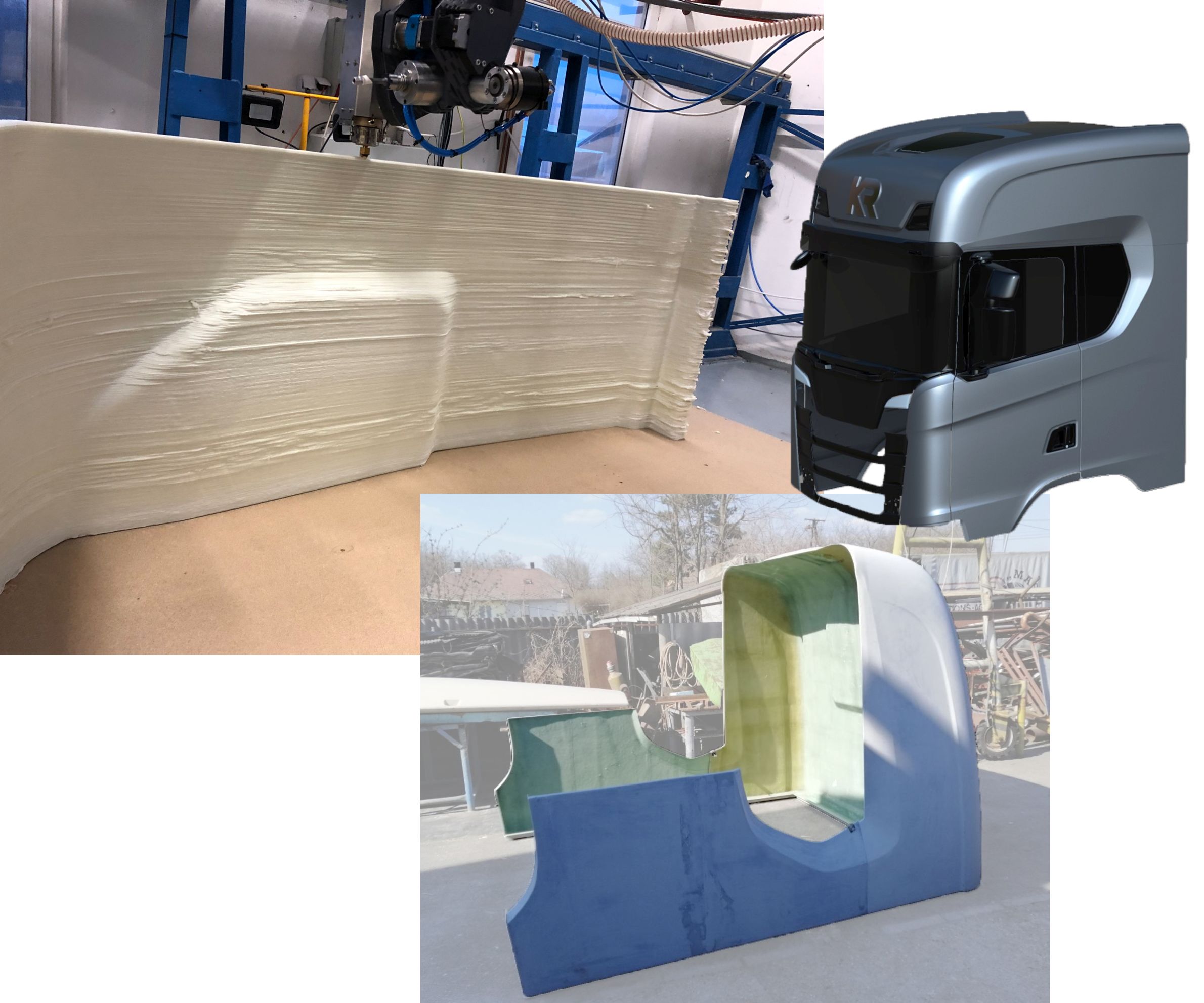
“We were building molds using CNC machined polyurethane foam and hand layup GRP (glass fiber-reinforced plastic), but that approach involved too much labor and waste,” explains György Juhász, owner of Rapid Prototyping (Budapest, Hungary), which bought a CEAD Robot Extruder in December. “We are now 3D printing molds using 30% short glass fiber-reinforced polypropylene and cutting our labor time by 50%.”

Juhász began working with composites as a boatbuilder. His projects include Como Yachts and the Narke Electrojet, which claims to be the world’s first all-electric personal watercraft in series production. “In Hungary, you cannot use petroleum-based fuels on any lakes, and we have the second largest lake in Europe,” he explains. “We are developing more electric boat models for companies. I needed a faster, cheaper way to create plugs and molds for these projects.”
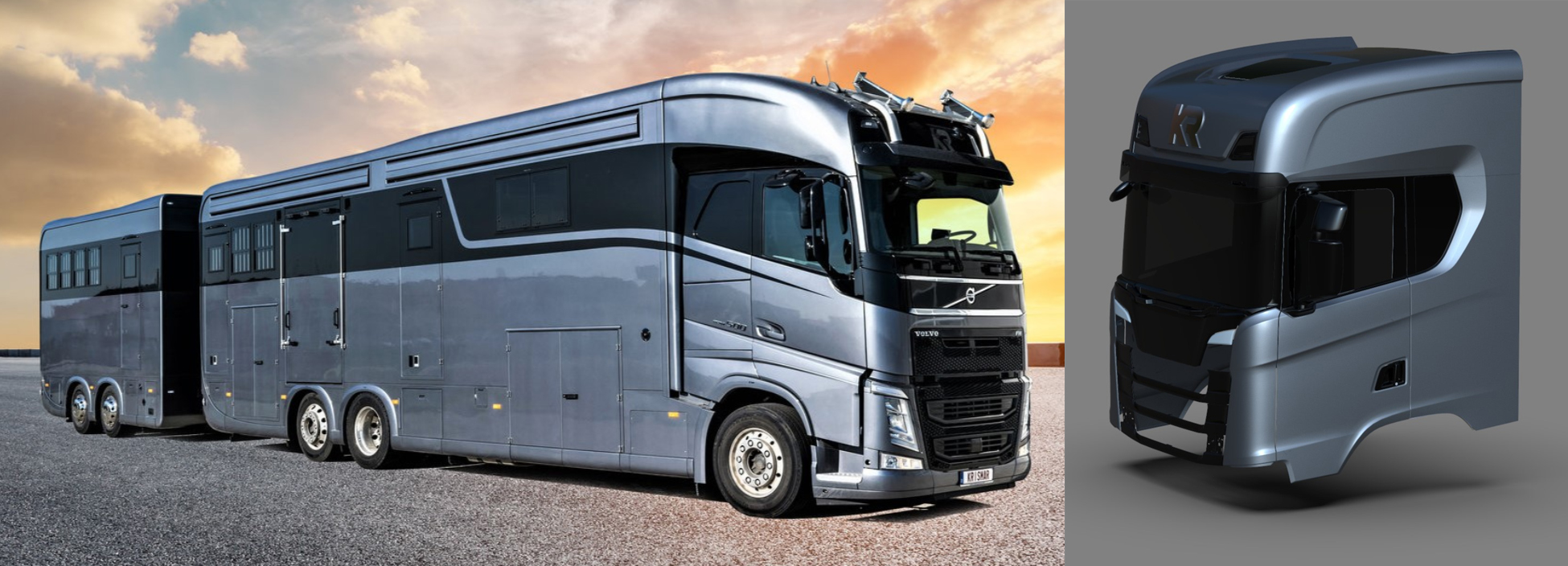
One of the first projects completed with this new 3D printing system is a fiberglass mold for a composite sleeper cab for custom truck and trailer manufacturer Krismar (Waardamme, Belgium). “This is quite a big component, measuring 2550 by 2200 by 1200 millimeters,” says Juhász. “We wanted to print the maximum thickness possible in order to avoid warping and deformation when cooling down.” The 30-millimeter thickness was printed in two layers of 15 millimeters each and used almost 400 kilograms of glass fiber-reinforced polypropylene pellets.
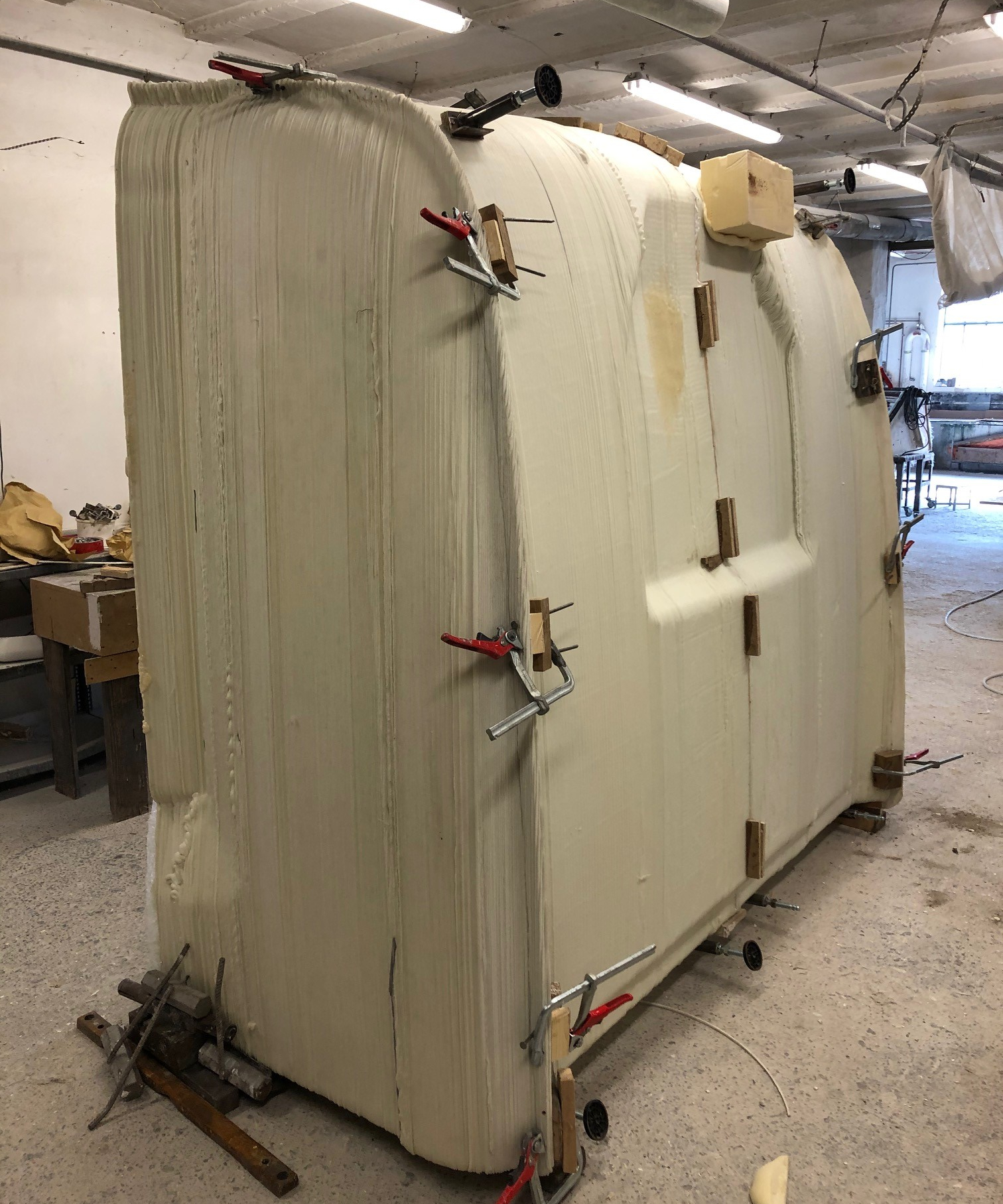
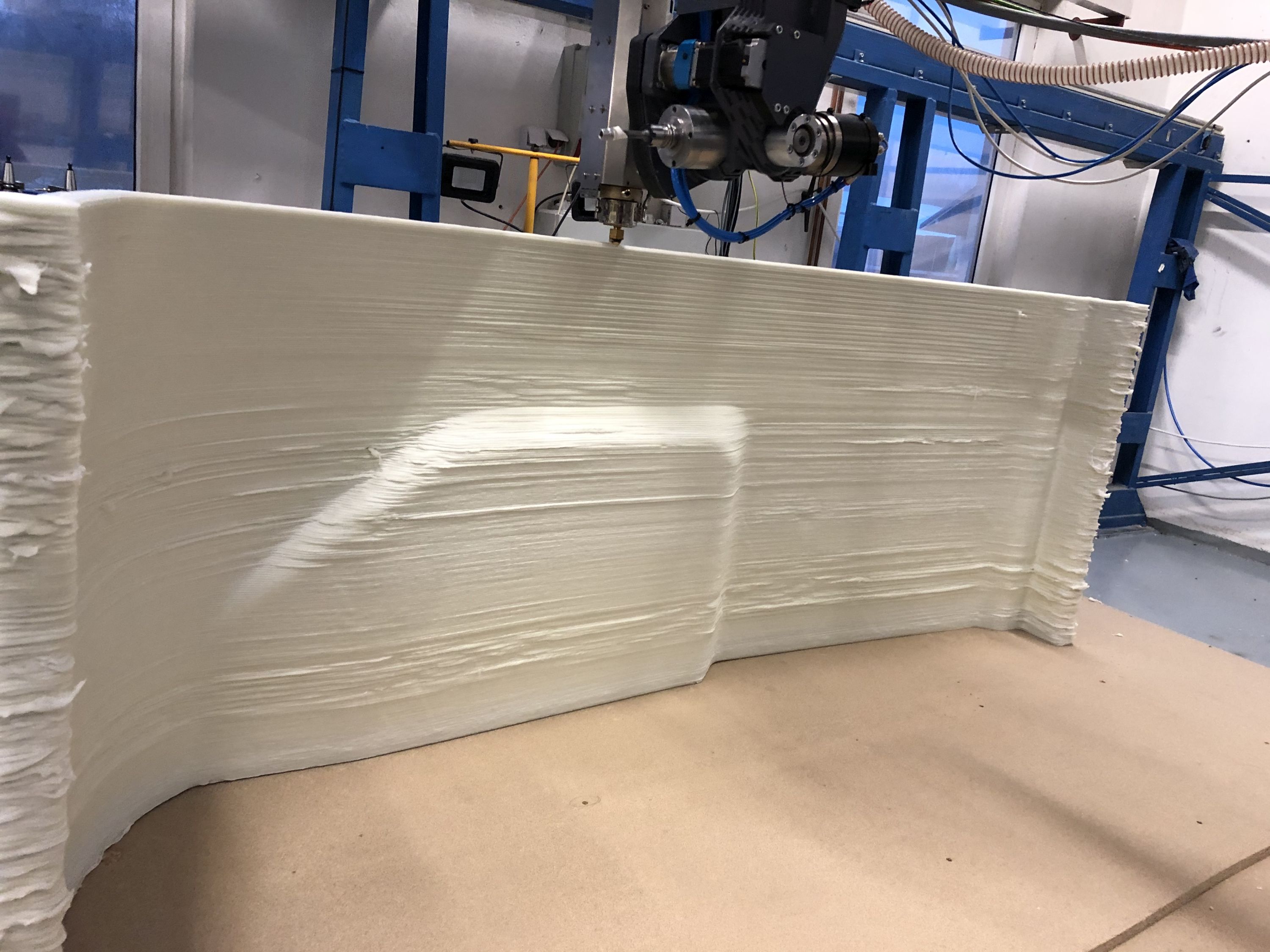
Rapid Prototyping printed the mold using its CEAD Robot Extruder mounted into a CNC machining system.
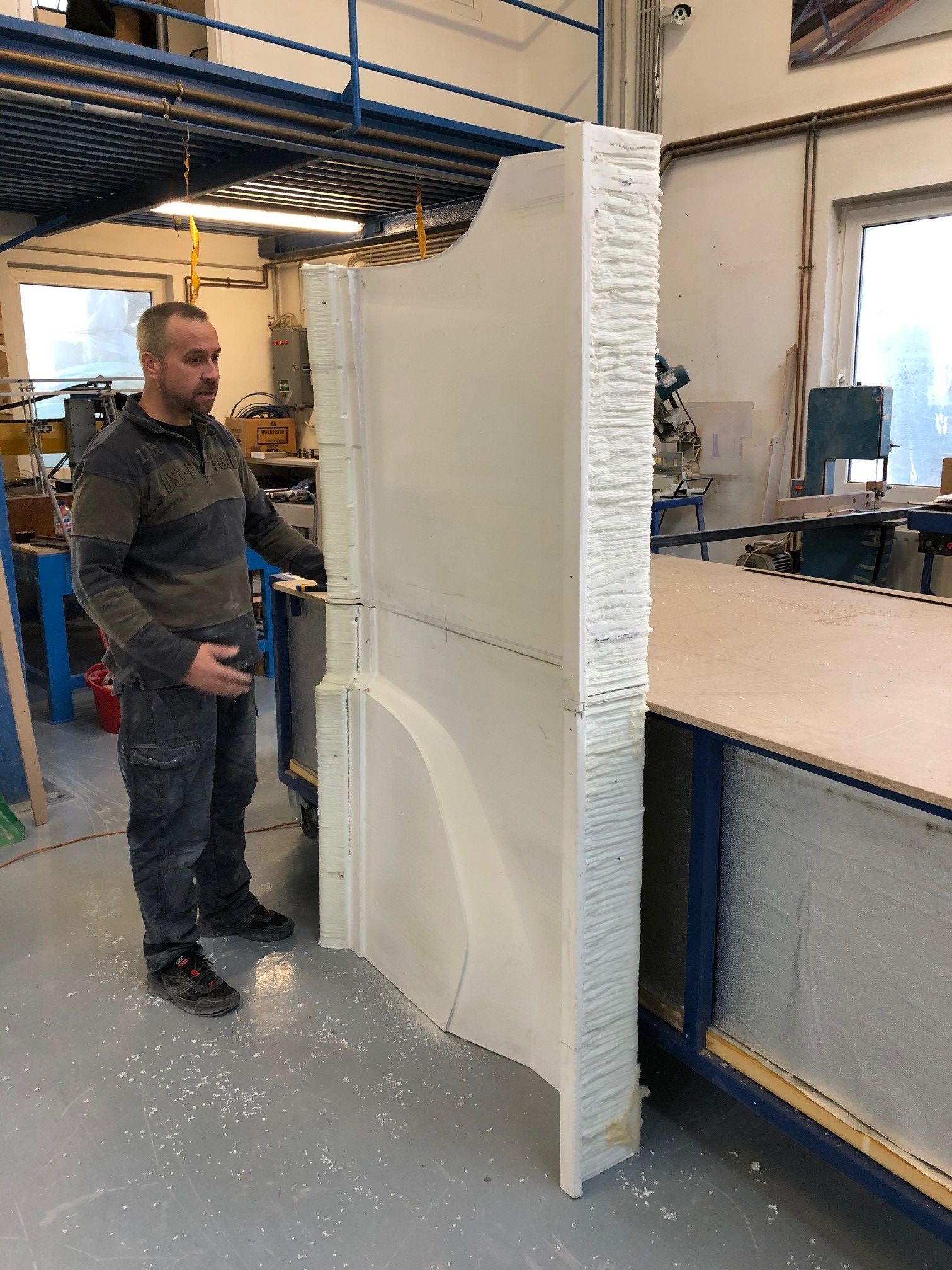
The mold was printed in four pieces, including right side piece and left side piece (shown here).
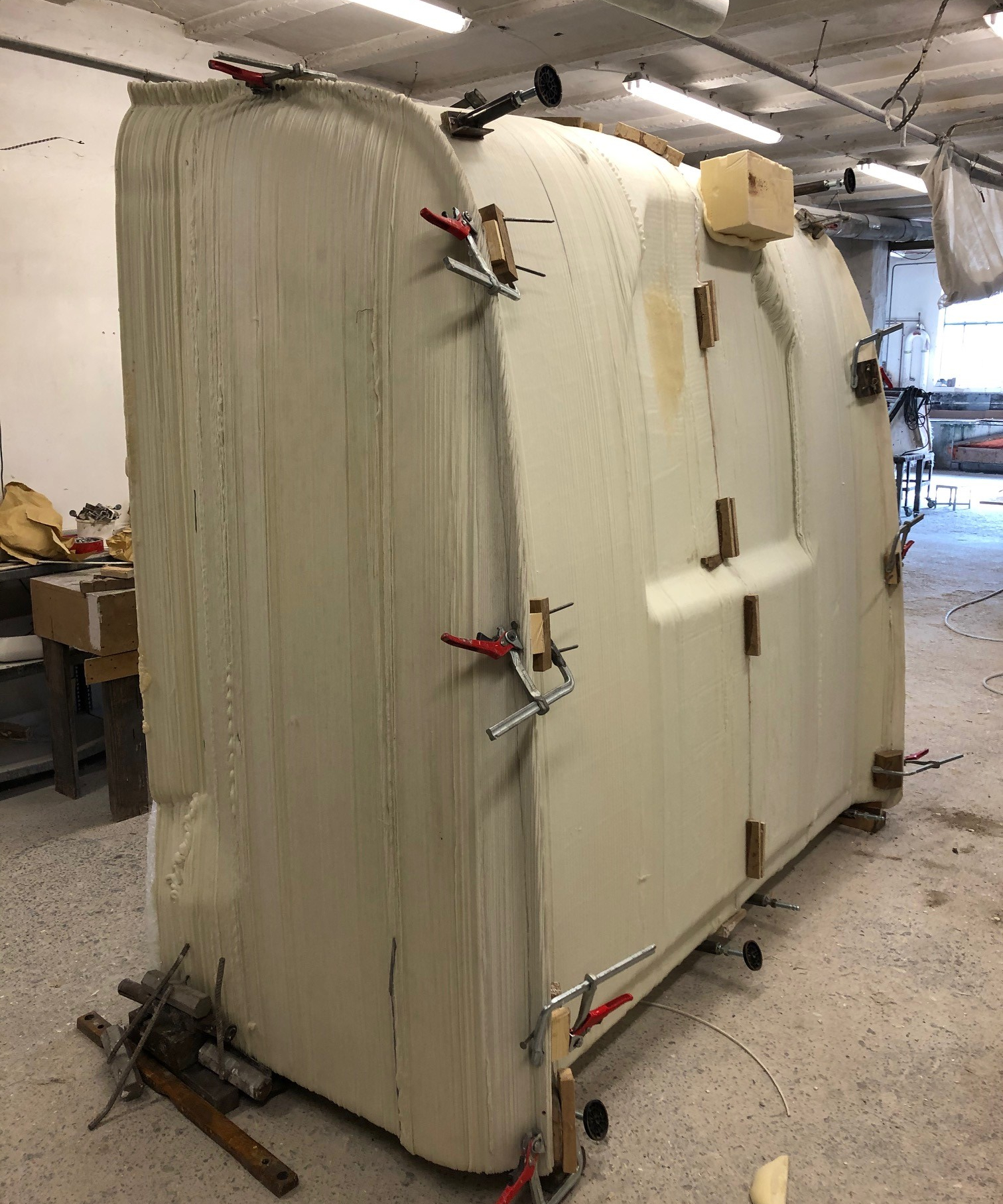
After each piece’s molding surface was machined, the four pieces were screwed together and clamped to provide a surface for laminating.
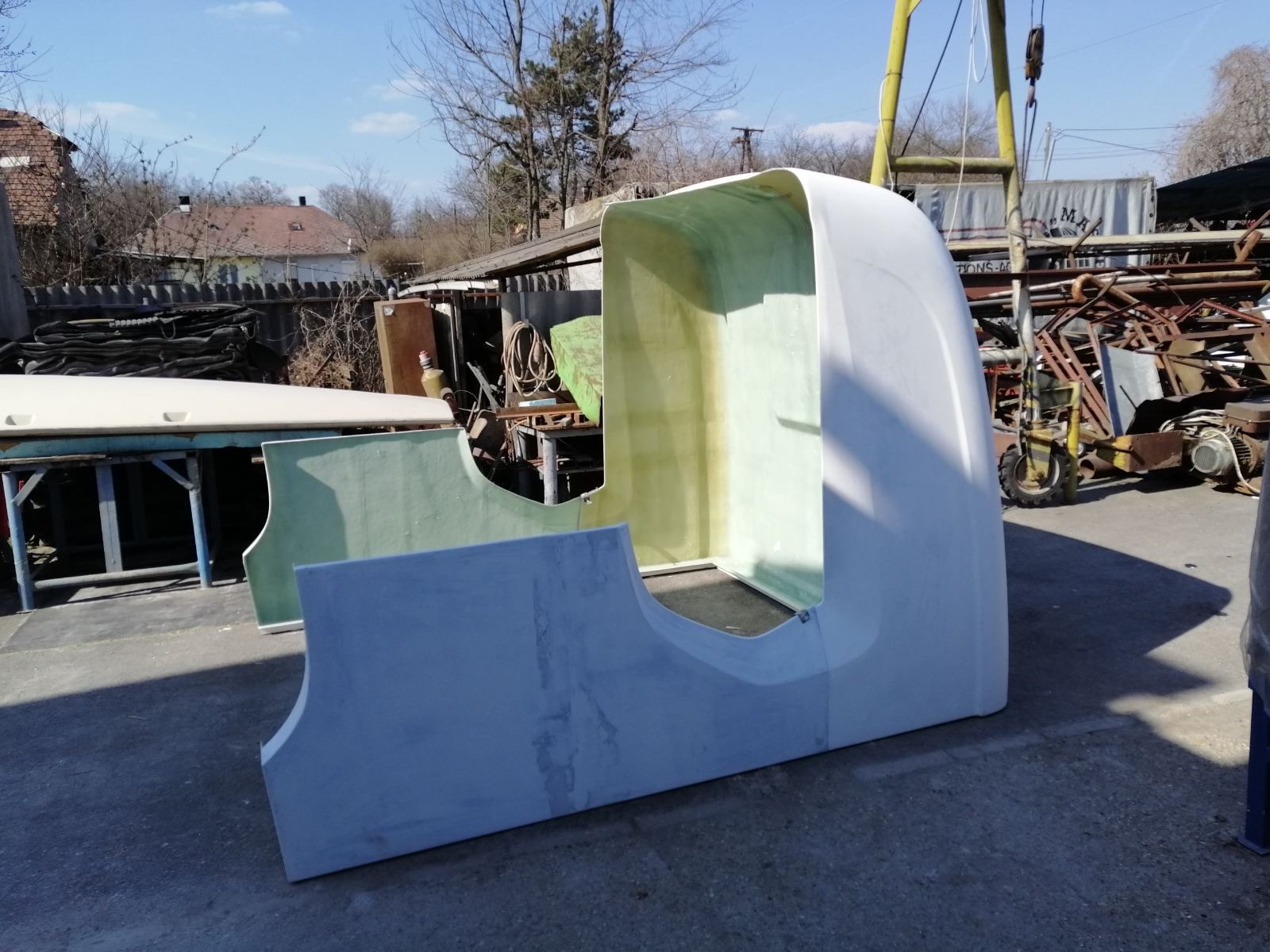
The sleeper cab shell was then laminated onto the 3D-printed mold surface.
Previous NextThough the project was successful and 3D printing saved time, Juhász admits there is a lot to learn. “One of the biggest challenges with this approach is after the printing we need to find a 0 point (origin) with the milling machine and software. We do the printing vertically and the milling horizontally — so, the starting point and the direction of each operation is different.” It also seems expensive to print solid instead of using an infill? “For this project, we were at the beginning,” he explains. “An extruder head using pellets is cheaper than a large-format filament printer, but not as easy for printing infill. But we are planning to print a piece of furniture with infill in the future, so we will adapt the lessons learned to our tool making.”
Resin
- Composite 3D Printing: A Growing Technology Poised for Industry Impact
- Impossible Objects & BASF Launch High-Performance Carbon Fiber PA6 3D Printing Solution
- New 5-Axis CNC Machining Guide Published – Expert Insights for Machinists
- Streamline 5‑Axis Programming with Hurco’s ASR Feature
- Comprehensive Guide to CNC G‑Codes & M‑Codes – Downloadable PDF Included
- Top-Turn S50 Slant-Bed CNC Lathes: Precision Machining for Long Workpieces
- Turn Long Workpieces with Precision Using Slant-Bed CNC Lathes
- What Products Can Be Created with CNC Machines
- 5-Axis CNC Machining: Unlocking Precision, Efficiency, and Design Freedom
- Understanding 5-Axis CNC Machining: Benefits & Applications