



Carbon Fiber Reinforced Plastics: Evolution, Benefits, and Production
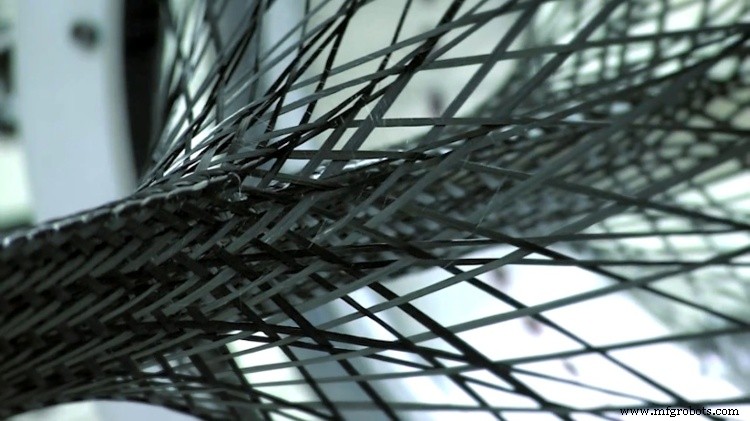 Carbon Fibers in Plastic Materials
Carbon fibers have been integral to advanced composites for well over a century. In 1879, Thomas Edison experimented with cotton‑based fibers that later powered the first incandescent light bulbs, marking the earliest use of carbon in practical devices.
By the 1960s, Dr. Akio Shindo at Japan’s Agency of Industrial Science and Technology pioneered a polyacrylonitrile (PAN)‑based carbon fiber that contained 55% elemental carbon. The PAN route quickly dominated the industry, supplying roughly 90% of today’s carbon fibers, with the remaining 10% derived from rayon or petroleum pitch. PAN fibers are prized for their exceptional strength‑to‑weight ratio, enabling high‑performance composites when combined with thermoset or thermoplastic matrices such as polyester, vinyl ester, or nylon to create carbon‑fiber reinforced plastics (C‑FRP).
Adding Carbon Fiber to a Polymer Has Many Benefits
Integrating carbon fibers elevates tensile strength, flexural modulus, and heat‑deflection temperature (HDT). It also mitigates shrinkage and warping, producing more dimensionally stable components.
Each fiber is a slender strand—5–10 µm in diameter—composed of thousands of carbon filaments. Microscopic graphene‑like crystals align parallel to the fiber axis, giving carbon its remarkable stiffness and strength.
Classified by Tensile Modulus
Carbon fibers are categorized by tensile modulus, ranging from 34.8 MPa to 145 MPa (approximately 34.8–145 million psi). For comparison, steel’s modulus is about 29 MPa. Ultra‑high modulus fibers (72.5–145 MPa) are up to five times stronger than steel.
Typical classifications—based on ascending tensile modulus—are: low modulus (< 34.8 MPa), standard modulus, intermediate modulus, high modulus, and ultrahigh modulus. Each class offers a tailored balance of strength, stiffness, and cost for specific engineering needs.
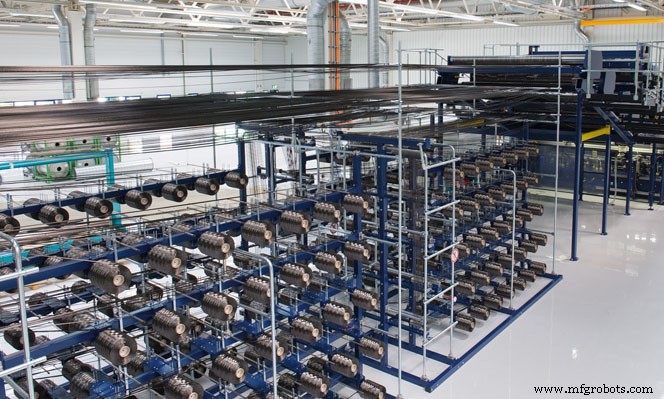 Spinning, Stabilizing, Carbonizing, Surface Treatment and Sizing
The production of carbon fiber blends chemistry with mechanical precision. Below is a concise overview of each stage:
- Spinning: PAN precursor is extruded into filaments, then washed and stretched to refine internal structure and promote molecular alignment.
- Stabilizing: Chemical treatment converts linear chains into a thermally stable ladder structure, followed by air‑oxidation to prepare fibers for high‑temperature processing.
- Carbonizing: Fibers undergo heat treatment in an inert atmosphere, eliminating non‑carbon atoms and forming crystalline carbon.
- Surface Treatment: Post‑carbonization, fibers are mildly oxidized or exposed to gases/liquids to improve adhesion with polymer matrices.
- Sizing: A protective coating is applied to safeguard fibers during winding or weaving and to enhance handling performance.
Applications span from sporting goods—such as fishing rods, bicycles, golf clubs, and tennis rackets—to critical infrastructure components in aerospace, automotive, and bridge construction.
* Tensile modulus measures the force a fiber can withstand per unit area (psi) before failure.
Questions? Let us know in the comments section below.
Looking for more information on plastics? Download our free guide!

Resin
- Why Carbon Fiber Is Transforming Aerospace: Strength, Weight, and Performance Benefits
- Top 5 Carbon Fiber Applications Revolutionizing Modern Sports
- Carbon Fiber Prosthetics: How High‑Performance Materials Transform Limb Replacement
- How Carbon Fiber is Revolutionizing Aerospace Materials
- Fiber Reinforced Plastics (FRP): A Comprehensive Beginner’s Guide
- Carbon Fiber Reinforced Plastic (CFRP): Strength, Weight Savings, and Emerging Applications
- Carbon Fiber: Revolutionizing Medical Implants, Equipment, and Prosthetics
- Recycled Carbon Fiber: Current Landscape & Future Outlook
- Holiday Gift Ideas: The Best Carbon Fiber Gadgets
- Carbon Fiber: The Ultimate Strength‑to‑Weight Advantage