



Fiber Reinforced Plastics (FRP): A Comprehensive Beginner’s Guide
Fiber‑reinforced plastic (FRP), also called fiber‑reinforced polymer, is a composite material that blends a polymer matrix with reinforcing fibers such as basalt, carbon, glass or aramid. In some cases, asbestos, wood or paper fibers are also used.
How FRPs Are Made
Polymer formation begins with either step‑growth or addition polymerization. FRPs are created when a polymer matrix is combined with a second material that provides enhanced mechanical properties. The resulting composite can be either fiber‑reinforced or particle‑reinforced.
In a fiber‑reinforced plastic, the polymer matrix is hardened and strengthened by the addition of fibers. The matrix alone is relatively weak and must be toughened by the high‑strength fibers that dominate the final product’s performance.
Typical manufacturing methods involve placing a dry fiber pre‑form into a mold, wetting it with resin, and then curing the assembly under heat and pressure. Common processes include compression molding, bladder molding, mandrel wrapping, autoclave, filament winding, and wet lay‑up. Check out this video on the process:
Key Properties of FRPs
- Low weight, high strength – FRPs can rival metals in tensile strength while being significantly lighter, making them ideal for automotive weight‑reduction.
- Customizable performance – By adjusting fiber type, volume fraction, length, and orientation, manufacturers can tailor strength, stiffness, thermal resistance, and electrical properties.
- Excellent environmental resistance – FRPs resist corrosion, chemicals, UV radiation, and fire, and they provide good thermal insulation.
- Cost‑effective production – Medium to high productivity and easy bonding with dissimilar materials keep manufacturing costs competitive.
These attributes stem from the interaction between the matrix and the fibers, where the matrix transfers load to the fibers, and the fibers carry the majority of the mechanical stress.
Common Reinforcing Fibers
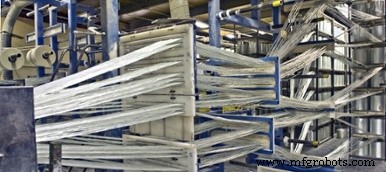
- Glass fibers – Provide good insulation, moderate strength, and are cost‑effective. They are less brittle and less expensive than carbon fiber.
- Carbon fibers – Offer high tensile strength, stiffness, chemical resistance, and low thermal expansion. Their crystalline structure aligns along the fiber axis, maximizing strength‑to‑weight ratio.
- Aramid fibers – Known for exceptional toughness and heat resistance, making them suitable for high‑performance applications.
Industries That Rely on FRPs
FRPs are integral to automotive, aerospace, construction, and marine sectors. Glass‑fiber reinforced plastics are especially valuable in the power industry because they are non‑magnetic and resist electric sparks. In sports equipment, carbon‑fiber FRPs are used in gliders, fishing rods, and racing gear. Japan has pioneered the use of FRPs in hydraulic gate construction.
Looking for more information on plastic materials? Download our complimentary guide!

Resin
- Spring‑Energized Seals: A Practical Guide for Reliable High‑Pressure Applications
- Piano Hinges Explained: Types, Applications, and Benefits for Professionals
- What You Need to Know About Flexible Magnets – A Practical Guide
- Silicone 3D Printing Explained: A Beginner’s Guide to Cutting‑Edge Production
- Introducing Pultruded Fiberglass Reinforced Plastic (FRP): High-Strength, Durable New Product Line
- Fiber‑Reinforced Plastic (FRP): A Game‑Changing Alternative to Steel
- Plastic Component Standards: A Practical Guide for Engineers & Buyers
- Carbon Fiber Reinforced Plastics: Evolution, Benefits, and Production
- Carbon Fiber Reinforced Plastic (CFRP): Strength, Weight Savings, and Emerging Applications
- Metal Casting Essentials: A Beginner’s Guide