



Piano Hinges Explained: Types, Applications, and Benefits for Professionals
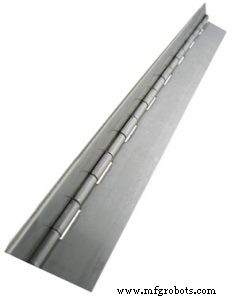
In any mechanical assembly, hinges are essential for connecting two components while allowing controlled movement. Among them, piano hinges—also known as continuous hinges—stand out due to their length, enabling them to span the full dimension of large panels or workpieces.
What Is a Piano Hinge?
A piano hinge is a mechanical bearing that extends the entire length of the objects it connects. Structurally, it comprises two rectangular plates joined at a central knuckle, through which a pin passes to secure the assembly. The hinge’s length is typically matched to the component’s length, ensuring uniform load distribution.
Common Applications
While the name originates from their widespread use on piano lids, piano hinges are employed in a variety of settings:
- Architectural doors and cabinets that require smooth, continuous motion.
- Heavy‑duty equipment such as industrial machinery and vehicle panels.
- Furniture pieces that demand durability and even stress distribution.
Key Benefits
1. Even Load Distribution: Because the hinge runs the entire length of the component, weight and stress are spread evenly across the plates, reducing the risk of deformation or failure.
2. Durability: The continuous nature of the hinge eliminates gaps that can trap debris, leading to smoother operation and longer service life.
3. Ease of Maintenance: Unlike multiple short hinges that require frequent tightening or lubrication, a single piano hinge simplifies upkeep, saving time and effort.
See Monroe’s Piano Hinges.
Industrial equipment
- Spring‑Energized Seals: A Practical Guide for Reliable High‑Pressure Applications
- Spring Door Hinges 101: How They Work, Benefits, and Why You Should Choose Them
- Compression Springs Explained: A Beginner’s Guide to Mechanics and Applications
- A Beginner’s Guide to Double‑Ended Screws: Design, Use, and Installation
- Yoke Ends 101: How to Select, Secure, and Use Them Safely
- Spring Plungers Explained: Function, Materials, and Installation
- A Complete Guide to Self‑Closing Hinges: How They Work & Where to Use Them
- Eye Bolts Explained: A Comprehensive Guide for Beginners
- Extension Springs 101: A Practical Guide for Beginners
- What You Need to Know About Flexible Magnets – A Practical Guide