



Expert Guide to Creating ABS Juice, Glue, and Slurry
Below you can find a very DETAILED insight on how to make ABS juice, glue, and slurry.

Are you a beginner at 3D printing? If yes, it will be best to start printing with PLA filaments and advance to other advanced materials later down the road.
ABS and PLA filaments are the popularly used filaments, although they come with different properties.
Additionally, it doesn’t produce any fumes during the printing process, and it doesn’t require high temperatures.
On the other hand, an ABS filament requires high temperatures; it can warp and give off fumes as you print. One area that the ABS filament beats the PLA filament is in its temperature resistance.
If both filaments are exposed to heat, the PLA filament (check at Amazon) will warp while the ABS one will not.
Additionally, the ABS filaments offer you additional finishing techniques due to their chemical makeup.
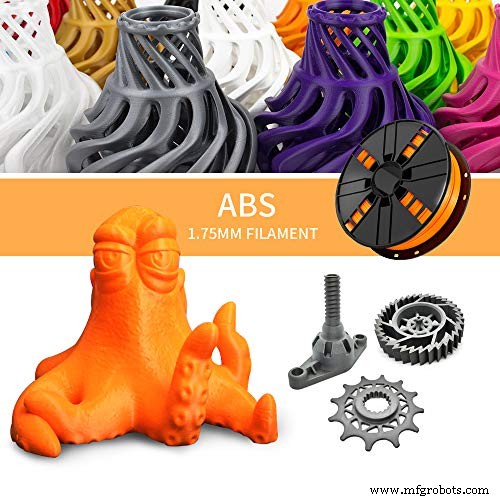
You can use acetone to get rid of the layer lines on an ABS filament, and it sands more effortlessly than PLA.
So, what are ABS juice, ABS glue, and ABS slurry? Does the amount of acetone you mix with ABS determine the kind of material you get?
What Is ABS Glue?
ABS glue is a product that you can use to stick ABS pieces together. It is an excellent choice for sticking two ABS parts together, and it is better than other adhesives, including superglue.
ABS glue is so effective than other adhesives as it melts a layer of material of the ABS parts.
Thus, it joins the two parts chemically using their molecules. Separate ABS parts fused together using the glue are converted into one strong piece.
Is There a Difference Between ABS Glue, ABS Juice, and ABS Slurry?
The three products are made using similar components but at varying proportions.
ABS juice is vicious, while ABS slurry is more of a liquid and is used on small gaps in your ABS print and smoothen the print surface.
How to Make ABS Glue
Can you make ABS glue? Yes, you can.
If you want to make your own ABS glue, you only require a few pieces of ABS filament and some acetone.
Additionally, making the glue is cheaper than buying from the stores. Plus, you don’t have to go through the trouble of ordering it online or running to the store.
Previously, you could use methyl ethyl ketone to make a solvent to bind ABS filaments together. The use of the product in making the solvent has gone down due to strict purchasing regulations.
MEK is considered more hazardous as it has some neuropsychological effects.
How Do You Make ABS Glue?
You can use the following steps:
- Get a glass container and ensure you have enough ventilation
- Get your acetone (check at Amazon) and put 50 ML into the glass container
- Get eight grams of ABS filaments and break them into small pieces. Scrap ABS prints can also be used in place of the filaments, which you should also cut into small pieces. Your ABS glue will have the same color as the ABS filaments or prints you used
- Take your small pieces of ABS and put them in the acetone. Use a metal or glass rod to mix. If the container comes with a tight lid, cover it and shake the filaments and acetone mixture
- As the ABS mixes with the acetone, gases will be released. The gases have an unpleasant smell and may be harmful to your health. As such, you should ensure you work in a properly ventilated area to enable the harmful gases to escape
- As the solvent becomes saturated, the process of dissolution can slow down. You can leave the solvent overnight to ensure you get the best results
- If you get every step in the process right, your ABS glue will be the same as white glue in terms of texture and consistency
What Is ABS Juice?
ABS juice is an excellent pick if you want your ABS prints to stick to the print surface. Since the ABS juice has acetone in it, you can only apply it on the glass or the Kapton tape on the glass.
You shouldn’t use the juice on a plastic print bed or BuildTak (check at Amazon).
This forms a microscopic layer of the ABS on the print surface. The layer offers a perfect surface for the ABS to stick on as it likes sticking on itself.
ABS juice is more liquid-like and thinner compared to ABS glue. The difference in properties of the two products means you don’t use them for the same purpose.
The chemical reaction during application is also slower compared to ABS glue, and no chemical welding happens.
How to Make ABS Juice
Like ABS glue, making ABS juice requires some acetone and a container (check at Amazon) that it cannot react with, like metal, glass, PP, etc. You will require a pair of scissors and a kitchen scale.
You can use the following steps to make ABS juice:
- Put 50ML of acetone in your glass container
- Next, measure out 50cm of ABS filament (3.00mm). Alternatively, you can also use 4 grams of ABS scrap. The ABS juice will have a color similar to the material you use while making it. If you are printing with any other filament, it will be best to use natural ABS filament (check at Amazon) as it doesn’t have any effect on the color of your mixture
- It will be best to chop the filaments into small pieces as this offers an additional surface area for the acetone to dissolve faster. If you are using ABS scraps, you should also break them into the smallest bits possible
- Drop your ABS materials into the container and mix them with acetone. You can use a stick to mix the materials. Alternatively, you can close the lid and occasionally loosen it, and burp the fumes that come out
- Allow the ABS to sit in acetone overnight to make sure it fully dissolves
- When the process is up, you should have a solution that looks like and has the same consistency as milk
How to Apply ABS Juice?
Before you can use the juice, it will be best to heat your print bed to the desired temperatures.
If you want to make cleaning the print area easier after applying the juice, you should border the print area using heat-resistant tape.
If your printing bed is made of plastic, you should avoid the use of ABS juice.
ABS juice is the thinnest compared to ABS glue and ABS slurry, and it is used to improve bed adhesion. You can apply a thin layer of the juice on your print bed to avoid warping, which is a major issue with ABS.
What Is ABS Slurry?
ABS slurry is the third auxiliary, and it is named slurry due to its slurry-like consistency. The ratio of acetone to ABS is highest at ABS slurry, and most of the ABS particles are in the mixture.
ABS slurry is looked at as the last option, and it is helpful for various purposes.
On the other hand, you can use ABS slurry for print bed, and it has as it has a high adhesive force. However, it destroys the print surface and leaves a rough surface texture.
How to Make ABS Slurry
If you want to make your ABS slurry and save the cost of buying and the trouble of going to the store, you require some acetone and enough ABS filament.
Additionally, you require a container that is made of metal, glass, and plastics such as PP or HDPE. This helps to prevent the container from reacting with acetone.
Some of the tools you require to come out and start making your ABS slurry include a kitchen scale, a pair of scissors, or cutting pliers (check at Amazon).
You can use ABS slurry to blend two ABS pieces that were glued together. You can also use it in areas that require more material to build up or fill the gaps between your glued parts.
Steps You Should Take to Make Your ABS Slurry
- Put 50 ML acetone in a glass container
- Measure 20g of ABS scrap or 250cm of ABS filament (3.00mm). Your ABS slurry will have a similar color to the materials you see in the mixture. If you are printing using another filament, it will be best to use natural ABS as it will not affect the color of your mixture
- Break the filaments into small pieces to offer acetone additional surface area and enable it to dissolve faster. If you are using ABS scraps, try and break them into the smallest pieces possible to hasten the process of dissolving
- Next, put your ABS filaments in the container and mix them with acetone. You can mix it using a stick, or you can close the tight lid and open it occasionally to enable the burping of the fumes the mixture gives off
- Allow the ABS to sit in the acetone for a night to make sure it dissolves completely
- If it fully dissolves, the ABS slurry will have the consistency and look of putty, and it will be goopy
You can use heat-resistant tape (check at Amazon) to mask the printing area.
If you want to use it for repair, use a brush to spread it on the affected areas. Ensure you fill all the holes without sparing and allow 24 hours for the repaired spots to dry well.
As such, you should use it sparingly. It will be best to use it when you have emergencies.
Final Thoughts
Do you want to make your own ABS glue, juice, and slurry? It is a straightforward process that requires you to have acetone and ABS filaments or scraps.
The process saves you the trouble of having to run down to the store, and it is also cheaper.
3D printing
- Secure IoT: Best Practices for Building Trustworthy Connected Products
- DIY Low‑Cost Glove Controller & Propeller Car – Build Your Own Arduino Hand Controller
- Build an Arduino RFID Door Lock – Master RFID Technology with a Step‑by‑Step Guide
- Build a Real‑Time Digital Compass with Arduino & Processing
- Expert Guide to Creating Sand Casting Molds for Foundries and DIY Projects
- Designing Clear Parts: Materials, Techniques, and Finishing for Transparent and Translucent Components
- Lithophanes: Create 3D Printed Images & Choose the Right Filament
- Top Filament Dryers & DIY Drybox Guide for Reliable 3D Printing
- Tachometer Circuit Explained: Function, Design, and Build Guide
- Create Stunning 3D Printed Lithophanes: A Step‑by‑Step Guide