



Direct Metal Laser Sintering: A Professional Guide to Metal 3D Printing
“Compared with a traditionally cast part, a printed part has superior strength, ductility, and fracture resistance, with a lower variability in materials’ properties.”
Elon Musk
For the past decade, metal 3D printing has moved from niche prototyping to mainstream production. Recent advances in metal powders and laser technology now enable manufacturers to produce functional metal components that match or surpass the mechanical performance of conventional CNC‑machined parts, while cutting material waste and lead times. This guide outlines the essentials of Direct Metal Laser Sintering (DMLS) and its practical applications across aerospace, automotive, medical, and jewelry industries.
What Is Direct Metal Laser Sintering?
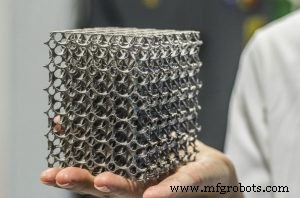
DMLS is an additive manufacturing process that fuses metal powder layer by layer with a high‑energy laser. The powder bed is repeatedly scanned, melting only the targeted areas; the remaining powder supports the structure until the next layer is applied. After the build, the part can be finished by conventional machining, polishing, or welding, achieving surface qualities comparable to traditionally manufactured components.
Why Choose DMLS?
- Consistent part quality with minimal shrinkage and distortion.
- Mechanical properties that often exceed machined equivalents.
- Up to 90 % reduction in material waste compared with subtractive methods.
- Post‑build flexibility: CNC machining, welding, or detailed engraving are all possible.
- Rapid production of complex geometries—ideal for short runs and low‑volume production.
Despite its advantages, DMLS remains a relatively sophisticated technology. It is best suited to industrial applications where design complexity and performance outweigh the higher upfront cost and limited build volume of current printers.
Materials Available for DMLS
The list of printable metal powders is expanding rapidly. As of now, the following powders are commercially available for DMLS:
- Stainless steel
- Nickel steel
- Sterling silver
- Gold
- Titanium
- Bronze
- Copper
- Brass
- Aluminium
- Cobalt chrome
- Inconel
Hybrid metallic polymers—polymers infused with metal particles—are also offered, providing a metallic aesthetic at lower processing temperatures. When selecting a material, review its specification sheet for key data such as tensile strength (MPa), flexural modulus (GPa), elongation at break (%), hardness (Rockwell B or other scales), minimum wall thickness, and achievable accuracy (µm).
Post‑Processing Considerations
Post‑build steps are essential to unlock the full potential of DMLS parts:
- Support removal: Mechanical or pneumatic tools are typically used to detach supports; plan for additional labor and time.
- Surface finish: Parts exhibit a coarse, grainy texture. Polishing—hand or machine—is required for a smooth, aesthetic surface. Electro‑polishing offers a non‑mechanical alternative that improves finish and reduces surface contamination, ideal for delicate or castable parts.
- Heat treatment: Certain powders benefit from post‑printing annealing or tempering to enhance mechanical properties. Refer to the material’s data sheet for recommended protocols.
Volume Packing and Orientation
Efficient build planning is critical for cost‑effective DMLS. Multiple parts can be printed simultaneously, but orientation is pivotal—metal parts demand careful support placement to avoid excessive material use and to preserve dimensional accuracy. Balance material cost, part quality, and build time by optimizing part placement and orientation early in the design phase.
By mastering these principles—material selection, post‑processing, and build strategy—engineers and designers can fully exploit DMLS to deliver high‑performance metal components faster and more sustainably than traditional manufacturing.
3D printing
- Sintering of Refractory Metal Powders: Processes, Classifications, and Performance Outcomes
- 5 Expert Finishing Tips for Direct Metal Laser Sintering Parts
- Mastering Selective Laser Sintering: From Fundamentals to Real‑World Applications
- Metal 3D Printing Explained: A Three‑Step Process From Design to Finished Part
- Mastering Metal 3D Printing: A Comprehensive Guide
- Laser Cutting Explained: Technology, Applications, and Benefits
- Expert Design Tips for Optimizing Direct Metal Laser Sintering (DMLS) 3D Printing
- Direct Metal Laser Sintering (DMLS): Advanced 3D Printing Technology for Functional Metal Parts
- Understanding Direct Drive Hydraulic Pumps: Key Features & Applications
- Precision Sheet Metal Stamping for High-Volume Production