



Advancing Hybrid Manufacturing: Merging Additive and Subtractive Techniques
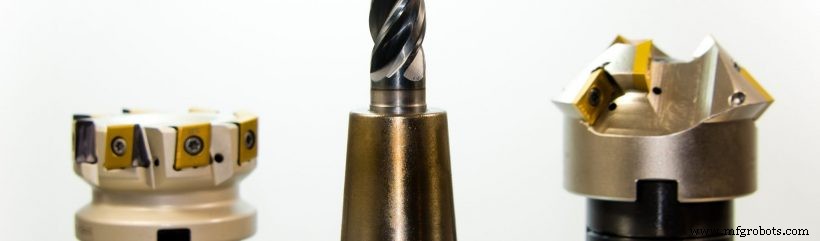
In recent years, additive manufacturing (AM) has made significant strides, and at RP Platform we are particularly excited by the emergence of hybrid processes that blend AM with traditional manufacturing methods. By combining 3D printing with CNC machining, manufacturers can harness the strengths of both worlds—rapid prototyping for complex geometries and precision machining for critical tolerances—on a single platform.
Several key machines have pioneered this approach. For instance, Hermle’s MPA 40, launched in early 2015, integrates AM and CNC capabilities within a five‑axis machining centre, enabling the creation of mixed‑metal parts that would otherwise be impossible with AM alone.
Hybrid Manufacturing Technologies has advanced the field with its AMBIT™ docking system, a modular solution that lets operators control both additive and subtractive tools from a single interface. Founder Jack Reiff noted that CNC shops could adopt AMBIT™ to add a new layer of capability, unlocking design concepts that neither method could achieve in isolation.
The concept’s appeal even sparked a successful 2015 crowdfunding campaign for BoXYZ, a compact desktop hybrid printer that combined AM, CNC, and laser‑etching tools. Professionals and hobbyists alike praised its versatility and ease of use.
While the potential for faster prototyping and efficient production is clear, realizing these benefits requires equally advanced workflow management. Selecting the optimal manufacturing technique for each project demands seamless data flow and effective scheduling across multiple processes.
Centralized workflow management—regardless of how many techniques are employed—is essential for maintaining efficient volume packing and production timelines. Existing software solutions must evolve to handle multi‑process coordination; otherwise, disparate workflows increase the risk of errors when integration is attempted.
As the industry adopts this streamlined methodology, we anticipate hybrid manufacturing will gain traction, driving innovation across a wide range of applications.
3D printing
- 5 Leading Additive Manufacturing Processes Explained
- Additive Manufacturing: Redefining Scale Economics and Driving Integrated Production
- Hybrid Manufacturing: Merging Additive and Subtractive Technologies for the Future of Production
- 5 Key Additive Manufacturing Trends Driving 2021 Innovation
- Additive Manufacturing in the U.S. Military: A Strategic Evolution
- Additive Manufacturing Explained: From Design to Finished Part
- Exploring the Core Additive Manufacturing Methods
- Metal Additive Manufacturing: Transforming Production for Aerospace and Beyond
- How Selective Laser Sintering (SLS) Converts 3D CAD Designs into Solid Parts
- Integrating Additive and Subtractive Manufacturing for Optimal Production