



Standardising 3D Printing File Formats: Challenges and Emerging Solutions for AM Service Providers
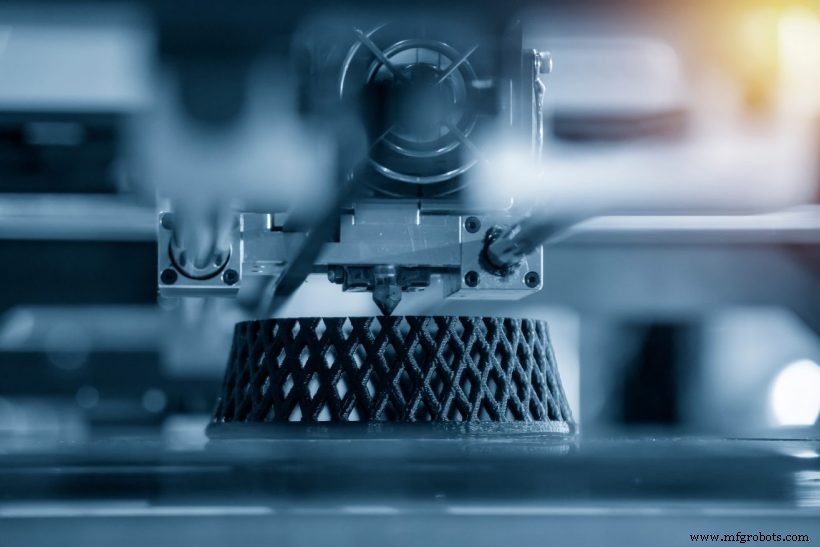
In an industry dominated by dozens of 3D file formats, establishing a universal standard remains a formidable task.
Without a single file format, AM service providers often encounter situations where customer submissions cannot be processed because the printer’s software or hardware does not support the format.
As the sector gradually moves toward a unified file standard, we examine emerging alternatives and tools that can make your 3D printing services more adaptable.
STL: The Enduring Industry Standard
Every 3D printer requires a digital blueprint— a file that encodes geometry, colour, texture, and material data. Historically, the STL file format has fulfilled this role and remains the most widely used format among AM service providers.
Invented in the mid‑1980s, STL represents a model as a mesh of triangles (polygons). Despite its ubiquity, the format has not evolved in over 30 years, and its limitations are increasingly apparent for complex production parts.
Key challenges of STL include:
- Large file sizes for intricate or expansive geometries, sometimes exceeding several gigabytes, which hampers transmission and acceptance by printers.
- Inability to encode colour, texture, or material properties.
- No provision for embedding metadata such as copyright or security information.
- Difficulty in modifying files; the format treats all changes as wholesale, restarting the workflow and adding hours to design cycles.
These shortcomings, combined with the growing demand for 3D printing services, have spurred initiatives to develop a new standard file format for AM.
Modern STL Contenders
The AM industry needs an enhanced data format that preserves CAD fidelity while supporting richer metadata.
AMF (Additive Manufacturing File)
Developed by the ASTM in 2011, AMF is an XML‑based format that natively supports geometry, scale, colour, materials, lattices, duplicates, and orientation. It also introduces "print constellations," allowing multiple objects to be positioned together, improving packing efficiency. Additionally, AMF lets designers specify scaling units— a feature absent in STL.
3MF (3D Manufacturing Format)
Microsoft introduced 3MF in 2015 as a comprehensive alternative to STL. Unlike the ASTM project, Microsoft established a consortium to oversee 3MF’s evolution. The format inherently distinguishes geometry segments— for example, marking lattice fills or support structures—and supports multiple textures, colour layers, and low‑size complex shapes.
Recent updates include extensions for Materials & Properties, Production, Beam Lattice, Slice, and a Secure Content extension that encrypts sensitive AM data.
Other formats such as STEP, IGES, NURBS, OBJ, and VRML are available, but their complexity limits widespread adoption.
Despite these innovations, industry adoption remains gradual, indicating that a fully standardised AM file format may still be some time away.
Building an Interoperable Workflow
In the meantime, AM service providers must adapt to the fragmented file landscape.
Accepting customer orders in any suitable 3D file format should be a priority. However, supporting numerous formats often requires multiple software licenses and can strain resources.
Investing in specialised workflow automation software can mitigate these challenges. Such platforms centralise order intake, automate pricing, and manage incoming requests. They also support dozens of file formats— for example, AMFG supports over 40— thereby expanding compatibility and enhancing customer service.
Ultimately, the case for standardisation remains compelling. Providers should objectively evaluate emerging formats and select the one that best aligns with their operational needs and customer expectations. The industry’s shift away from STL heralds a future where a truly versatile file format can meet the evolving demands of additive manufacturing.
3D printing
- Seamless Large‑Format SLA 3D Printing: From Build to Finish
- Locating Stratasys Service Documents for All 3D Printer Models – A Complete Guide
- Mastering High‑Quality STL Export Settings for Precise 3D Printing
- IoT Cost Analysis: What Service Providers and Enterprises Can Learn from Cloud Pricing
- Automation Ethics: Navigating the Ongoing Challenge for a Responsible Future
- 6 Essential Tips to Maximize Industrial Crane Performance and Longevity
- 5 Critical Pitfalls to Avoid When Implementing an Asset Management System for HVAC Service Providers
- Integrating the 5S Method into Industry 4.0: Overcoming Implementation Challenges
- A Comprehensive Guide to 3D Printing File Formats: OBJ, STL, AMF, and 3MF
- Choosing the Right CAD File Format for CNC Machining: STEP vs IGES