



Simplifying Metal 3D Printing: Expert Tips for Managing Support Structures
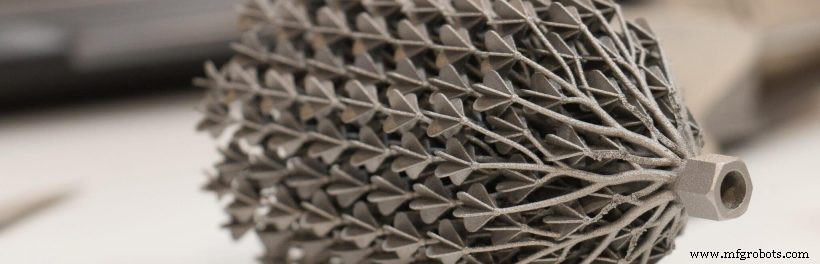
Successfully removing support structures from metal parts can be tricky, especially when a pristine, smooth finish is required. This guide offers proven strategies to streamline post‑processing and reduce stress on your parts.
Avoid supports whenever possible
Minimising support use is the first line of defence. Test different part orientations in your slicer until you find a compromise that reduces visible layers while keeping support count low. Many CAD programs now offer automated support optimization – use it.
Use angled supports
Angled supports keep a solid bond to the build plate but touch the part’s surface minimally, making them easier to remove later.
Prefer lightweight, tubular supports over heavy ones
While solid supports may be unavoidable for large, downward‑facing surfaces, they’re difficult to cleanly detach. Whenever possible, switch to thin, tube‑style supports that require less effort and produce fewer marks.
Design for clean break points
Two common techniques can reduce post‑processing clutter: 1) incorporate fine “teeth” into the support that pierce the part; they provide a strong print‑time grip but leave tiny divots that can be filled during finishing. 2) taper the support as it meets the part, leaving a subtle ridge that is easier to clip away.
Wire cutting beats machining for a cleaner finish
Removing supports with the same wire‑cutting method you used to separate the part from the bed yields a cleaner result and eliminates the need for extra machining.
Consider dissolvable support materials
Advanced processes like FDM‑based metal printing or LENS can use dedicated, dissolvable support powders. These materials can be washed away after printing, leaving no residual marks. Although this requires a multi‑material printer and specialised post‑processing, it can dramatically cut turnaround time if surface perfection is paramount.
Support structures will always add complexity to metal 3D printing, but thoughtful design and the right post‑processing tools can turn a potentially time‑consuming task into a quick, efficient workflow.
3D printing
- Key Design Principles for Optimizing Metal 3D Printed Parts
- Metal 3D Printing: 5 Cutting‑Edge Applications Transforming Industry
- How Metal 3D Printing Is Revolutionizing Lightweight Parts for Aerospace and Automotive
- Support Structures in 3D Printing: Expert Guide to Design, Use, and Optimization
- Onyx: The Next Leap in Production‑Ready 3D Printing
- Metal 3D Printing: Revolutionizing Production with Speed, Cost Savings, and Design Freedom
- Essential Support Structures in 3D Printing: Technology Insights & Best Practices
- Mastering 3D Printing Supports: A Comprehensive Guide to Quality & Efficiency
- Mastering HIPS Filament: A Comprehensive Guide to 3D Printing Success
- Enhancing 3D Printing: Mastering Support Structures for Complex Builds