



Speed Up Elastomeric Prototyping with Form 4’s New Flexible 80A Resin
Speed Up Elastomeric Prototyping with Form 4’s New Flexible 80A Resin
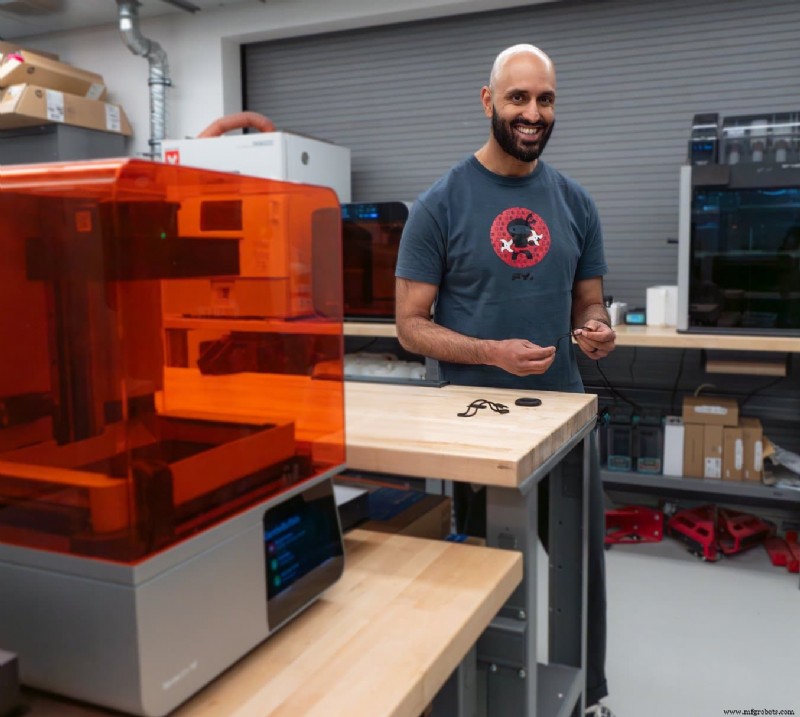
Photo: FYi Design Dept.
At FYi Design Dept., a lean R&D team delivers complex prototypes in days. That pace demands a 3D‑printing solution that is reliable, intuitive, and fast. Elastomeric parts—used to transition from rigid assemblies to soft‑tissue‑friendly designs—add extra complexity. They must exhibit spring‑back, rebound rate, elongation, and tear resistance while still being printable at scale.
“Flexible 80A Resin has been a gamechanger in enabling us to iterate and design faster. The team has been impressed with the rebound, elongation, and tear strength.” — Derek Disanjh, R&D Mechanical Engineer, FYi Design Dept.
After extensive testing, Disanjh found the new Flexible 80A Resin delivers the performance and workflow he needed. The material offers a matte black finish and superior mechanical properties compared to the older clear formulation and other market options.
Key Performance Enhancements
- 4× higher rebound
- 2× higher tear strength
- 2× higher elongation at break
- Improved aging characteristics
These gains come with a matte black finish, ideal for wearable technology and technical apparel prototypes that will be embedded in 3D knit or laminated textile assemblies.
FYi’s R&D process already includes a range of printers—Formlabs Form 4 Generation SLA, Stratasys J850, HP MJF, and Bambu Lab FDM. Among these, the Form 4 ecosystem provides the fastest, most reliable workflow for elastomeric parts.
Why the Form 4 Ecosystem Matters
“We work in a very fast‑paced environment. Our turnaround time on models could be days. Speed, execution, post‑processing, reliability, and pre‑print setup—all feed into what makes a good material just as much as the material properties.” — Derek Disanjh
Form 4’s Form Cure V2 offers a two‑step post‑cure process that takes only 10 minutes total, including a water submersion step that produces a fine, tack‑free surface. While this extra step might seem daunting, the result justifies the effort, delivering real‑world performance on par with high‑quality hard plastics.
Unlike previous materials—such as LOCTITE 3D IND402, Formlabs Flexible 50A Resin, and the original Flexible 80A—the new resin is easy to print, requires minimal operator expertise, and consistently produces high‑quality parts. Its matte finish also satisfies the aesthetic demands of FYi’s wearable prototypes.
Workflow Snapshot
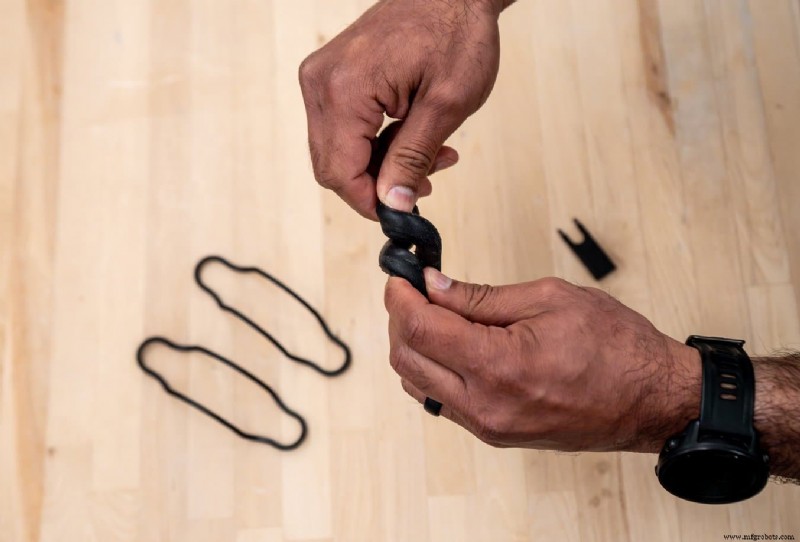
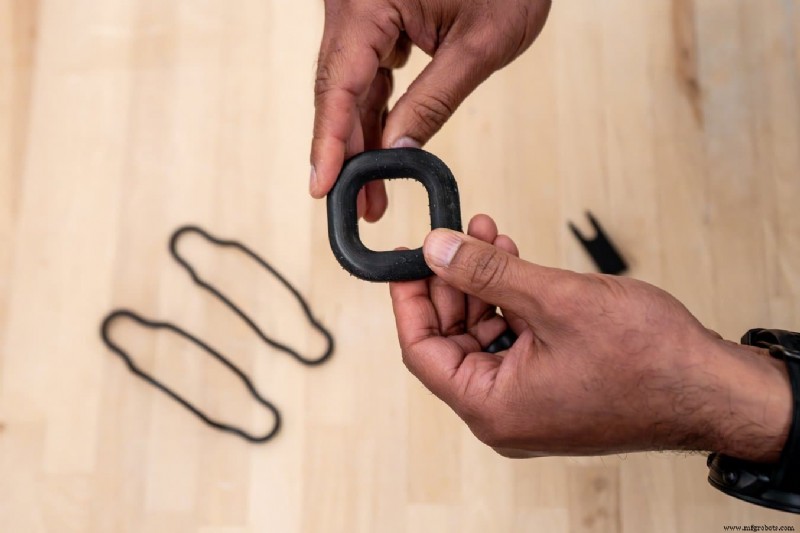
1. Print the part on a Form 4 Generation SLA printer using the Flexible 80A Resin.
2. Wash the print in Form Wash L.
3. Remove supports and perform the first post‑cure step.
4. Submerge the part in water for the second post‑cure step to achieve a tack‑free finish.
From Design to Real‑World Data
“We’re now able to design, iterate, prototype, and get real‑world data on our ideas at the speed that we’re currently iterating with all hard plastics. It’s upgraded our ability to use soft and elastomeric materials in our design process as we would with the rigid materials.” — Derek Disanjh
While large parts still require casting, the time‑consuming mold‑making process is largely eliminated for most elastomeric prototypes. With Flexible 80A Resin, a team member can hit print and receive a finished part that behaves like a tough, high‑performance polymer—just as the Tough 2000 Resin does for ABS.
Ready to Accelerate Your Prototyping?
Request a free sample part or purchase Flexible 80A Resin to start printing flexible components on Form 4 Generation 3D printers today.
3D printing
- Markforged Introduces 3D‑Printed Copper – Unlocking High‑Conductivity Parts
- SLS vs MJF: Understanding the Key Differences in Powder Bed Fusion 3D Printing
- Eliminate First-Layer Ripples: Proven Causes & Solutions for 3D Printing
- Essential Environmental Glossary: Key Terms Explained
- Six Unexpected Advantages of Additive Manufacturing for Your Business
- STL to 3D Printing: A Comprehensive Guide to Turning Digital Blueprints into Physical Objects
- How 3D Printing Enhances Traditional Manufacturing: Five Proven Applications
- Expert Interview: SmarTech Analysis VP Scott Dunham on Additive Manufacturing Trends (Part One)
- Tight Deadlines & Product Marketing: Why Rendering Wins Over Traditional Photos
- Fiber‑Reinforced 3D Printing Delivers Military‑Grade Durability to Genasun‑II CM