



Flexible 80A Resin V2 – Superior 3‑D Printed Elastomers Matching Cast Urethanes
Elastomers combine resilience, strength, and compliance, making them ideal for tooling, enclosures, seals, and more. Yet, 3‑D printing elastomers has traditionally forced designers to choose between cumbersome two‑part systems or single‑part formulations that lack toughness and finish. Casting from a mold is another option, but it is time‑consuming and restricts design flexibility. Flexible 80A Resin V2 resolves these limitations, delivering cast‑urethane‑like performance in a single‑part, easy‑to‑use process.
Built for Form 4 Series SLA printers, Flexible 80A Resin V2 offers a single‑part elastomer that delivers four times the rebound, twice the tear strength, twice the elongation at break, and superior aesthetics and aging performance versus its predecessor.
"We are incredibly impressed with the strength and fatigue resistance of the new Flexible 80A Resin. In our application, parts manufactured in the new Flexible 80A Resin last 10 times longer than the previous generation. It's a dramatic improvement."
Jonathon Campion, President, Modern Body Engineering
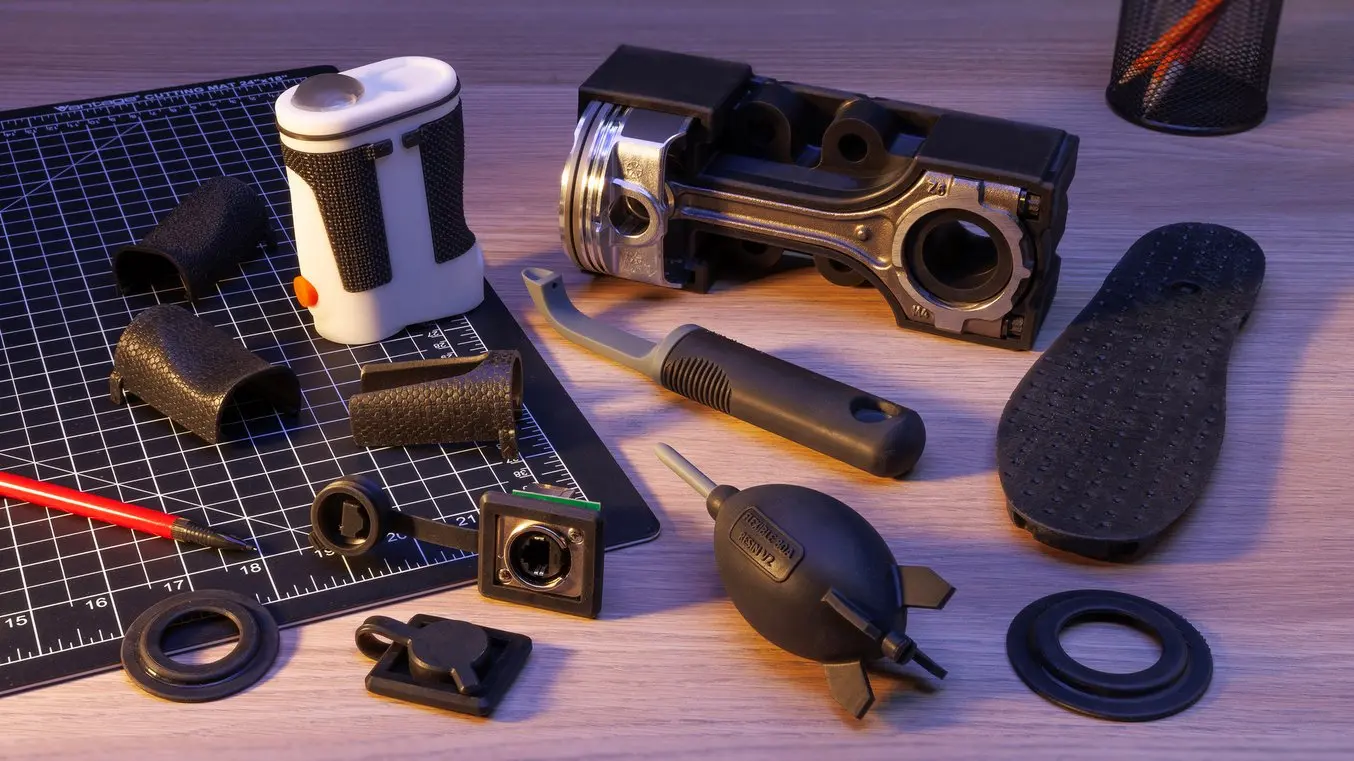
Print components that return to shape after deformation, resist repeated bending, tension, and compression, and serve as tear‑resistant prototypes, end‑use parts, or protective inserts. The matte black, tack‑free surface is ideal for ergonomic padding and grips.
Compared with Flexible 80A Resin V1.1, the new formulation aligns performance more closely with commercial and industrial 80A urethanes.
Parts printed with Flexible 80A Resin are resilient, snapping back into shape with a 56% pendulum rebound. Durable, stretchable parts resist failure with a tear strength of 28 kN/m and an elongation at break of 230%, 2× higher than the previous generation. Connectors, fixtures, and covers printed with the new formulation have better Ross Flex fatigue, surviving 5× more cycles compared to the previous generation.
*Value reported by manufacturer and not tested directly by Formlabs
**Internally tested with no environmental control
Accelerated indoor aging testing was performed on parts printed with the new Flexible 80A Resin in accordance with ASTM D4459. The new Flexible 80A Resin maintained 87% of elongation at break after 1,000 hours.
View the technical data sheet for Flexible 80A Resin for more information.
The new material formulation is tack‑free with a matte black appearance. Parts printed with the new Flexible 80A Resin look and feel like a cast urethane.
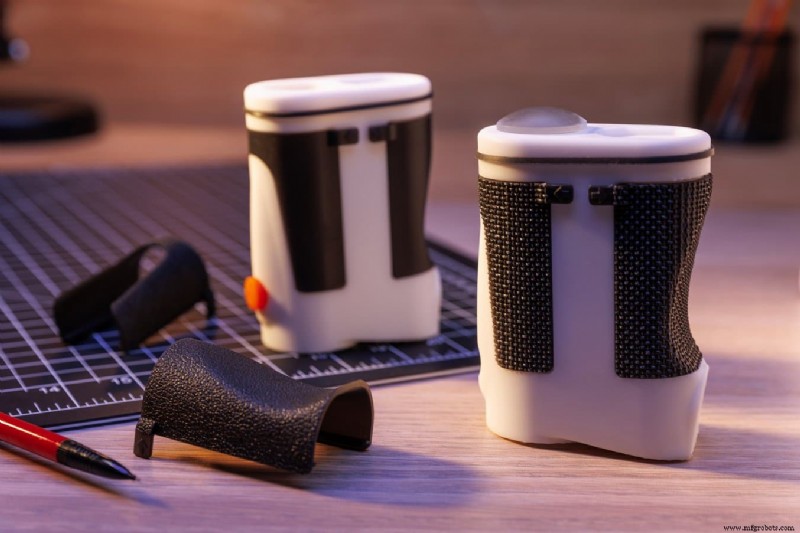
Directly print flexible parts with fine details and surface textures.
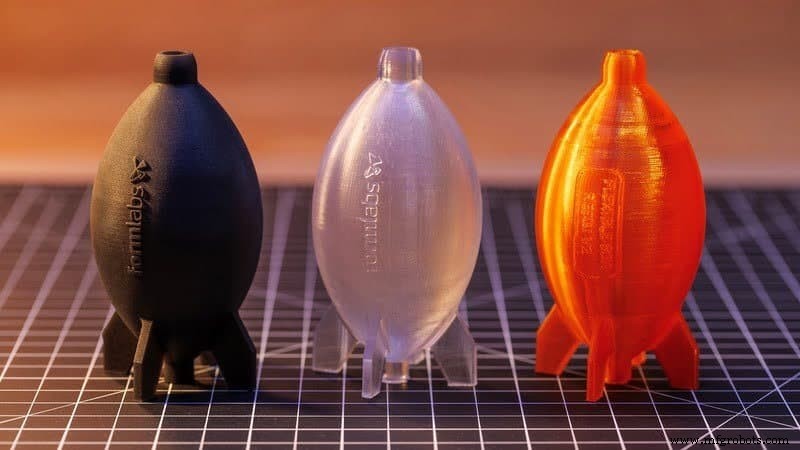
New Flexible 80A Resin (at left), the old formulation (middle) and the same part printed in TPU filament on an FDM printer (right).
Flexible 80A Resin can be printed with Form 4 Series 3D printers, including Form 4 and Form 4L, with easier, more streamlined workflows than two‑part resin systems or casting.
Parts printed in Flexible 80A Resin should be washed and dried, followed by post‑curing. It is recommended that parts printed in this material be cured twice, the first time submerged in water in a UV‑transparent container. View the full workflow in the TDS.
Located in Squamish, British Columbia, FYi Design Dept. specializes in R&D at the intersection between technology, soft goods, and hard goods. In the past, FYi printed flexible materials on Carbon 3D printers to make elastomeric parts. While Disanjh liked the material, the workflow was difficult and only one member of the team had the expertise to print, disrupting timelines. This led Disanjh to investigate alternative elastomeric materials for 3‑D printing.
“Hands down, the Formlabs is the better solution for elastomeric parts, and that's because of how it plugs into our R&D process.”
Derek Disanjh, R&D Mechanical Engineer, FYi Design Dept.
Disanjh and his colleagues were already printing with Form 4 Generation 3D printers, including the Tough Resins Family. They appreciated the easy workflows empowering anyone on the team to print, and the reliability and speed of printing and post‑processing, for meeting deadlines.
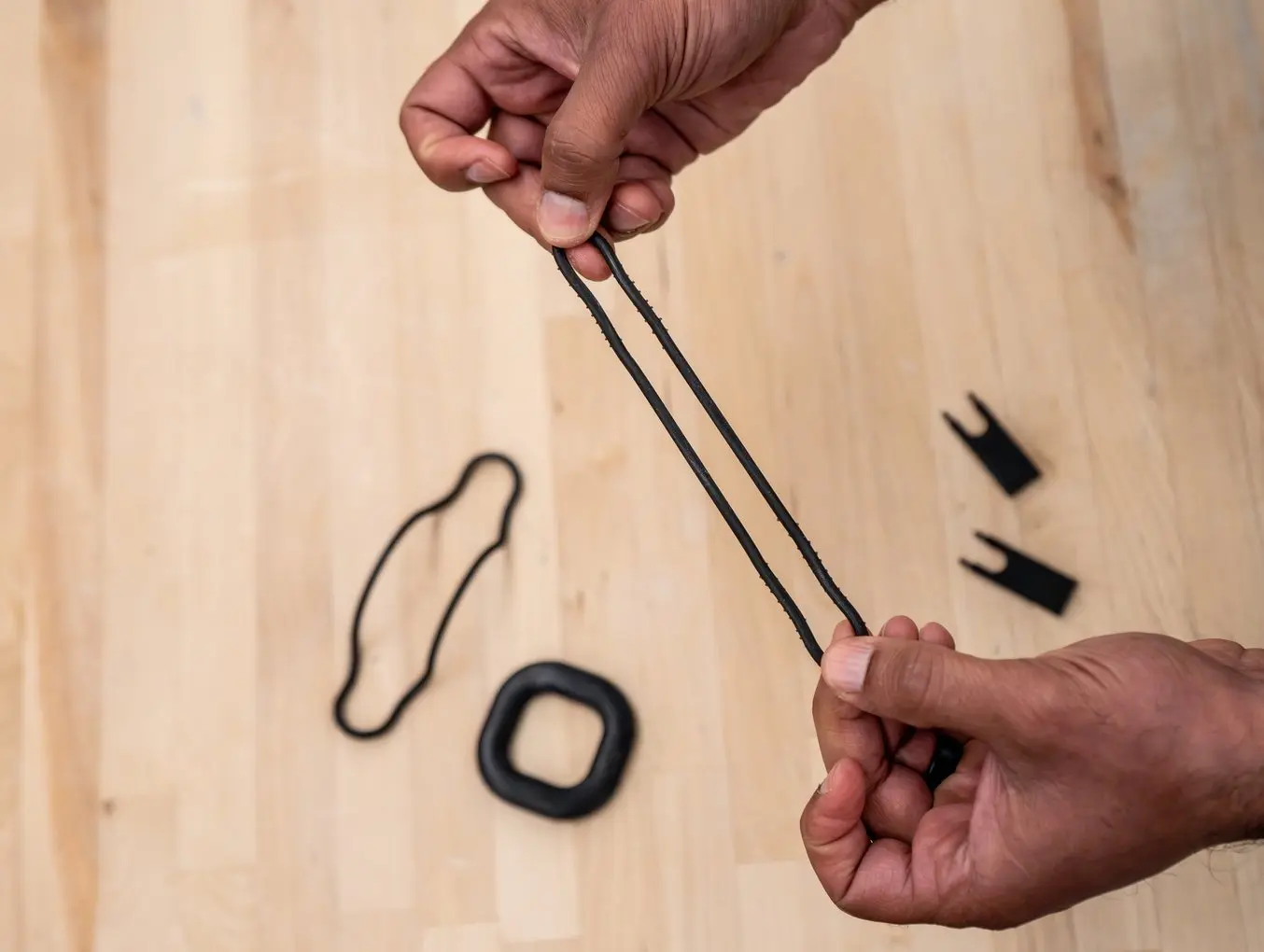
Parts printed with the new Flexible 80A Resin have higher rebound, tear strength, and elongation at break plus improved aesthetics. (Photo: FYi Design Dept.)
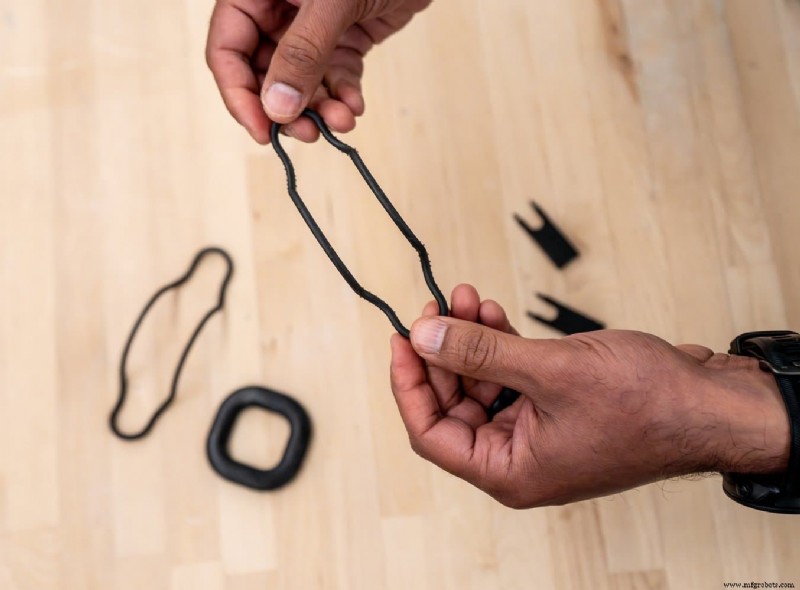
Disanjh says, "The surface finish of the part is very important to us. The team has similarly been impressed with the rebound of the material. Other 3D printed elastomers feel dead." (Photo: FYi Design Dept.)
"The speed of the Form Cure V2 has really enabled the team to lean into the Form Ecosystem a lot more," says Disanjh. Though Flexible 80A Resin requires two post‑cure steps, including one with parts submerged in water, Disanjh says, "The result we’re getting is worth that step," especially as total cure time is only 10 minutes in Form Cure V2.
"Flexible 80A Resin has been a gamechanger in enabling us to iterate and design faster. The team has been impressed with the rebound, elongation, and tear strength."
Derek Disanjh, R&D Mechanical Engineer, FYi Design Dept.
The updated Flexible 80A Resin makes it easier than ever to manufacture resilient, elastomeric parts that perform cycle after cycle and achieve the look, feel, and function of Shore 80A cast urethanes with 3‑D printing.
Request a free sample part to evaluate Flexible 80A Resin for yourself or buy the material to start printing flexible parts on Form 4 Series 3D printers.
3D printing
- Case Study: Nylon AF80 – 3D Printing Revolutionizes Geology Sensor Design
- Printing Durable Gaskets with 3D Filament: Which Material Works Best?
- How 3D‑Printed Fixtures Save Shop Time: Harnessing Tough Nylon and Fiber‑Reinforced Parts
- From Hobby to Income: How I Secured My First 3D Print Sale on Etsy
- Navigating Rising Steel and Aluminum Tariffs: Strategies to Reduce Raw Material Costs
- MELD Manufacturing CEO Nanci Hardwick on Revolutionizing Metal Additive Manufacturing
- Introducing Endur™ – Advanced Polypropylene‑Like 3D Printing Material
- Lean Principles in Healthcare: Personalization Drives Better Outcomes
- Revolutionizing Learning: The Impact of 3D Printing in Education
- Ultimate 3D Printer Maintenance Checklist: Keep Your Printer Running Smoothly