



LEO Lane’s VP Business Lee‑Bath Nelson on Secure Digital Supply Chains and the Future of 3D Printing
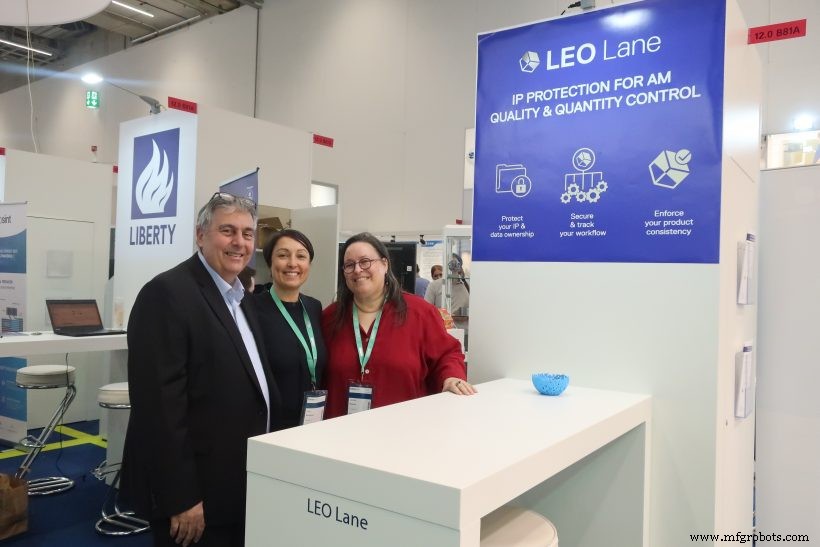
Featured: LEO Lane Co‑Founders Moshe Molcho (CEO), Tessa Blokland (Industrial Design Expert), and Lee‑Bath Nelson (VP Business). Image credit: Beau Jackson.
3D printing is a leading catalyst for distributed, digital manufacturing. By converting digital files into physical parts, it unlocks virtual inventories and on‑demand, local production.
However, the same digital files that enable rapid manufacturing also pose serious security risks. Unauthorized access to a 3D model can compromise a company’s intellectual property and threaten the integrity of its product line.

In response, the industry is developing end‑to‑end security solutions. One pioneer is LEO Lane, an Israeli startup that offers a cloud‑based platform for protecting additive manufacturing (AM) data at every workflow stage.
To learn more about LEO Lane’s software, we spoke with co‑founder and VP Business Lee‑Bath Nelson. In the interview, Nelson explains how digital inventory drives cost savings, how 3D printing can mitigate global supply disruptions, and the key applications that are shaping the future of AM.
What inspired the founding of LEO Lane?
Nelson’s 20‑year career in venture capital, including early investment in Objet Geometries (now Stratasys), gave him a front‑row seat to the evolution of AM. “When I first saw 3D printing as a prototyping tool, it was fascinating but limited,” he recalls. “As the technology matured, we saw its potential for end‑use production, but new challenges emerged: repeatability, consistency, and intellectual‑property protection.”
“If a digital blueprint falls into the wrong hands, it can be replicated infinitely, eroding a company’s competitive advantage,” Nelson explains. “To move AM into mainstream manufacturing, we needed a solution that guarantees repeatable quality and safeguards IP.”
How does LEO Lane’s software ensure repeatability?
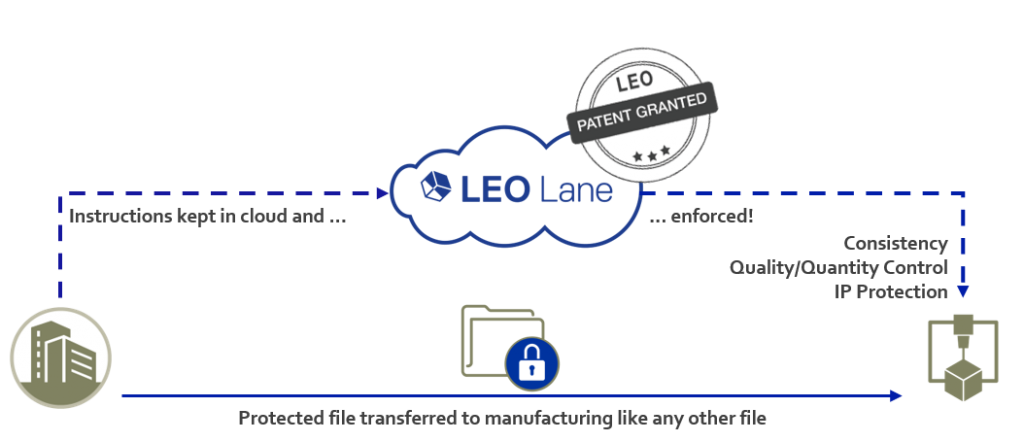
LEO Lane’s SaaS platform lets manufacturers dictate exactly how, where, and in what volume a part is produced. “Different industries have distinct requirements,” Nelson says. “A jeweler might only care about the material, while an aerospace manufacturer must specify machine type, settings, and material properties.”
By enforcing these parameters across the entire production chain—from design file to finished part—LEO Lane guarantees that each copy meets the same rigorous standards. The solution works with existing manufacturing software and machine controllers, ensuring seamless integration.
What are the advantages of digital inventory?
Digital inventory eliminates the need for large physical stockpiles, cutting storage, logistics, and obsolescence costs. “A virtual catalogue can be updated instantly,” Nelson says. “When a new jig or part is introduced, the digital system automatically deprecates the old version, preventing errors on the shop floor.”
Moreover, distributed production reduces supply‑chain exposure. “During events like Brexit or a pandemic, physical parts may be delayed or restricted,” Nelson notes. “Digital files can be shared instantly, allowing local production without compromising quality.”
How can 3D printing help during global crises?
Localized, on‑site production means no virus transmission risk and faster turnaround. “In Italy, hospitals ran out of ventilator valves during COVID‑19,” Nelson recounts. “3D printing allowed temporary replacements to be produced within hours, buying critical time.”
He also cites downtime savings: “A single lost part can halt a production line for weeks, costing the automotive sector roughly $22,000 per minute.” “If a 3D‑printed spare arrives in a few hours, the cost of downtime drops dramatically, and customers are willing to pay for the continuity.”
Beyond crisis response, 3D printing fuels innovation. Nelson highlights “hand‑less elbow openers for door handles” as an example of a quick, distributed solution that a single company can produce locally within days.
What are the top challenges preventing AM from becoming a mainstream manufacturing technology?
1. Repeatability – AM must meet the same reliability standards as traditional processes. “ERP systems like SAP expect a seamless order flow,” Nelson explains. “Integrating AM into that flow is essential.”
2. Integration – Hardware and software must work together effortlessly. “The ecosystem needs to be cohesive,” he adds.
3. IP protection – Securing digital designs while allowing controlled sharing is critical for commercial adoption.
Nelson believes the path forward is to make AM indistinguishable from any other manufacturing method, so procurement and production teams can treat it as a standard component of the supply chain.
Which AM trend excites you the most?
Nelson is passionate about jigs and fixtures. “These are internal tools that companies can produce in‑house, eliminating external dependencies,” he says. “A failure in a jig can halt a line; producing it locally with 3D printing removes that risk and saves time and money.”
He describes this as a “gateway application” that demonstrates the benefits of AM in a low‑complexity environment, paving the way for more complex end‑use parts.
What’s next for LEO Lane in 2024?
LEO Lane will continue to refine its security platform, ensuring that intellectual property cannot be stolen but can also be shared securely when required. “Our mission is to empower companies to produce best‑of‑breed parts without compromising IP,” Nelson says.
He emphasizes the importance of partnership and collaboration across the AM ecosystem, noting that the industry’s maturity is evident in the growing focus on software and integration at events like Formnext.
Any final thoughts?
Nelson reflects on how the AM industry has evolved from hardware‑centric to a software‑driven ecosystem. “Maturity is a sign of health,” he says. “With repeatable processes, integrated systems, and robust IP protection, additive manufacturing is poised to become a core manufacturing technology.”
To learn more about LEO Lane, visit: https://www.leolane.com/
3D printing
- Digital Alloys CEO Duncan McCallum Discusses Joule Printing and the Future of Metal 3D Manufacturing
- Interview with APWORKS CEO Joachim Zettler: Unlocking Business Value in Metal 3D Printing
- Interview with Xometry’s Greg Paulsen: How Manufacturing‑as‑a‑Service Is Revolutionizing Production
- Industrial IoT: Driving Digital Transformation and New Business Value
- Traceability & Material Flow: Key to Resilient Food & Beverage Supply Chains
- Harnessing Blockchain for Supply Chain Transparency and Efficiency
- How Digital Transformation is Reshaping Supply Chains: Lessons from COVID-19 and the Future
- Charting the Path to Fully Integrated Digital Supply Chains
- AI & IoT Fuel Digital Twins for Smarter Supply Chains
- Why Just-in-Time Inventory Is Critical for Business Success