



Lean Principles in Healthcare: Personalization Drives Better Outcomes
Improve quality, consistency, and efficiency while saving money. I know what you are thinking. I’m talking about going lean, right? Minimize waste; maximize productivity. The mantra of modern manufacturing.
In fact, the same lean mindset is reshaping healthcare. Hospitals worldwide face the dual challenge of delivering superior patient care while staying financially viable. By adopting manufacturing principles—such as eliminating waste and streamlining processes—healthcare providers can achieve both objectives.
A leading example of this transformation is the UK’s Getting It Right First Time (GIRFT) program, a nationwide initiative aimed at raising clinical standards and saving the NHS billions each year.
 Brigitte de Vet‑Veithen, Vice President of Materialise Medical
GIRFT is a comprehensive improvement program currently being rolled out across the NHS. It is projected to boost patient outcomes, support sustainable care, and generate savings of around £1.5 billion annually.
At its core, GIRFT promotes best‑practice processes that enhance outcomes for patients and organizations alike. Importantly, it also highlights the critical role of personalized care—an area where Materialise is a global leader.
Why GIRFT Matters
The program originated from orthopedic surgeon Professor Tim Briggs’ study, which uncovered infection rates for hip and knee replacements ranging from 0.2 % to 4.5 %. Briggs argued that if all hospitals adopted the procedures used by those with 0.2 % rates, they could prevent countless infections and unnecessary surgeries, saving the NHS substantial money while improving patient outcomes.
Following the pilot, 70 hospital trusts reported savings of up to £30 million. Today, GIRFT’s methodology spans 40 surgical and medical workstreams across the NHS.
Frontline clinicians and specialty experts visit health trusts to review challenges, compare procedures, and analyze results. This collaborative approach identifies best practices that can be replicated system‑wide, while eliminating unnecessary variation that can compromise quality.
Personalization: The Consistent Approach
One might wonder why a personalized approach is compatible with the goal of reducing procedural variation. The answer lies in the fact that true consistency is achieved when each patient receives the best‑possible care tailored to their unique anatomy and circumstances.
Orthopedic data shows that about 15 % of joint‑replacement revisions fail, with the failure rate for a second revision being three times higher—an outcome of one‑size‑fits‑all protocols.
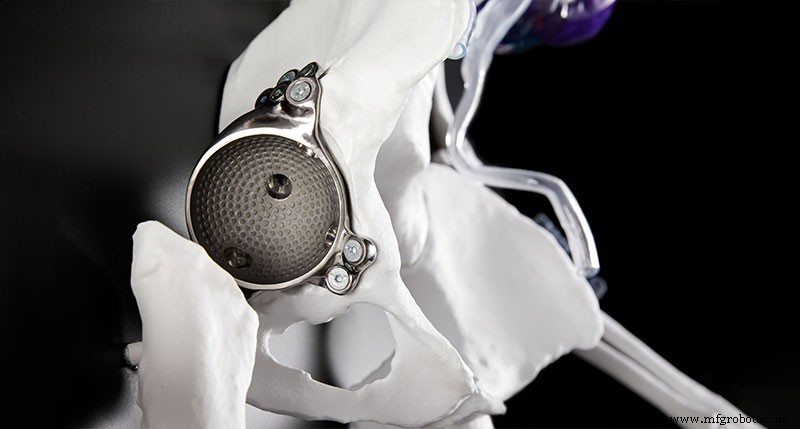 The aMace hip implant and its 3D surgical planning are designed based on each patient’s personal scan
In contrast, our personalized aMace 3D‑printed hip implant boasts a 98 % implant survival rate and 100 % patient satisfaction. Studies by Bollard et al. report average cost savings of $1,488 per case and a 23‑minute reduction in operating‑room time when using patient‑specific 3D‑printed surgical guides.*
These benefits extend across many surgical disciplines. The GIRFT program already recognizes the advantages of surgical planning tools and personalized guides.
Planning, Predicting, and Performing with Precision
With 3D visualizations, procedural and soft‑tissue simulations, surgical teams gain a personalized blueprint for each operation. They can anticipate intra‑operative challenges and determine the optimal approach. 3D‑printed guides translate this plan into precise, reproducible action.
Reduced operating‑time was a key highlight of the GIRFT report on cranio‑maxillofacial (CMF) surgery. Our experience in CMF, particularly with 3D guides, has earned Materialise recognition in this area.
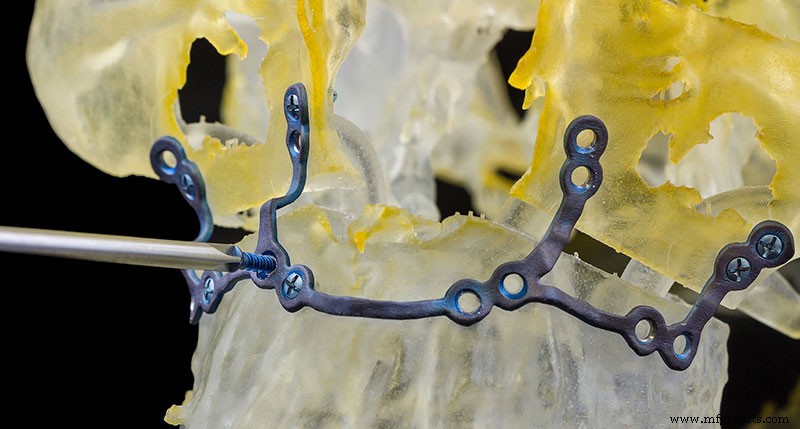 Materialise cranio‑maxillofacial (CMF) guides reduced time on the operation table, according to the latest GIRFT report (Feb 2019)
As AI, AR, and predictive modelling evolve, the accuracy and predictability of these tools will only improve. Better planning also empowers patients to understand their procedure and expected outcomes, aligning expectations with reality and potentially reducing litigation risk—an area where NHS negligence claims reached £2.2 billion in 2017/2018.
Replicable, Accessible, and Achievable
Surgical planning and personalized devices are scalable solutions that any hospital can adopt to meet GIRFT objectives. 3D planning solutions are readily available, whether through outsourced services or in‑house production, enabling hospitals to generate visuals and printed tools at the point of care.
Going lean in healthcare means embracing personalization to improve outcomes, cut costs, and serve society better. We at Materialise are committed to driving this future forward.
*Bollard et al., Medical 3D Printing Cost‑Savings in Orthopedic and Maxillofacial Surgery, Science Direct, 2019.
3D printing
- How Digitisation Powers the Future of Medical 3D Printing
- The Key to Reliability Success: Culture Change Over Technology
- What Maintenance & Reliability Leaders Are Prioritizing Right Now
- TTO vs Hot Stamp Printing: A Professional Guide to Choosing the Right Technology
- Maximize Construction Efficiency: 4 Questions to Unlock Live Field Data
- Process Improvement: Unlocking Sustainable Workforce Growth
- 4 Critical Signs Your Motor Is About to Fail
- When to Replace Hydraulic Filters: Prevent System Failures and Downtime
- When to Replace Your 3D Printer Nozzle – Expert Guide
- Maintaining Biocompatibility During Material Processing for Medical Applications