



3 Proven Strategies to Eliminate Repetitive Tasks in Additive Manufacturing
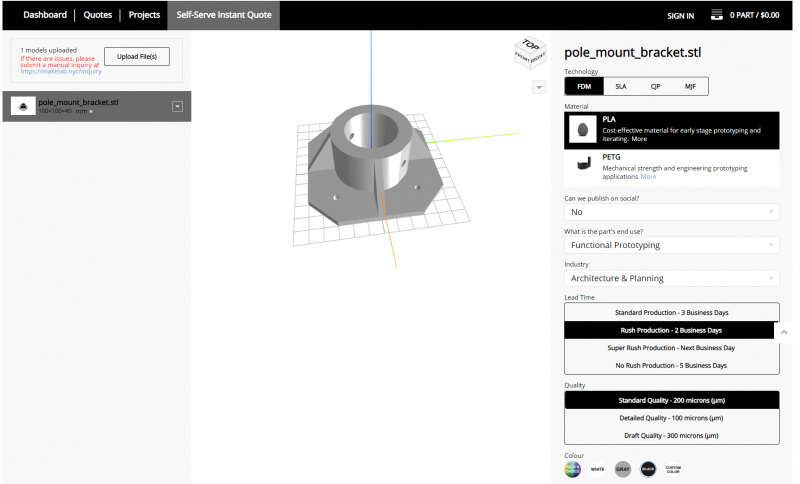
Do you find yourself starting each day in the additive manufacturing (AM) department by sifting through a flood of 3D‑printing requests in your inbox, only to manually transfer them into spreadsheets, calculate quotes, and confirm details with the requester? Typical duties—updating engineers on order status, re‑entering data across systems, compiling reports—also consume valuable time. Manual, repetitive work can slow production, delay deliveries, frustrate customers, and, worst of all, introduce costly errors. Automation is the answer. By offloading routine tasks to intelligent systems, you free up skilled staff for high‑value activities, reduce operational costs, and build processes that are more reliable and compliant. Below we outline three automation solutions that target the most common pain points in AM workflows, from order submission to data management and workflow orchestration. The heart of most AM bottlenecks lies in managing the workflow. Three core solutions—an ordering portal, an internal order management system, and workflow automation software—can dramatically simplify operations. An intuitive, web‑based ordering portal lets engineers and designers submit 3D‑printing requests at any time, selecting materials, technologies, and parameters with a few clicks. Key advantages include: By automating order submission, your team can focus on engineering decisions rather than administrative overhead. Once orders flow in, a dedicated AM order management system (OMS) replaces spreadsheets and scattered data silos. Traditional ERPs often lack the specialized features required for additive manufacturing—such as rapid part‑level tracking, material inventory integration, and rapid re‑quote capabilities. A modern OMS, tailored for AM, offers: When combined with an ordering portal, the OMS creates a closed‑loop process that dramatically reduces errors and accelerates order throughput. Workflow automation formalizes business rules so that tasks, documents, and status changes flow automatically. In AM, this can include: Without automation, status changes require manual spreadsheet edits and email alerts—introducing lag and limiting real‑time visibility. Workflow tools eliminate these bottlenecks, enabling agile response to production hiccups. Prior to automation, L’Oréal’s 3D‑printing lab relied on email requests, spreadsheet pricing, and manual status updates. An assistant spent hours entering data and sending email follow‑ups. After adopting AMFG’s integrated ordering portal, OMS, and workflow engine, the lab: Read more: How L’Oréal Accelerates Time to Market with AMFG’s Workflow Software Investing in automation yields a strong ROI—often paying back within a year—while delivering consistent quality, efficiency, and control. Consider these metrics: For labs and manufacturers looking to scale, automation is a strategic enabler. With our proven track record across diverse clients, AMFG stands ready to guide your organization toward scalable, profitable growth.
Automating Repetitive Tasks in Additive Manufacturing
1. Deploying an Ordering Portal
2. Implementing an Internal Order Management System
3. Deploying Workflow Automation Software
Case Study: L’Oréal’s Transformation Through Automation

Doing Additive Manufacturing Smarter
3D printing
- 3 Proven Strategies to Eliminate Repetitive Tasks in Additive Manufacturing
- Industrialising Additive Manufacturing: Three Key Trends of 2021
- Mapping Your Additive Manufacturing Automation Journey: 5 Maturity Stages & Practical Solutions
- Four Emerging Automation Trends Shaping Additive Manufacturing
- How Digital Inventory Enhances Additive Manufacturing: 4 Key Advantages
- Three Ways Connectivity Drives Efficiency in Additive Manufacturing
- Additive Manufacturing in Smart Factories: 5 Essential Success Factors
- Additive Manufacturing 101: A Beginner’s Guide to 3D Printing
- Cut Costs, Not Quality: 5 Proven Ways to Reduce Manufacturing Expenses
- 8 Proven Strategies to Cut Manufacturing Waste and Boost Efficiency