



Calculating ROI for the Metal X 3D Metal Printer – A Practical Guide
Understanding ROI in Capital Investments
In the manufacturing world, ROI (Return on Investment) is the decision‑making metric that stops most procurement decisions. While an R&D lab might gamble on new tech, most companies base purchases on clear, measurable value, especially for high‑cost assets like CNC mills, robotic arms, and large fabrication systems that can exceed six figures.
Traditional equipment such as CNC mills has a well‑defined, easily calculable value proposition. When you already operate three mills and are considering a fourth, you can estimate the incremental benefit with reasonable confidence. Emerging technologies, however, are unproven and harder to predict. This uncertainty often deters risk‑averse businesses from adopting high‑potential capabilities.
Metal 3D printers, like the Metal X, exemplify this challenge. In this post we break down the two key factors that shape ROI: Acquisition Costs and Value Added.
Acquisition Costs for a Metal 3D Printer
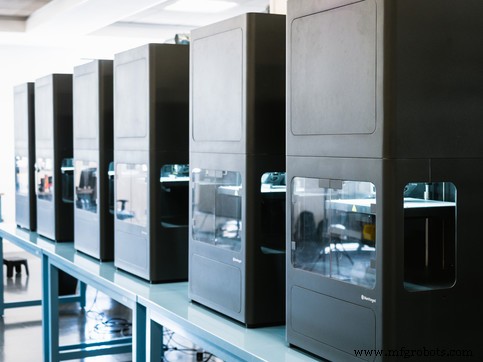
The first step is to establish the true acquisition cost—every expense required to bring a fully operational Metal X onto your shop floor, including fully trained operators. This cost varies by bundle, facility readiness, and location. Below is a comprehensive breakdown:
- Machine Cost: The manufacturer's suggested retail price (MSRP).
- Success Plan: Preventative maintenance, warranty, and part replacement coverage.
- Facility Upgrades: Minor modifications such as power routing and ventilation drops.
- Shipping & Installation: Transport and on‑site setup.
- Training: Labor required to bring operators up to speed (often overlooked).
Depending on your specific circumstances, a standard Metal X system typically ranges from $150,000 to $200,000 USD. For a precise quote tailored to your operation, request a Metal X quote below.
Request a Metal X quote
Quantifying Value Added
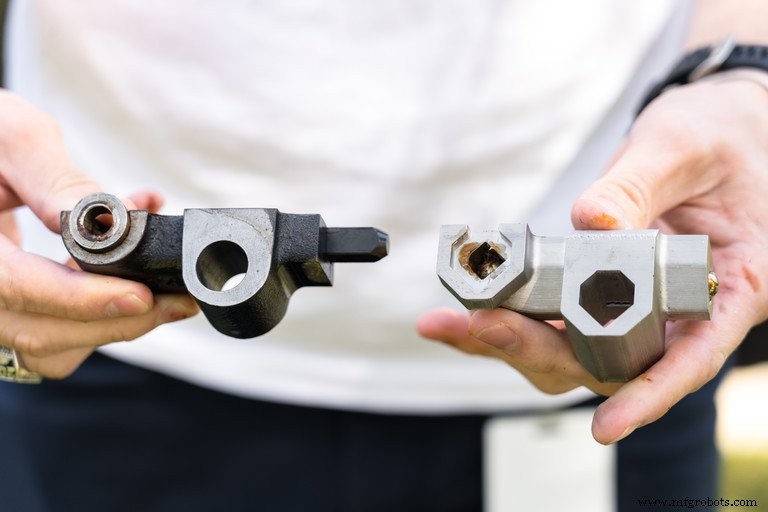
While calculating acquisition costs is straightforward, estimating the monetary benefits of a new technology can be challenging. For the Metal X, we recommend a simple, cost‑based methodology that works best when contrasting 3D printing with your existing manufacturing process.
- Identify a Benchmark Part: Choose or design a representative part that reflects the “average” component you plan to produce. It need not be a high‑volume item, but it should embody typical geometry and material requirements. If you’re unsure which parts benefit most from metal 3D printing, download our whitepaper on metal 3D printing applications.
- Calculate 3D Printing Costs: Upload the part file to Markforged’s Eiger software to generate a per‑part cost. This figure incorporates material, labor, sintering electricity, consumables, and gas. Accurate unit costing is critical.
- Estimate Conventional Production Costs: Whether you outsource or produce internally, gather all material, labor (programming + machining), and consumable expenses for the same volume. Use a realistic production volume to ensure fair comparison—don’t compare the cost of printing one part to machining twenty.
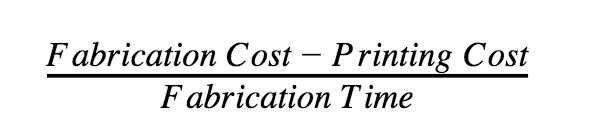
- Compute Value per Time Unit: Using the fabrication time, printing cost, and conventional cost, calculate the value created per hour (or other time unit). A sample formula is illustrated below.
- Determine Payback Period: Divide the total machine cost by the annual value generated. A payback of two years or less typically signals a compelling investment. If the payback aligns closely with the machine’s expected lifespan, reassess expectations before proceeding.
While this method quantifies direct cost savings, it does not capture additional benefits such as reduced lead times, accelerated iteration cycles, and design flexibility—all of which can deliver substantial strategic value.
Conclusion
Assessing new technology’s business value is notoriously difficult. A rigorous ROI calculation addresses this challenge in three key ways:
- It delivers a solid, quantifiable justification for disruptive technology purchases.
- It provides a detailed cost estimate for every acquisition and production step.
- It sets realistic expectations for the value the new machine will generate.
Ready to uncover the potential ROI of the Metal X for your organization? Request a Metal X quote below and start the conversation.
Request a Metal X quote
3D printing
- How to Accurately Estimate CMMS Software Costs & ROI
- Calculating ROI for Metal 3D Printers: A Practical Guide
- Selecting the Perfect Abrasive for Metal Fabrication: A Practical Guide
- Choosing the Right Inventory System for Your Warehouse: A Practical Guide
- Cutting 3D Printing Costs: Proven Strategies from Design to Post-Processing
- Maximize ROI on Scrap Metal: Shipping Costs Explained
- Cutting Costs in Metal Machined Parts: Proven Strategies
- Calculating ROI for Robotic Systems: A Practical Guide to Investment Payback
- Proving the ROI of a Robotic System: A Guide to Justifying the Investment
- Calculating SLS 3D Printing Costs: A Step-by-Step Guide for Sinterit Lisa & Lisa Pro