



FDM vs SLA: Choosing the Right 3D Printing Process for Your Project
3D printing, or additive manufacturing, transforms digital designs into tangible, three‑dimensional objects by depositing material layer by layer until the final part emerges. For both hobbyists and professionals, Fused Deposition Modeling (FDM) and Stereolithography (SLA) are the most widely used techniques. They offer comparable performance for prototyping, short‑run production, and complex geometries, yet each has distinct strengths that influence the choice of process and material. FDM extrudes a molten thermoplastic filament onto a heated build plate, bonding each layer as it moves. From biodegradable PLA to high‑strength composites reinforced with Kevlar or carbon fiber, the filament library is vast. The larger build volumes of FDM machines also make them suitable for functional parts that need mechanical strength. SLA uses a UV laser or projector to cure photosensitive resin layer by layer. The result is a part with exceptional surface finish and dimensional accuracy—often indistinguishable from injection‑molded parts. Advantages of FDM FDM offers a wide array of filaments—PLA, PETG, ABS, nylon, polycarbonate, and composites infused with carbon or glass fiber—each tailored to specific industry needs. The larger build volumes of many FDM printers also allow the creation of full‑size, functional parts, from automotive components to aerospace tooling. Markforged’s industrial X7 printer, for instance, can print at a 50‑micron layer height, producing near‑smooth surfaces that rival SLA while retaining the mechanical robustness of fiber‑reinforced polymers. Because Markforged’s desktop and industrial systems come pre‑calibrated, users can focus on material selection and part design without worrying about temperature drift or extrusion inconsistencies. This turnkey approach significantly reduces the risk of delamination or warping. Disadvantages of FDM However, FDM’s relatively coarse resolution leaves visible layer lines—sometimes called ribbing—especially at lower layer heights. Post‑processing such as sanding or polishing is often required to match the ultra‑smooth finish of SLA prints. Temperature fluctuations can also cause warping or layer separation, necessitating careful control of ambient conditions and printer maintenance. Advantages of SLA SLA delivers resolutions as fine as 25 µm, producing parts with a glass‑like surface finish and tight dimensional tolerances. This makes SLA ideal for high‑detail prototypes, jewelry, medical devices, and intricate architectural models where aesthetics and precision are paramount. Thanks to the UV laser’s incredibly accurate curing process, SLA 3D prints offer tighter dimensional tolerances. This is because there is no thermal expansion during the fusion of layers, making it ideal for extremely accurate prototypes such as jewelry posts, medical implants, intricate architectural models, and other small components. Disadvantages of SLA Resin’s inherent brittleness limits its use in load‑bearing applications unless specialized engineering resins are chosen. SLA resins are also typically more expensive per part, yield fewer parts per batch, and have smaller build chambers compared to FDM machines, making them less suitable for high‑volume production. Choosing between FDM and SLA ultimately depends on the project’s priorities. For fine‑feature, high‑detail models that will be presented or used as proof of concept, SLA is the clear choice. For functional parts that demand strength, larger build volumes, or cost‑effective production, FDM offers the versatility and scalability needed. Both technologies can complement each other in multi‑part assemblies.FDM
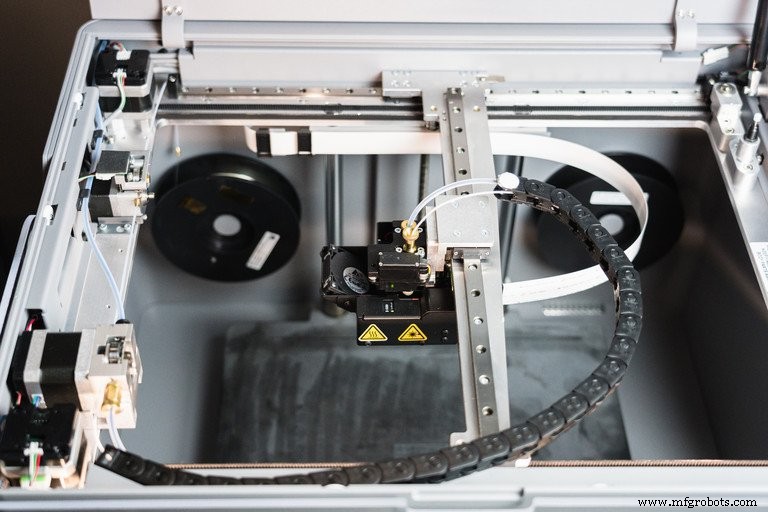
Learn more about Markforged printers
SLA
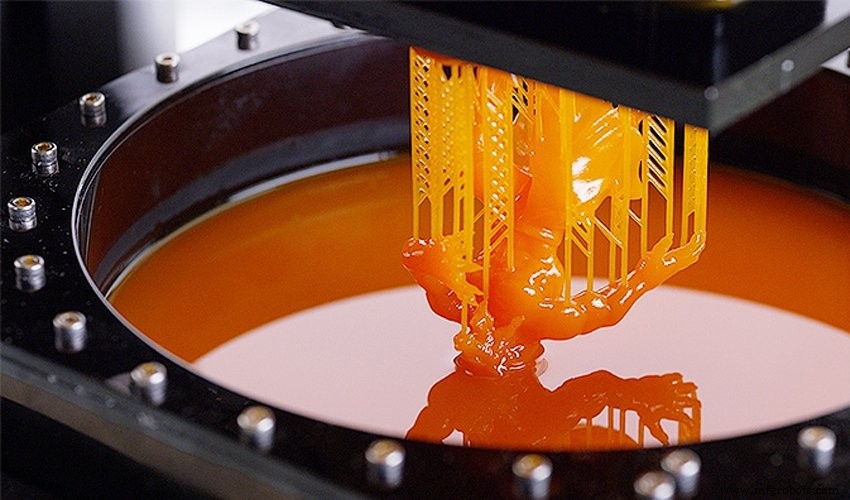
FDM vs SLA
3D printing
- FDM 3D Printing Today: Current State, Milestones, and Future Outlook
- Understanding SLA 3D Printing: Process, Benefits, and Applications
- PolyJet 3D Printing Explained: How It Differs from FDM and SLA
- Understanding FDM 3D Printing: A Complete Guide
- SLA vs. FDM Prototyping: Which 3D Printing Method Delivers Better Accuracy and Speed?
- SLA vs. FDM: A Clear Guide to Choosing the Right 3D Printing Technology
- FDM 3D Printing: Choosing Between Desktop and Industrial Solutions
- SLA vs. FDM: Comparing the Leading 3D Printing Technologies for Quality and Precision
- Understanding the Key Differences Between FDM and SLA 3D Printing Technologies
- A Retrospective on FDM 3D Printing: Key Milestones and Components