



Understanding Network Topologies: From Point‑to‑Point to Ring and Star
Point‑to‑Point
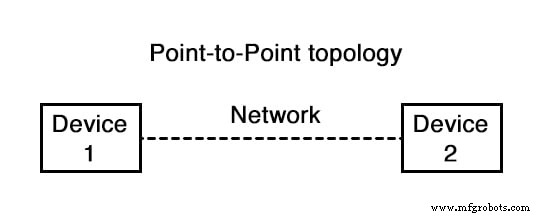
Connecting two digital devices directly creates a dedicated link known as a point‑to‑point topology. The wiring is represented as a single line between the two endpoints, but the underlying media can be twisted‑pair copper, coaxial cable, optical fiber, or even a seven‑conductor BogusBus.
Bus Topology
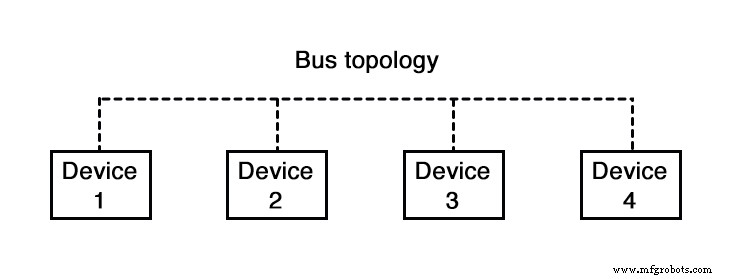
A bus network uses a shared transmission medium to which all nodes connect. The layout is simple: a single cable runs through the entire network, with each device attaching to it via a tap.
Star Topology
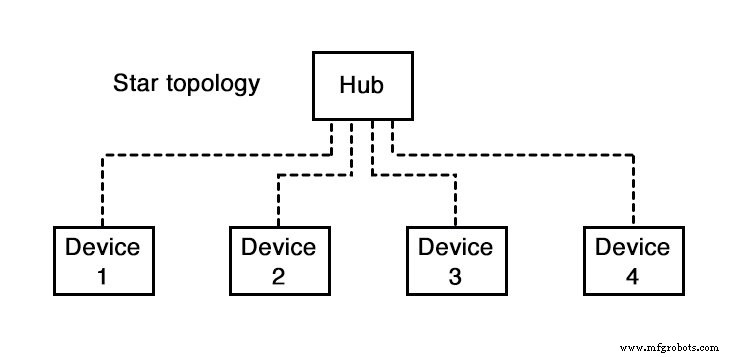
In a star layout, each node links to a central hub or switch. This hub acts as the local server, routing traffic between devices and simplifying troubleshooting.
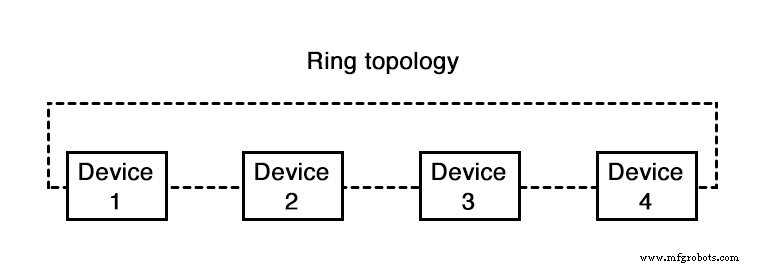
Industry standards often dictate the preferred topology. For example, Ethernet is traditionally implemented on a bus but can be configured as star or ring with appropriate equipment. RS‑232C is almost exclusively point‑to‑point, while token ring operates solely in a ring topology.
Advantages and Disadvantages of Common Topologies
Point‑to‑Point
- Ideal for two‑node connections.
- Simple installation and maintenance.
- Unidirectional or bidirectional traffic with minimal collision risk.
Bus
- Easy to install and extend; new nodes can be added with minimal cabling.
- All traffic is broadcast, limiting bandwidth per node and posing security risks.
- A single cable fault can segment the network, isolating groups of nodes.
Star
- Central hub isolates traffic; a failure in one branch doesn’t affect others.
- Supports private communication between selected node groups.
- Single point of failure: if the hub fails, the entire network goes down.
Ring
- High reliability: each node connects to two neighbors, so a single break doesn’t collapse the network.
- Requires specialized device design and can be disruptive when adding or removing nodes.
- Like bus networks, traffic is broadcast, so bandwidth per node is shared.
In many industrial settings, multiple ring topologies are combined to achieve optimal performance, reliability, and scalability.
Industrial Technology
- Parallel vs Serial Electrical Signals: How Differential Voltage and Modulation Enhance Reliability
- Understanding Network Protocols: From Physical Layer to Advanced Arbitration
- Network Analysis Explained: Advanced Techniques for Complex Electrical Circuits
- Foundations of Network Theorems: Simplifying Circuit Analysis
- Low‑Power, Wide‑Area (LPWA) Networks: A Comprehensive Overview
- Mesh Network Topology for M2M: Benefits, Challenges, and Best Use Cases
- Supplier Scouting: Strategic Solutions for Small Businesses
- Python Network Programming: Master Sockets & Advanced Protocols
- Network Automation: The Key to Efficiency and Value
- How Global Manufacturing Networks Boost Efficiency, Quality, and Market Reach