



Discover the Production Process of Polyvinyl Chloride (PVC)
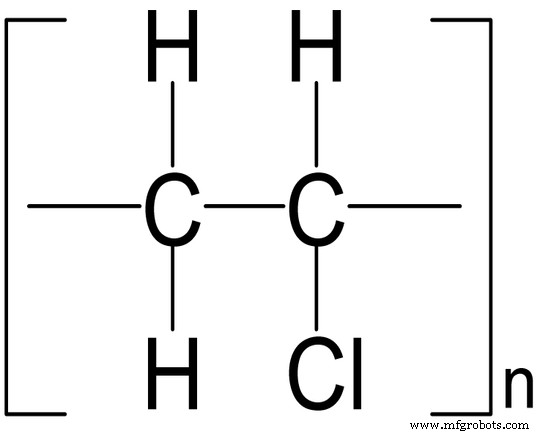
In everyday life Polyvinyl Chloride (PVC) is all around us, in various forms of products like 24% in pipes, 19% films & sheets, 17% profiles and tubing, 10% wiring and tubing, 8% bottles, 5% flooring products, 4% coated fabrics, 2% moulded goods and 2% vinyl goods. It is a major plastics material which finds extensive use in building, transport, packaging, electrical/electronic and healthcare applications.
Need of PVC in everyday life!
We are using PVC because; they make life safer, bring comfort and joy, and help conserve natural resources. When used for car components, PVC thus helps to reduce the risk of injuries in case of accidents. In fashion, furniture and all types of indoor and outdoor accessories, PVC open up functional and design opportunities that are both visually striking and fundamentally practical. In short, PVC enables us to live better, richer and, perhaps, even more, beautiful lives.
But who & how PVC was discovered?
PVC was accidentally synthesized in 1872 by German chemist Eugen Baumann. The polymer appeared as a white solid inside a flask of vinyl chloride that had been left exposed to sunlight.
Chemical Properties of PVC
PVC contains high levels (57%) of chlorine content. PVC is chemically resistant to acids, salts, bases, fats, and alcohols.
Thermal Properties of PVC
PVC starts to decompose when the temperature reaches 140 °C, with melting temperature starting around 160 °C. The heat stability of raw PVC is very poor, so adding heat stabilizers during the manufacturing process is necessary in order to ensure the product's properties.
Manufacturing Process
Manufacturing polyvinyl chloride (PVC) involves
STEP 1] Ethylene dichloride production
STEP 2] Vinyl chloride monomer production
STEP 3] Polyvinyl chloride production
STEP 1]
Chlorine is extracted from sea salt via electrolysis, and ethylene is derived from hydrocarbon raw materials. These are reacted to produce ethylene dichloride (1,2-dichloroethane).
C2H4 + Cl2 = C2H4Cl2
ethylene + chlorine = ethylene dichloride
STEP 2]
The ethylene dichloride is then decomposed by heating in a high temperature furnace or reactor.
C2H4Cl2 = C2H3Cl + HCl
ethylene dichloride = vinyl chloride monomer + hydrogen chloride
The hydrogen chloride is reacted with more ethylene in the presence of oxygen (a reaction known as oxychlorination).
2HCl + C2H4 + ½ O2 = C2H4Cl2 + H2O
This produces further ethylene dichloride. The resultant ethylene dichloride is decomposed according to the above equation, and the hydrogen chloride is again returned for oxychlorination.
C2H3Cl + HCl2 + H2O
The overall reaction can be shown by adding together the above equations:
2C2H4 + Cl2 + ½ O2 = 2C2H3Cl +H2O
Ethylene + Chlorine + oxygen = VCM + water
STEP 3]
PVC is made using a process called addition polymerization. This reaction opens the double bonds in the vinyl chloride monomer (VCM) allowing neighboring molecules to join together creating long chain molecules.
nC2H3Cl = (C2H3Cl)n
vinyl chloride monomer = polyvinylchloride
Applications
- It is used for sewerage pipes and other pipe applications where cost or vulnerability to corrosion limits the use of metal.
- PVC is strong, lightweight, durable and versatile characteristics make it ideal for window profiles.
- PVC has been used for hundreds of life-saving and healthcare products for almost 50 years being used in surgery, pharmaceuticals, drug delivery and medical packaging.
- PVC brings both high-performance qualities and important cost benefits to the automotive industry. It is used as interior door panels and pockets, sun visors, seat coverings, headlining, seals, mud flaps, underbody coating, floor coverings, exterior side moulding and protective strips and anti-stone damage protection.
- PVC is commonly used as the insulation on electrical cables.
- PVC has become widely used in clothing, to either create a leather-like material.
Industrial Technology
- How Tungsten Crucibles Are Manufactured
- How Stainless Steel Is Produced: From Smelting to Finished Products
- From Silk to Synthetic: How Nylon Is Made
- How FRP Is Made – From History to Modern Production
- From PAN to Performance: The Expert Guide to Carbon Fiber Manufacturing
- How Stainless Steel Is Made: From Raw Materials to Finished Products
- The Steel-Making Process Explained: From Iron Ore to Alloy
- Inside the Manufacturing of Electronic Circuits
- PVC Machining Guide: Properties, Benefits, Applications & Expert Tips – CNCLATHING
- Polyvinyl Chloride (PVC): Properties, History, and Modern Applications