



From Silk to Synthetic: How Nylon Is Made
How Nylon Is Made
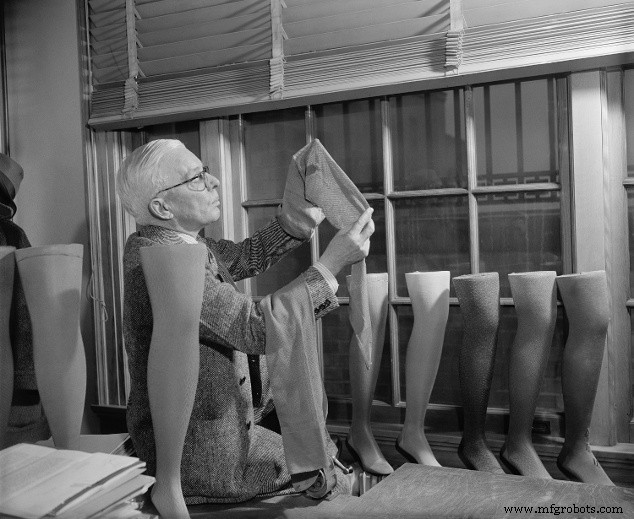 For centuries, inventors sought a synthetic replacement for silk.
In the early 1880s, Sir Joseph Swan experimented with dissolving the inner bark of mulberry trees to produce filaments. Though Swan recognized that the material could be woven, he pursued it mainly for light‑bulb filaments. The breakthrough came in 1889 when French chemist Count Hilaire de Chardonnet introduced rayon, or “artificial silk,” at the Paris Exhibition. He is hailed as the father of the rayon industry.
Wallace Carothers and the Birth of Nylon
On February 28, 1935, American chemist Wallace Carothers, working at DuPont, synthesized nylon 6/6, a “miracle fiber” whose name reflects its chemical formula. In 1938, German chemist Paul Schlack at I.G. Farben polymerized caprolactam to produce nylon 6. Unlike earlier synthetic silks that relied on cellulose, nylon was made entirely from petrochemicals. DuPont began commercial production in 1939, and nylon quickly replaced silk in parachutes, toothbrushes, and women’s stockings. The San Francisco Exposition in February 1939 showcased nylon stockings, sparking an immediate sensation.
Nylon’s Role in the War Effort
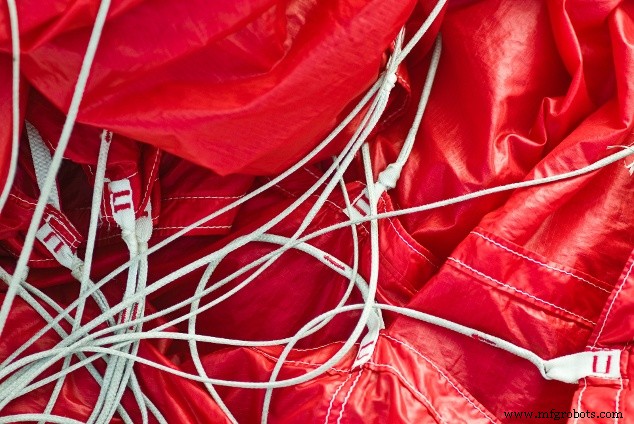 The onset of WWII in December 1941 halted nylon stockings, as all production was redirected to the war effort. Nylon replaced Asian silk in parachutes, tires, tents, ropes, ponchos, and even the high‑grade paper used in U.S. currency. By war’s end, cotton still dominated at 75%, but synthetic fibers had risen to 15%. Post‑war, nylon stockings surged back into popularity.
The Many Uses of Nylon
Today, nylon remains integral to clothing, outdoor gear, and sports uniforms. A landmark example is Neil Armstrong’s moonwalk suit—multi‑layered nylon and aramid fabrics—along with the nylon flag he planted. Nylon’s durability, abrasion resistance, and dimensional stability make it a favorite for high‑performance applications.
Nylon is a strong, synthetic fiber that resists abrasion and retains shape after washing. However, it degrades under UV light unless UV stabilizers are added and is flammable without flame retardants. It also absorbs more water than many other polymers. Chemically, nylon is a thermoplastic polyamide composed of repeating units linked by peptide bonds. Nylon 6/6 melts at 509 °F (265 °C), while nylon 6 melts at 428 °F (220 °C).
How Nylon Is Made?
Nylon is produced through condensation polymerization, where di‑functional monomers—one containing amine groups and the other carboxylic acid groups—react to form amide linkages. For nylon 6/6, the monomers are adipic acid and hexamethylene diamine; for nylon 6, a lactam or amino acid is used. The reaction releases water, which must be removed to drive the polymerization forward. The “6” or “6/6” designation refers to the number of carbon atoms between the functional groups in each monomer.
At Craftech, we supply thousands of fastener and custom part options in nylon, as well as a broad range of other plastics.
Questions? Comments? Let me know in the comments section below.
Looking for more information on different nylon grades? Download our free guide!

Resin
- How Tungsten Crucibles Are Manufactured
- How Ceramic (Ferrite) Magnets Are Manufactured
- How Stainless Steel Is Produced: From Smelting to Finished Products
- How FRP Is Made – From History to Modern Production
- From PAN to Performance: The Expert Guide to Carbon Fiber Manufacturing
- How Stainless Steel Is Made: From Raw Materials to Finished Products
- Discover the Production Process of Polyvinyl Chloride (PVC)
- The Steel-Making Process Explained: From Iron Ore to Alloy
- Stainless Steel Fabrication: From Raw Materials to Finished Products
- The Production Process of Nylon: From Polymers to Durable Fibers