



CNC Machines Explained: How They Work, Types, Benefits & Applications – PDF Guide
Today at The Mechanical post we’ll learn about What is a CNC ? its construction, working, its types, advantages, limitations and applications.
You can download and print the PDF by clicking on the button provided at the end of the article.
What is a CNC ?
The full form of CNC machine is Computer Numerical Control. A CNC machine is a computer-controlled machine used for performing various functions automatically which were once done on conventional machines like drilling, milling, turning etc, with the help of a computer. The CNC machine can be said to be a robot that acts according to the program. The CNC machine is programmed or controlled by a computer and has a wide range of applications including Industrial automation. The CNC machine performs the required task as specified by the numeric code entered into the machine. These codes are the set of commands with the help of which the operator can instruct the machine what function is to be performed. These codes are called G-codes and M-codes. Each code has a specific function.CNC machining
CNC machining can be defined as, ” The manufacturing process in which a computer code commands the machine to perform various machining processes on the workpiece “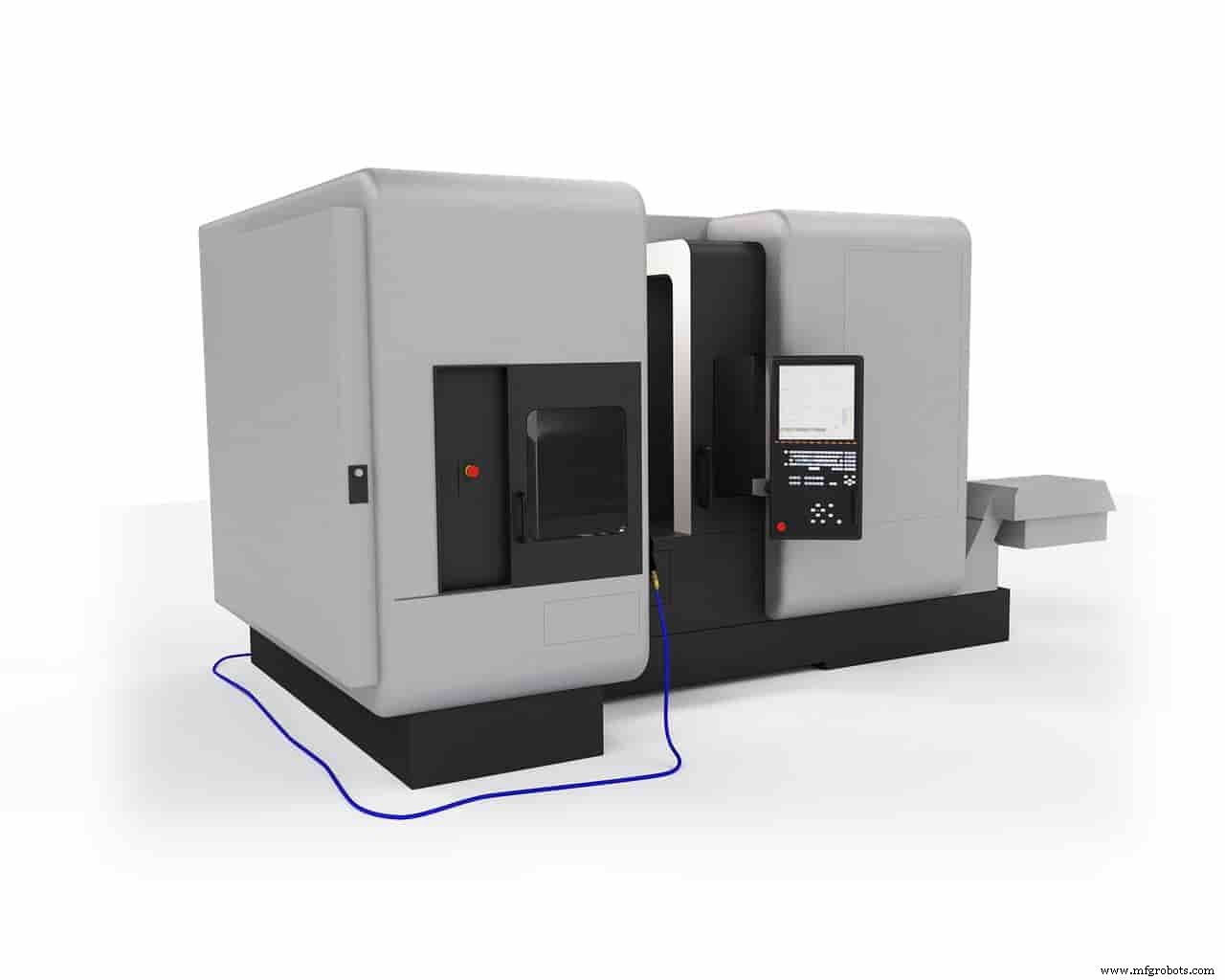
The CNC machine is capable of machining in 3 axes simultaneously. Some advanced CNC machines are capable of machining in 5 axes at the same time.
Basic components of CNC machine
The basic structure or components of a CNC machine are :- Input device
- The machine control unit (MCU)
- Machine tool
- Driving mechanism
- Display unit
Input device
Input devices are those devices that are used to feed the program into the machine. Older CNC’s used punch tapes or magnetic tapes for program input, however, they have been replaced by digital ones called CNC controllers.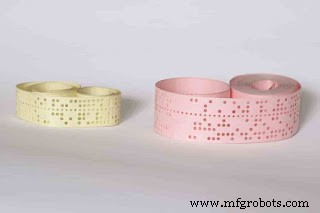 |
| TedColes, Public domain, via Wikimedia Commons |
Machine Control Unit (MCU)
The machine control unit is the brain of the system which receives input, processes it, and then executes the program accordingly. The MCU is capable of controlling the tool movement, control the driving system, turn ON/OFF the various functions like turn ON/OFF spindle, turn ON/OFF the coolant etc. For eg: if the operator has specified that the coolant must be switched OFF after completion of a certain process, the MCU then sends signals to switch OFF the coolant.Machine tool
The machine tool is one of the basic components of the CNC machine. It is the component that performs the operations to convert the raw material into the finished product. The machine tool is controlled by the MCU. The machine tool moves forward, upwards, downwards etc; thus removing the material from the workpiece little by little. How much should be the spindle speed, when shall the coolant turn ON / OFF, how much should be the feed rate? all of these parameters are specified by the operator in the form of code and thus the machine tool operates accordingly.Driving mechanism
The driving mechanism consists of a drive motor and ball leadscrew arrangement with a feedback mechanism. The MCU signals the motor to rotate, this in turn rotates the ball leadscrew which is connected to the drive motor. The table slide upon which the workpiece is placed for machining is mounted on the leadscrew. So as the leadscrew rotates the table slide moves to and fro accordingly. A feedback mechanism is placed at the end of the leadscrew to signal the MCU about the changes. This enables higher accuracy in the table slide movement.Display unit
It is a monitor that displays the input, output, and other useful system information and settings.Working of CNC machine
The following are the steps on how a CNC machine works:- The operator enters the G-codes and M-codes into the CNC controller and starts the process.
- This program is then processed by the Machine Control Unit.
- The MCU then instructs the machine tool and dive mechanism to take positions.
- Then the workpiece is machined according to the program entered into it.
- The feedback system gives feedback to the MCU.
- The MCU also switches ON/OFF the different components according to the program.
- The MCU also sends the output or feedback to the operator via the display.
You might also like to read:
- What is GMAW ? detailed explanation
- Rolling process – working, application and advantages
- What is extrusion ? working, types, advantages and limitations
Types of CNC machines
The different types of CNC machines are :- CNC Milling machine
- CNC Lathe machine
- CNC Router
- CNC Plasma Cutter
- CNC Electric Discharge Machines
CNC Milling machine
The CNC milling machine is similar to the conventional milling machine, however, it is automatic as well as more accurate than the conventional milling machine.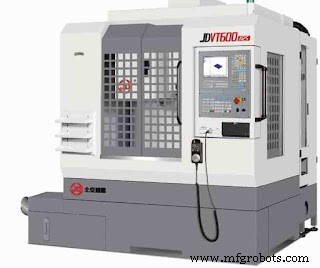 |
| HafeezJD, CC BY-SA 4.0, via Wikimedia Commons |
CNC Lathe machine
A CNC lathe can be said as an automatic lathe machine. The CNC lathe can perform turning, taper turning, drilling, grooving, knurling and almost all operations that can be performed on a lathe.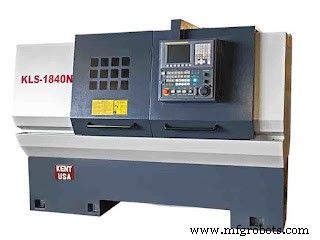 |
| Mike Zielinski, CC BY-SA 4.0, via Wikimedia Commons |
CNC Router
The CNC router is an upgrade to the handheld router. It is capable of cutting materials like steel, aluminum, foam, plastics, brass etc. Most of the routers can machine in 3 axes (i.e X, Y, Z) Also there are 4, 5 and 6 axes CNC Routers available in the market.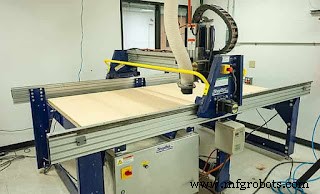 |
| Rickwashburn1, CC BY-SA 4.0, via Wikimedia Commons |
CNC Plasma Cutter
The CNC plasma cutter uses a plasma torch to cut metals by melting them. It is usually used to cut metal sheets. It can easily cut heavy metals like steel. These machines are similar to CNC Routers, however, they are restricted to 2 axes only.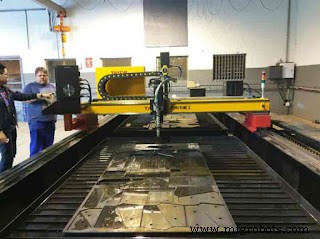 |
| Zgyricky, CC BY-SA 4.0, via Wikimedia Commons |
CNC Electric discharge machine
This machine uses electric sparks to melt the metal and thus machine it. The tool here in this case is an electrode. There is a gap between the tool and the workpiece. A dielectric fluid is continuously passed through the gap. The whole process is computer-controlled.CNC laser cutting machine
The CNC laser cutting machine is similar to the CNC plasma except that instead of plasma a laser beam is used to cut the workpiece. They are generally used for cutting metals, wood, and plastic.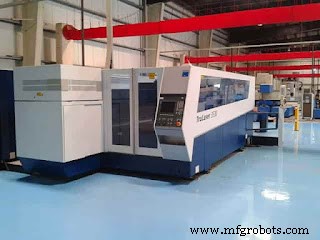 |
| S zillayali, CC BY 3.0, via Wikimedia Commons |
Advantages of CNC machines
The advantages of using a CNC machine are :- The accuracy of machining the workpiece is very high.
- CNC’s can be used to manufacture components with tighter tolerances.
- The production rate is high due to less idle time as well as reduced errors.
- Human errors are reduced to a great extent.
- The time required to finish the machining process is comparatively less.
- These machines are highly reliable due to high accuracy.
- Increased productivity.
- Best suited for large scale production.
- The program can be saved and can be performed later on.
- It can be used 24 hours a day with very little downtime.
- Complex designs can be produced in minimum time with high accuracy.
Limitations of CNC machines
- The major limiting factor for CNC machine is that they are very expensive.
- These machines are complex in build.
- They require a considerable floor area.
- Control systems used in CNC are expensive.
- Due to the complex construction of CNC’s, their maintenance cost is high.
Uses of CNC machine
The following are the applications of CNC machines :- They are used for manufacturing shafts, gears, square jobs, rounded jobs, rectangular jobs, threaded jobs, tapered jobs, milled jobs, drilling holes, making grooves etc.
- They are used in fabricating industries for cutting metal sheets.
- CNC machines are also used widely in the wood industry.
- CNC machines are also used to carve into the workpiece.
That’s an overview of the CNC machine. If you like this post or have any suggestions do let us know in the comments we would love to hear it from you.
Also do consider subscribing by clicking the subscribe button and never miss a post by us!
We’ll be back soon with another interesting article till then Keep learning and read The Mechanical post!
Comprehensive Guide to CNC G‑Codes & M‑Codes – Downloadable PDF Included
Understanding the Rolling Process: Definition, Mechanics, Types, Benefits, and Applications
Industrial Technology
- Virtual Machines Explained: Types, Architecture, and Key Advantages
- Jig Boring Machines: Types, Functions, and Benefits
- Lathe Machines Explained: Types, Functions & PDF Guide
- Woodruff Keys Explained: Types, Functions, Benefits & Applications
- Ultrasonic Machining (USM): Parts, Process, Applications & Benefits – PDF Guide
- Electric Discharge Machining (EDM): Process, Benefits, and Applications
- Comprehensive Guide to CNC G‑Codes & M‑Codes – Downloadable PDF Included
- Understanding the Rolling Process: Definition, Mechanics, Types, Benefits, and Applications
- Lathe Machines Explained: Components, Operations, and Types – Free PDF Guide
- What Products Can Be Created with CNC Machines