



Norman Joseph Woodland, Co‑Inventor of the Barcode, Passes Away at 91
Today we’d like to honor the co-inventor of the bar code, Norman Joseph Woodland, who passed away days ago at the age of 91. Mr. Woodland’s invention has no doubt shaped the face of commerce and technology for decades to come.
According to yesterday’s USA Today article, Mr. Woodland and Bernard Silver were students at what is now Drexel University in Philadelphia when Silver overheard a grocery store executive asking an engineering school dean to guide students into research on how product information could be captured at checkout, said Woodland’s daughter, Susan Woodland.
From there, Woodland dropped out of graduate school to work on a bar code idea that would symbolically capture details about an item, his daughter said. One day, Woodland drew Morse code dots and dashes as he sat on the beach and absent-mindedly left his fingers in the sand where they traced a series of parallel lines. According to his daughter, this was Woodland’s moment of inspiration. He said, “Instead of dots and dashes I can have thick and thin bars.”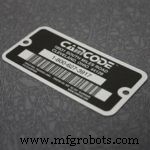
In 1952, a patent was issued for Woodland and Silver’s code patterned on concentric circles, which looked like a bull’s eye. Woodland had joined IBM in 1951 hoping to develop the bar code, but the technology wasn’t accepted for more than two decades until lasers made it possible to read the code easily, the technology company said. In the early 1970s, Woodland moved to Raleigh to join a team at IBM’s Research Triangle Park, N.C., facility. The team developed a bar code-reading laser scanner system in response to demand from grocers’ desires to automate and speed checkout while also cutting handling and inventory management costs.
IBM promoted a rectangular bar code that led to a standard for Universal Product Code (UPC) technology. The first product sold using a UPC scan was a 67-cent package of Wrigley’s chewing gum at a supermarket in Troy, Ohio, in June 1974, according to GS1 US.
Today, about 5 billion products are scanned and tracked worldwide every day, all thanks to Norman Joseph Woodland. From products at the grocery store to machinery with required maintenance updates, bar code labels have made life easier and more efficient.
Camcode joins the world in thanking Norman Joseph Woodland for his accomplishments in automatic data capture through bar code labels.
Industrial Technology
- DeMorgan’s Theorems: Mastering Boolean Complementation and Gate Equivalence
- Bar Code Scanner: Technology, Design, and Future Trends
- Choosing Between Data Matrix and QR Codes: Which Is Best for Your Business
- Understanding Symbologies: The Backbone of Asset Tag Barcodes
- How Barcode Scanners Influence Scan Range and Accuracy
- Elevate Warehouse Efficiency: Maximize Space Using Barcode Labels
- Understanding QR Codes: Definition, Uses, and Benefits
- Unit 3: Mastering the Sine Bar for Precise Angle Measurement
- Alloy 52 Bar: High-Performance Nickel-Iron Steel with Superior Strength
- Understanding the ASME Code: Why Certified Welders Matter