



Understanding Ultraviolet Light: Risks, Sources, and Safety Measures
People may hear about ultraviolet (UV) light and UV rays from dermatologists and eye doctors. Still, in reality, the general public may not understand the intricate ins and outs of this kind of light—or the workplace hazards ultraviolet radiation can present.
UV light and radiation are naturally present in sunlight but can also be artificially produced by products like arc welders, mercury-vapor lamps, tanning lamps, and backlights.
MCR Safety understands the value of education regarding ultraviolet light and radiation and the importance of wearing protective gear to avoid the risks of exposure to it. Certain occupations place individuals at a higher risk for damage from UV radiation, and protective gear can help limit exposure and associated risks. This article will take an in-depth look at ultraviolet light, the risks that accompany exposure to ultraviolet rays, and how to stay protected from harmful UV rays—especially in the workplace.
Ultraviolet Light Definition
What is ultraviolet light? It's a kind of electromagnetic radiation that emanates from the sun, and it represents 10% of all the sun’s radiation. Ultraviolet technically means “beyond violet,” with violet representing the highest frequency of visible light. Ultraviolet light is what makes blacklight posters glow and also what gives people their summer tans and sunburns.
As MCR highlights in their article A Break Down of Blue Light Glasses, electromagnetic radiation, or UV light, is transmitted in waves or particles. It travels at different wavelengths and frequencies, known as the electromagnetic (EM) spectrum. This spectrum is broken up into seven segments, established in order of decreasing wavelength and increasing frequency, and is shown below.
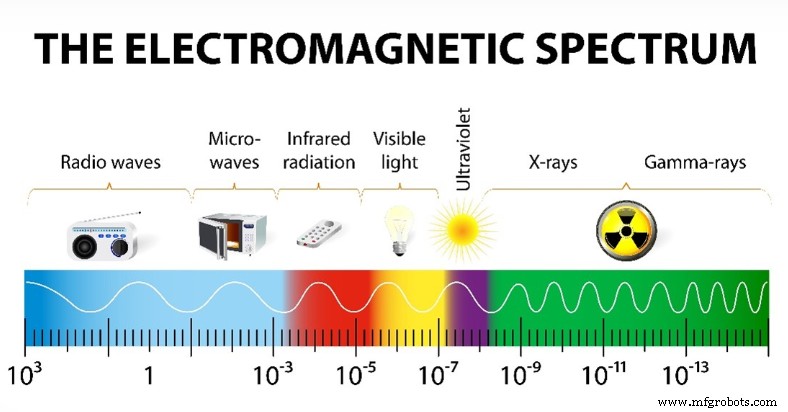 UV light is a kind of electromagnetic radiation measured in frequencies and wavelengths. It has a shorter wavelength than visible light.
Unfortunately, UV radiation can damage a person’s skin, which is why protection is so important. Wearing personal protective equipment (PPE) when working in or around UV light can help protect workers. MCR will cover that more in-depth below; first, let’s talk more about the different types of UV light.
Spectrum and Wavelength Classifications
There are three different kinds of ultraviolet light rays, segmented based on their energy. These divisions can be compared to the different wavelengths of visible light colors.
Here are the three types of UV light:
- UVA Light: UVA light, also called near UV, has wavelengths of 315 to 400 nanometers. It also has the least energy of all UV rays. These are the UV rays that cause the skin cells to age and can cause indirect damage to a cell's DNA. UVA rays are most commonly linked to long-term skin damage (like wrinkles or sunspots) but may also play a role in some skin cancer.
- UVB Light: UVB light, also called middle UV, has wavelengths of 280 to 315 nanometers and has a bit more energy than UVA rays. These rays can damage the DNA in skin cells and are the leading cause of sunburns. They are also linked to most skin cancers.
- UVC Light: UVC light, also called far UV, has wavelengths of 180 to 280 nanometers and has more energy than other kinds of UV rays. Luckily, these rays tend to react with the ozone high above the earth's surface and don't generally reach the ground. This means they are not usually a risk for skin cancer. However, UVC rays can come from other sources like arc welding torches, mercury lamps, and UV-sanitizing bulbs that kill bacteria in the water and on surfaces.
Higher-energy UV rays are so intense that they even have the power to ionize an atom or molecule and damage the DNA found in cells, potentially leading to cancer. However, even the highest UV rays are not powerful enough to penetrate deep into the body, which means UV light does the most damage to the skin.
Even though we can't see it, ultraviolet light is everywhere. While the ozone layer absorbs quite a lot of the UV rays that come from the sun, soaking up 99 percent of UVC rays and up to 90 percent of UVB rays. About 50 percent of UVA rays, the UV light that does manage to come through, can be pretty damaging to a person's skin and eyes and even trigger skin cancer.
Sunlight Risks
Prolonged or intense exposure to ultraviolet light and radiation can present significant health risks to both our eyes and our skin. Let's break down a couple of ways it impacts an individual's health.
Photokeratitis and Long-Term Eye Damage
Our eyes are especially susceptible to UV radiation, and even a short period of exposure can lead to painful, temporary eye damage known as photokeratitis. It can also cause temporary damage and inflammation to your cornea, as well as cause conjunctivitis. In particular, UVA and UVB rays coming from the sun can result in long-term damage to the eye and even impact your vision.
Long-term UV radiation exposure can increase your risk of developing cataracts or macular degeneration. It's important to note that this exposure adds up over time, so exposure now can affect a person's vision down the road.
Skin Damage and Skin Cancer
In addition to premature aging and wrinkles, UV radiation puts those exposed at a much higher risk of skin cancer. Most skin cancers directly result from exposure to UV rays, including basal cell and squamous cell cancers, the most common kinds of cancers. UV exposure also increases the risk of melanoma, a more severe but less common kind of cancer. While most of this UV exposure comes from sunlight, skin cancer has also been correlated to exposure to some manufactured UV light sources.
While all UV radiation poses some risk to human health, not all UV light is equally dangerous. UVC light is absorbed by the atmosphere before reaching the earth, posing little risk. UVA and UVB light, however, better penetrate the ozone layer and can damage skin and eyes. About 90 percent of UVB rays are absorbed by the atmosphere, but 50 percent of UVA light filters through. While weaker in strength than UVB radiation, UVA radiation penetrates the skin more deeply and is more prevalent than UVB light, potentially causing more damage.
Continue reading this blog in its entirety to learn more about protecting your workers from the adverse affects of UV light and see the protective clothing and safety glasses that MCR Safety has to offer.
Previously Featured on MCR Safety's blog.
Industrial Technology
- Gas Lanterns: Evolution, Design, and Modern Manufacturing
- Laser Pointer: Design, Manufacturing, and Safety Overview
- Flashlight: From Inception to Modern Innovation
- The Kaleidoscope: From Brewster’s Science to Modern Design
- Semiconductor Lasers: Precision Light Generation for Modern Technology
- The Art and Science of Photographic Processes: From Daguerreotypes to Modern Film
- Traffic Signals: Engineering, History, and Future Innovations
- From Fire to Filament: The Evolution and Production of the Modern Light Bulb
- Optical Fiber: Technology, Production, and Future
- Mastering LED Strip Accessories: Connect, Control, and Customize Your Lighting