



Understanding LDRs: How Light-Dependent Resistors Work
What is ldrs? LDR is an acronym for a light-dependent resistor. This resistor is commonly known as a photoresistor. It is a particular type of resistor that operates from the principle that its resistance is dependent on the light intensity. Additionally, this operating principle is known as the photoconductivity principle. The photoconductivity principle explains that the opposition will reduce when the light increases. Otherwise, when the amount of sunlight reduces, the resistance will rise.
This article discusses the working of the LDR, its structure, and its applications in electric energy projects.
How is the LDR Made?
Importantly, this electronic device has photosensitive materials like Cadmium Sulphide (CdS) in a zig-zag shape. However, some geographical regions have banned using Cadmium Sulphide in projects. Instead, other photosensitive materials to use are Indium Antimonide (InSb) and Lead Sulphide(PbS).
On both ends of the zig-zag line, there are two metal contacts. These contacts help create a connection with the LDR forming an energy band. Notably, this main feature distinguishes a Light Dependent Resistor from a phototransistor or a photodiode. Also, this feature means an LDR does not possess a P-N junction.
Additionally, the zig-zag line is a delicate material that needs protection. Hence, the transparent coating on the zig-zag shape offers this protection. Also, the layer is transparent to allow light from the environment to penetrate through to the photosensitive material.
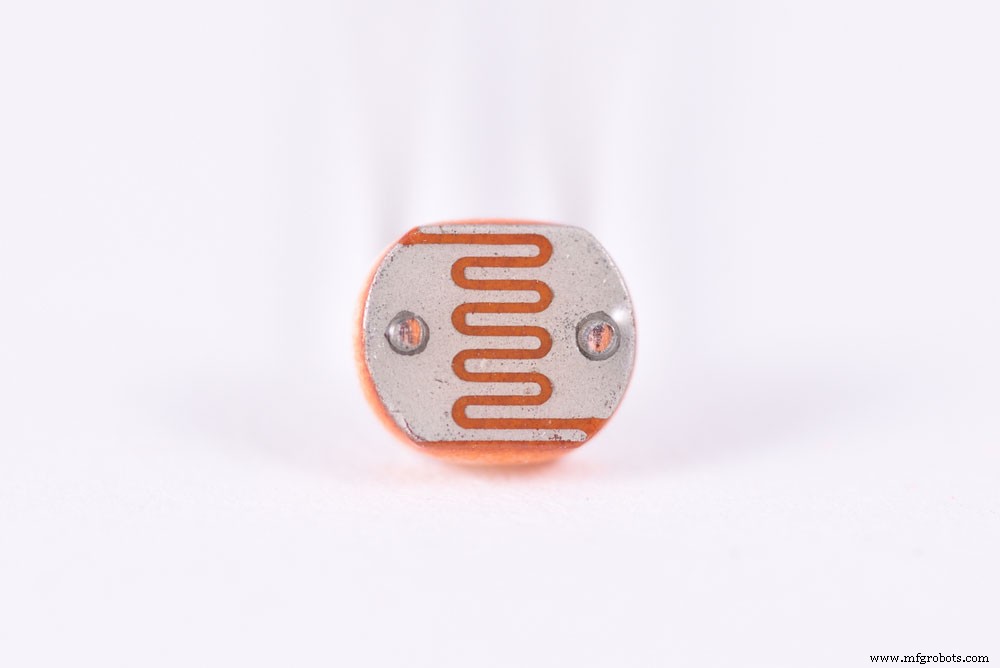
(a photoresistor showing the transparent coating.)
The Type of LDR
There are two types of LDR. These are the intrinsic photoresistor and the extrinsic photoresistor. Notably, the two photoresistors are different because the intrinsic photoresistor has pure semiconductor materials. At the same time, the extrinsic photoresistor uses semiconductor materials that have undergone doping and contain some impurities.
Germanium and silicon are some examples of pure semiconductor materials. When an energized incident light lands on this semiconductor material, the electrons in the region gain this energy. Then, these electrons get triggered, and some of them travel to the conduction band.
An impure semiconductor makes up an extrinsic photoresistor. These impurities work by creating a new energy band over the valence band. As a result, you’ll need less power for electrons transfer from the conduction band because of the lesser energy gap.
Both these resistors are light-dependent; therefore, you can use automatic street lights, light sensors, or light meters. Also, you can use these resistors in applications that require light sensitivity.
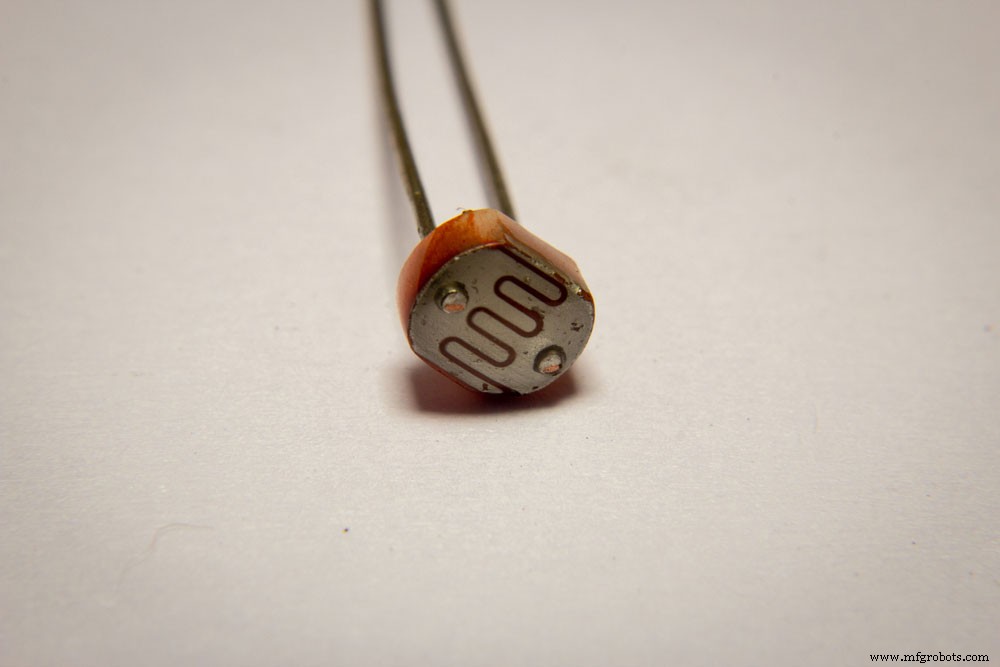
(a photoresistor image.)
How do Light-dependent Resistors Work?
Basic Understanding
To understand how a semiconductor works, you must know how a good conductor and insulators operate. A good conductor contains large numbers of free electrons that move in different directions when you apply energy. On the other hand, an insulator possesses a higher resistance, therefore, contains very few electrons. As a result, no movement of the electrons is present.
However, an LDR uses a semiconductor. A semiconductor has few electrons that can move from one region to another. Additionally, most semiconductor electrons are immobile because they are subdued in the crystal lattice. Consequently, due to the state of these materials, they offer very high resistance.
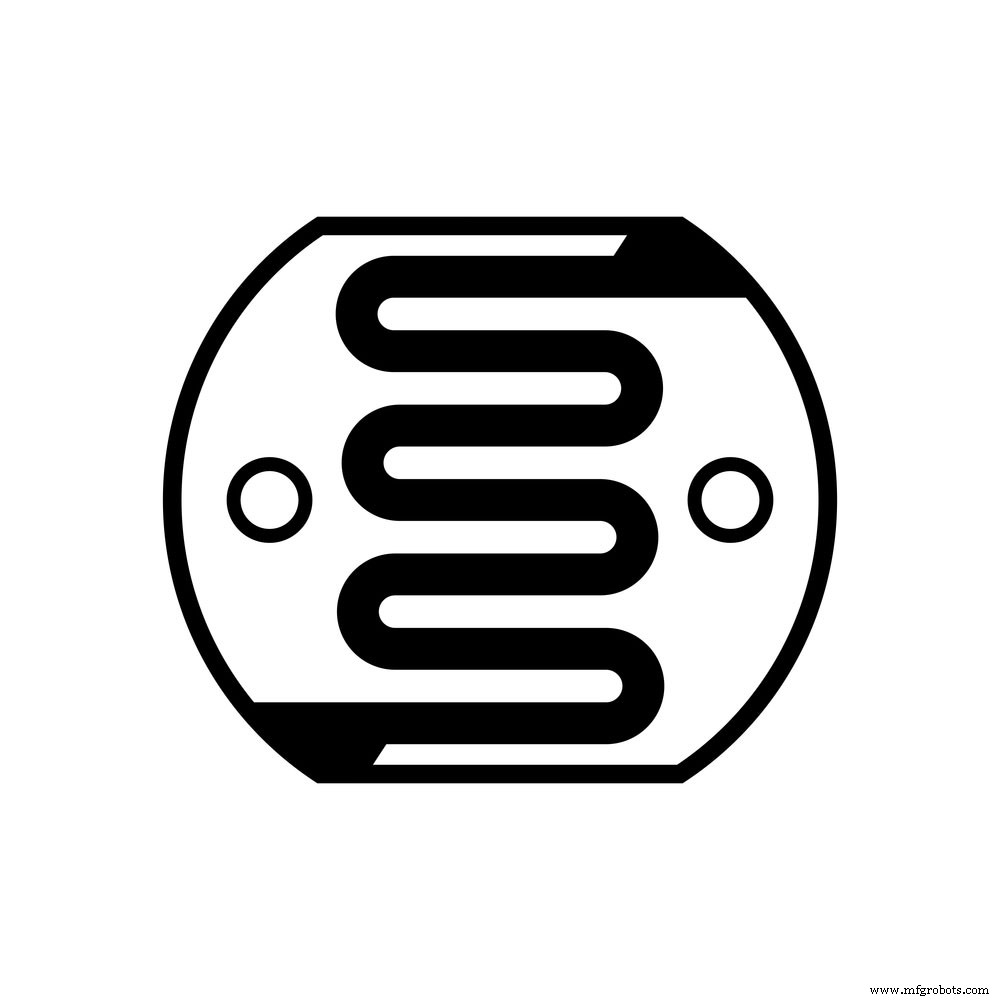
(light-controlled variable resistor LDR)
Principle explained
As aforementioned, the LDR abides by the principle of photoconductivity. This principle is that a drop in light intensity level brings about a rise in resistance. At any given time when illumination from the environment falls on the photosensitive material, the photosensitive material absorbs this energy. Then, electrons in this photosensitive matter, particularly in the valence band, get triggered and travel to the conduction band. Finally, once the electrons reach the conduction band, they raise the level of conductivity when the intensity of light rises. Therefore, an increase in conduction level corresponds to the rise in the light intensity.
Also, the charged particles can only move from the valence band to the conduction band. Importantly, this energy infrastructure only happens if the energy in the incident light is greater than the bandgap energy.
When in gloomy places, the LDR has its resistance at its highest. However, its resistance reduces once you expose the device to light rays.
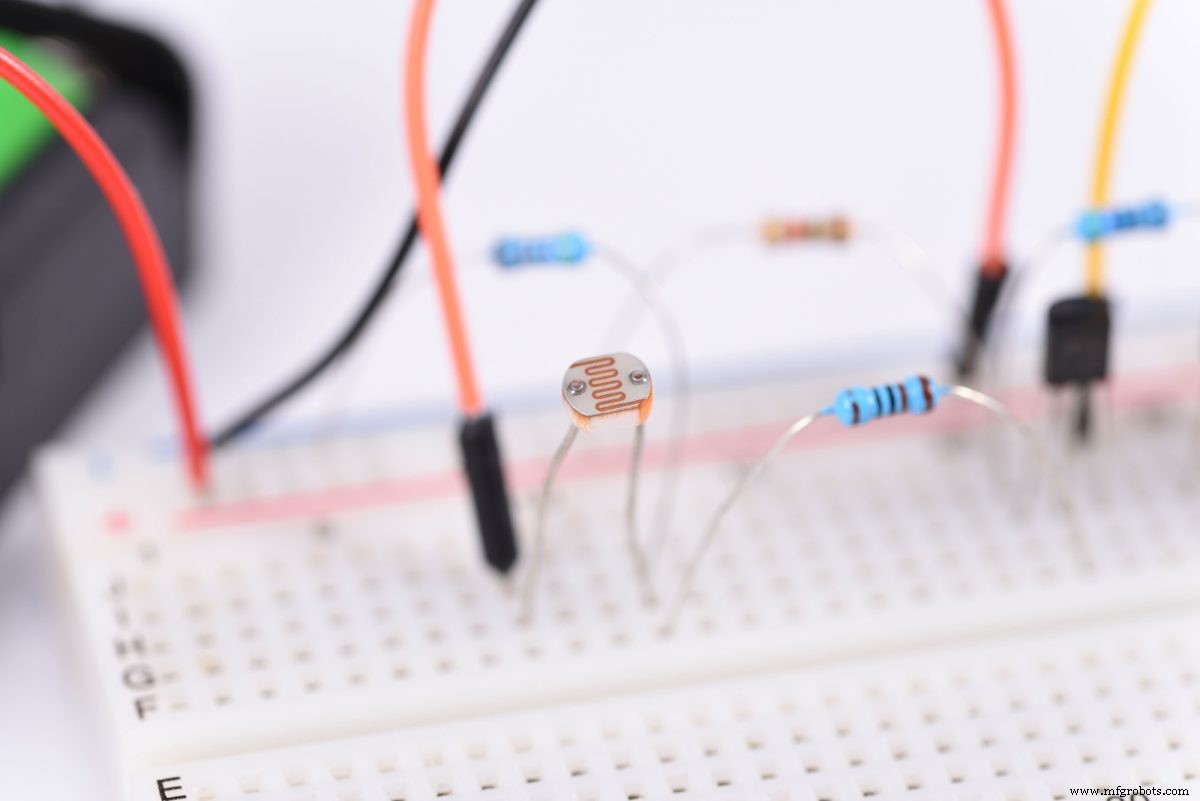
(an LDR assembled on a breadboard.)
Application of the LDR
- Firstly, these photoresistors are useful in detecting the intensity and presence of light in a certain environment.
- Secondly, the device is useful in automatic bulbs that go on and off whenever the light is.
- Thirdly, you can use this photoresistor in a photo proximity switch.
- Also, clocks and smoke alarms with automated lights can use the LDR.
- Lastly, you can use the LDR in an optical circuit design.
(LDR icon.)
Light-dependent Resistor Structure
The LDR has a horizontal body that has most parts exposed to light.
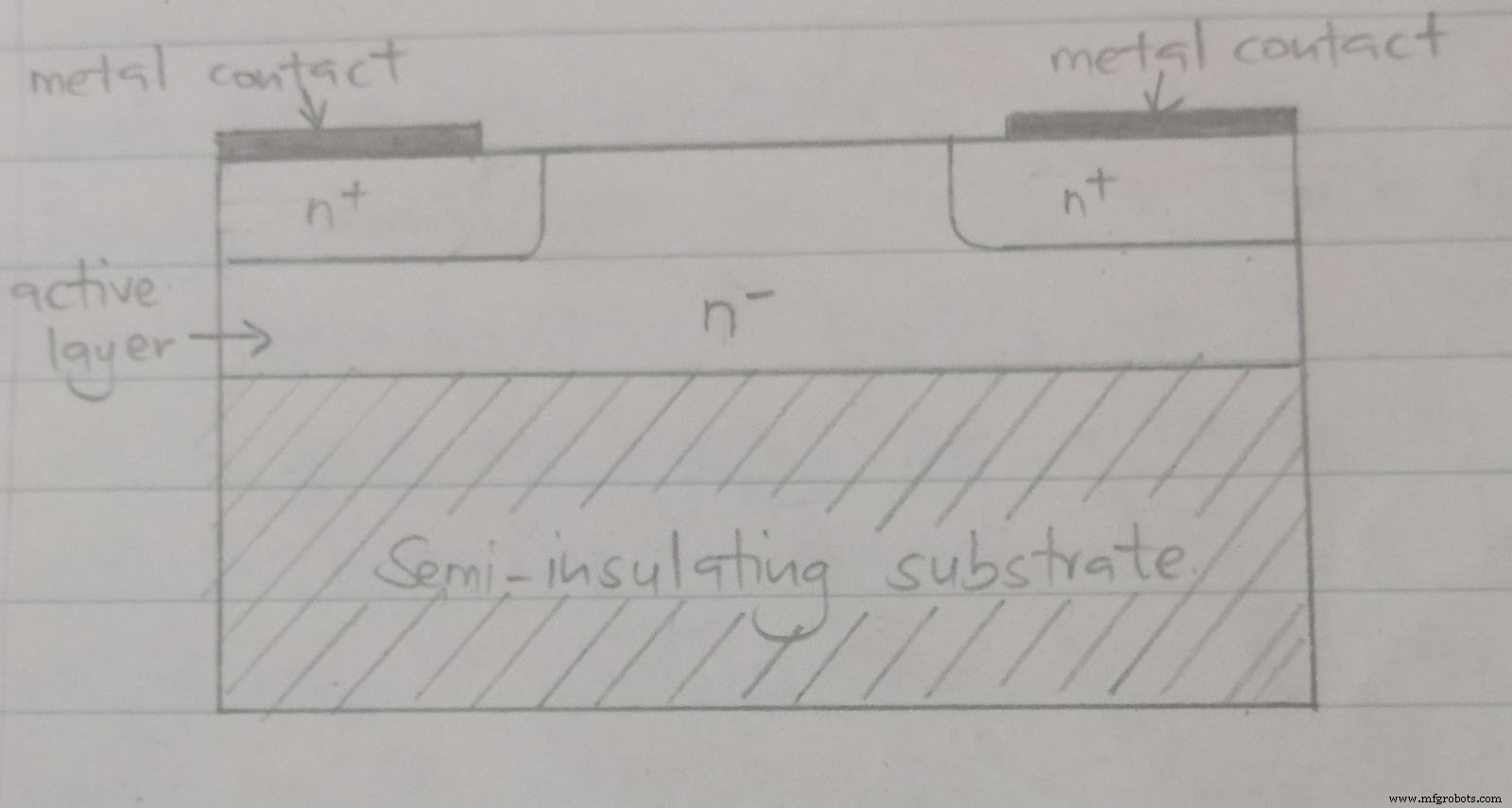
(a light-dependent resistor structure.)
You should know that lightly doping the active semiconductor region and placing it on a semi-insulating substrate is essential.
However, with most discrete LDRs, use an interdigital pattern to increase the body’s surface area exposed to light.
Also, the physical structure of the LDR allows light to penetrate. This feature plays a significant role since the pattern is cut in the metallization on the surface of active areas. Notably, the two metalized areas represent the two metal contacts for the resistor. However, the metalized area should be substantial in size. Enough space reduces the contact resistance to the active area.
This particular structure is quite common in small photoresistors. Additionally, the interdigital pattern structure is quite complex. Therefore, it is present in discrete photoresistor devices.
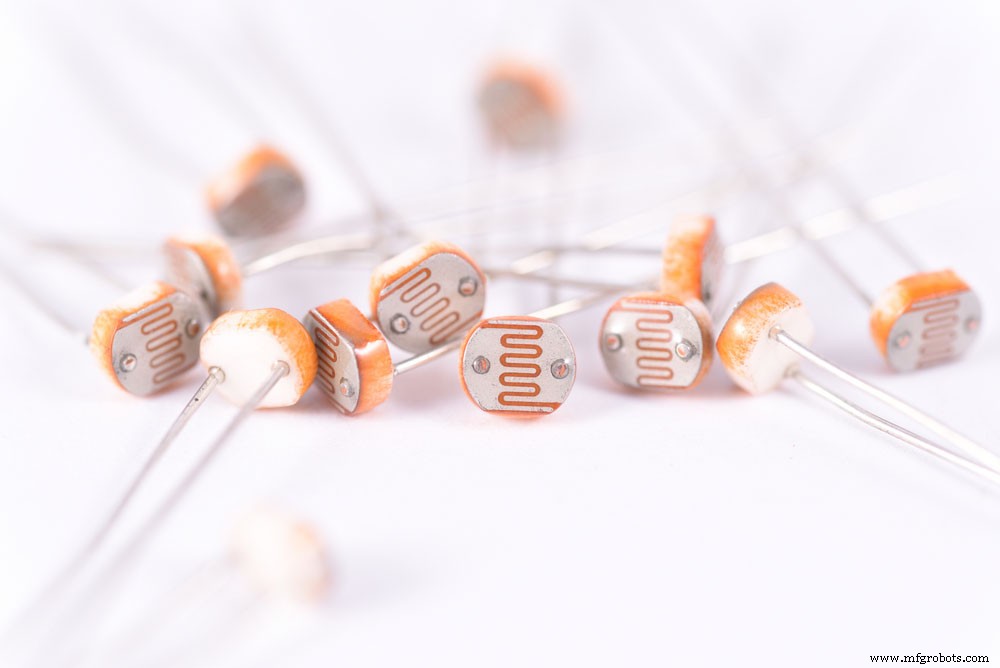
( photoresistors image)
LDR Symbol
The LDR symbol in most circuits is often the resistor circuit symbol. This symbol shows arrows shining on it, representing the light rays. The hands resemble that of the photodiode or the phototransistor circuit.
Also, it is essential to note that there are old and new ways of representing a resistor in a circuit. The old method uses the zig-zag line, whereas the new method uses a rectangular box.
(an LDR vector icon.)
Difference Between a Photocell and an LDR
Both the LDR and the photocell work on principles. The LDR works on the principle of its resistance reducing with a rise in light intensity. Contrastingly, the photocell converts light energy into electrical energy. Also, the photocell works with a PN junction diode even though both require semiconductor materials to function.
Lastly, while both devices give out a response, the photocell gives a quicker response. On the other hand, the LDR offers frequent reactions. Therefore, photocells are ideal electrical devices in applications that require an immediate response when detecting change.
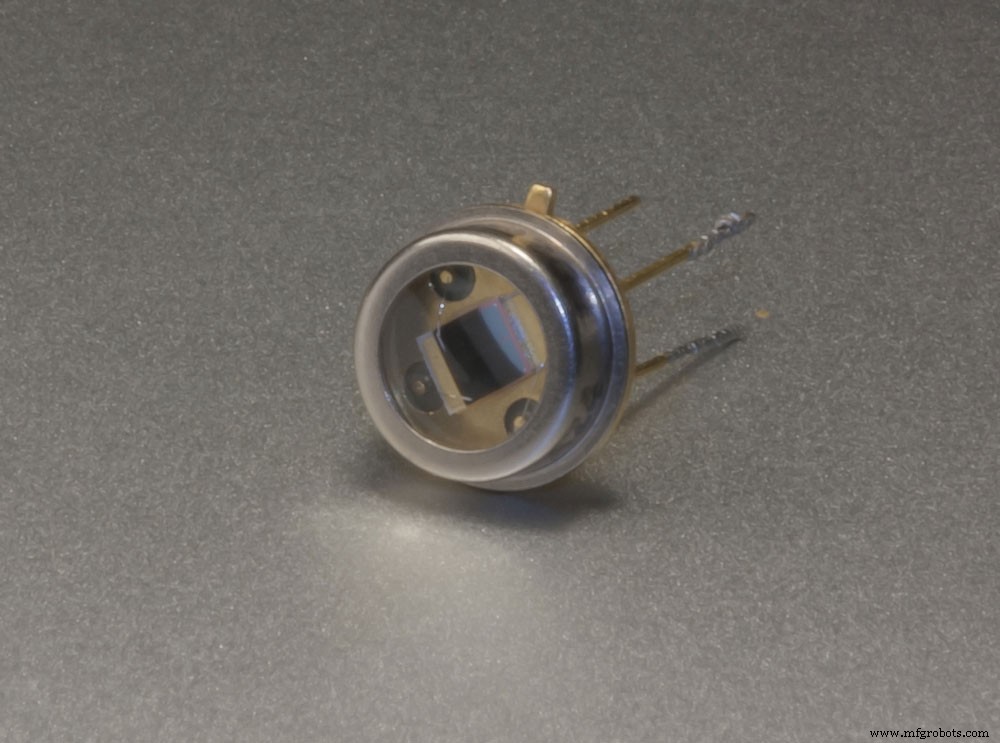
(a photocell or photodiode used for light detection.)
Summary
An LDR is a piece of crucial electrical equipment used in projects that require light detection. An LDR uses a semiconductor material, therefore, can offer high resistance.
We hope this article has been of help to you. Our team is always ready to help! For more information regarding this or any of our work kindly do not hesitate to contact us.
Industrial Technology
- Plasma Cutting Explained: How It Works and Key Benefits
- Electrochemical Grinding Explained: How It Works & Key Benefits
- Understanding Ransomware: How It Works & Why It Matters
- Understanding LED StarBoard: Design, Function, and Heat Dissipation Benefits
- DIY Timer Explained: Design, Function, and Practical Uses
- Optocoupler Basics: Function, Types, and Practical Applications
- Vacuum Tube Diodes Explained: Function, History, and Modern Applications
- Refrigerator Alarm: The Smart Solution to Keep Your Food Fresh
- LED Fader Circuit Explained: How It Works & Why It Matters
- Neon Lamp Circuit Explained: Function, Applications, and Benefits