



Comprehensive Guide to the LM7815 Voltage Regulator: Usage, Features & Applications
Voltage regulators are very popular in electrical projects. They work by providing a sustained output voltage despite the feed-in voltage presented. The LM7815 rectifier belongs to an LM78XX series of consolidated circuits. Voltage rectifiers in this series have three pins and produce a fixed output voltage. However, voltage regulators in the series come with contrasting fixed-output voltages. This feature helps the LM78XX series voltage regulators be applicable in many applications. This article will discuss the LM7815 voltage regulator, its characteristics, and its use in projects.
7815 Voltage Regulator Introduction
The LM7815 voltage regulator is a fixed voltage regulator. Its name 7815 stands for “78,” meaning that the regulator provides a positive voltage. Whereas a voltage regulator works by providing a constant output, from the 7815, “15” signifies a 15v voltage output. Notably, from the two statements above, the LM7815 positive voltage regulator gives out an output voltage of +15v.
Additionally, with the positive 15v, the regulator can give most TTL components a sustainable amount of power. Notably, the regulator comes in a package and is available in TO-220, TO-3, TO-220FP, and D2PAK packages.
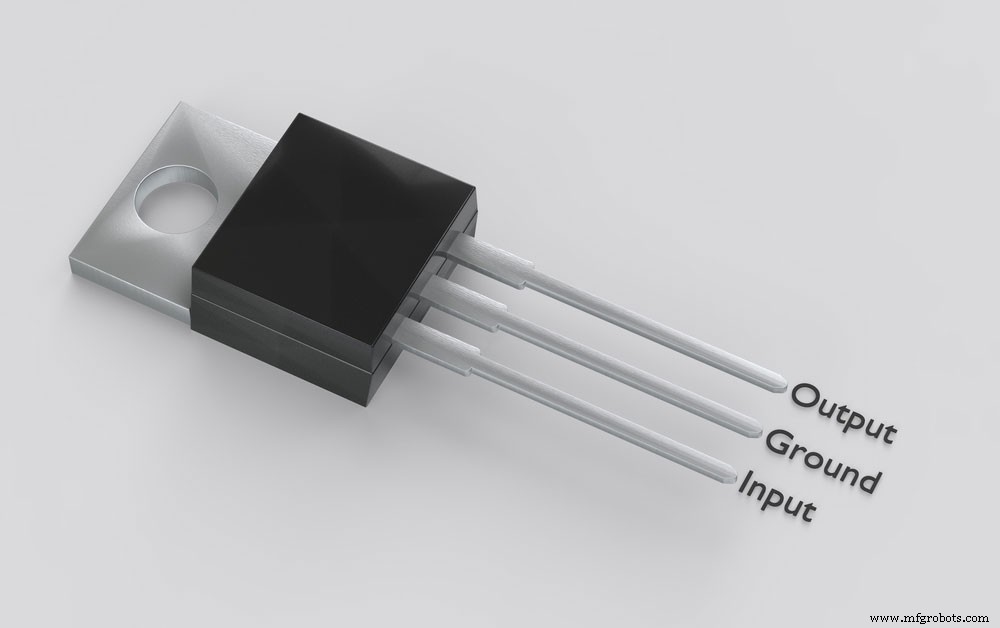
(an isolated electronic component with a TO-220 package with three pins.)
Measurably, the output current of this Integrated circuit can reach up to 1.5A. However, the same IC undergoes a lot of heat loss. It would help if you used a heat sink to mitigate and stop the IC from losing too much heat. This action is done primarily for projects that take up more energy.
For example, a project like the local on-card regulation application. Importantly, this application works by removing the distribution problems that come with single-point regulation. Also, the presence of these terminal regulators is instrumental in the making of logic systems and HiFi.
Note;
It would help if you remembered that the input voltage of the LM7815 should always be between 17v and 35v. Any current below 17v will not produce a stable output. Additionally, the voltage regulator requires at least 2v over its fixed output to work efficiently to have a sound production. However, supplying a current over 35v is not recommended since it will damage the device.
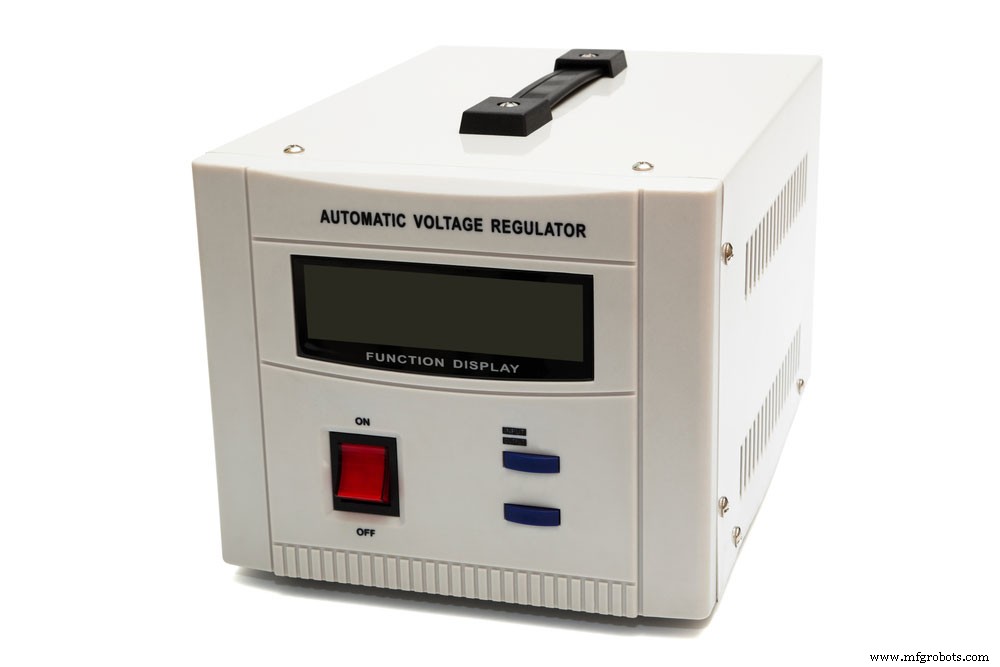
(an automatic voltage regulator.)
7815 Voltage Regulator Characteristics
- Firstly, the regulator circuit design is configured to output a +15v.
- Secondly, the minimum required input voltage is 17v.
- Thirdly, the varying input voltage has its maximum input voltage of 35V.
- Also, the regulator outputs a maximum current of 1.5A.
- Next, the 7815 voltage regulator has an in-built short circuit shut down function.
- Additionally, the regulator has an in-built heat shut down function.
- Also, the voltage regulator utilizes a backup current of 8mA.
- Moreover, this electrical device has a short circuit current limiting protection and an internal thermal overload.
- Then, the LM7815 voltage regulator has a high junction temperature of 125 degrees Celsius.
- Lastly, the voltage regulator comes in TO-220, TO-220FP, D2PAK, and a TO-3 package.

(image of voltage regulator icon sets.)
LM7815 Pin Configuration
The LM7815 voltage regulator is among the 3-terminal regulators. Namely, the input, output, and ground pin. Also, these pins have different functions. The table below describes each pin.
| Pin | Pin Name | Description |
| 1 | Input(v+) | This pin supplies the non-specific input voltage. |
| 2 | Ground | The ground pin secures the whole circuit to the ground. Additionally, the pin earths the course. |
| 3 | Output(V0) | This pin gives out the tuned +15v output voltage. |
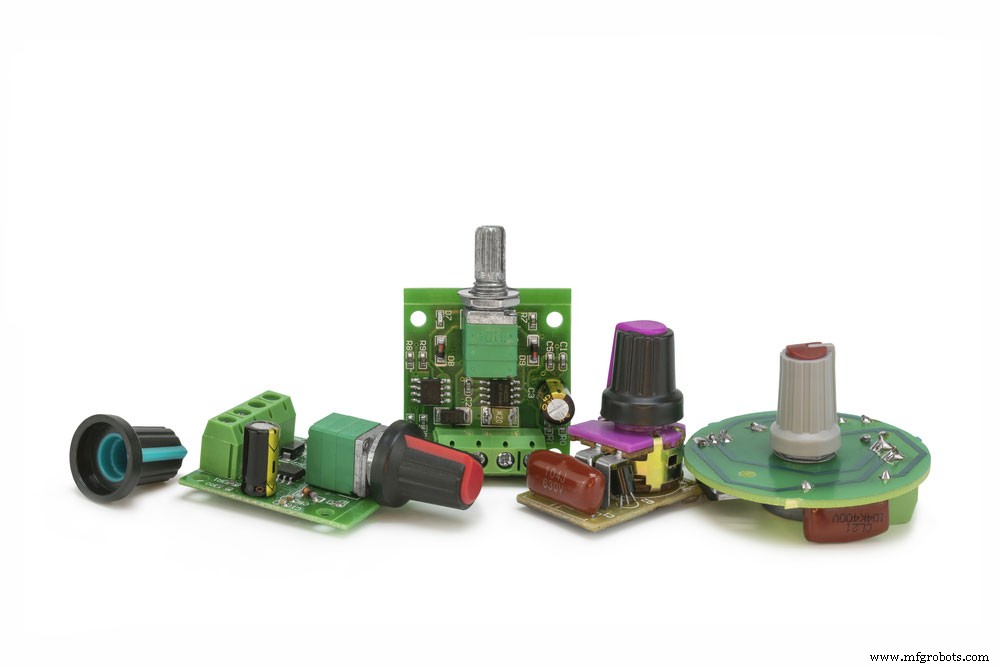
(adjustable voltage regulators step-down power supply modules.)
How to use an LM7815 Voltage Regulator?
You can use a 7815 positive regulator like any other electrical equipment in a circuit. Importantly, use it with two capacitors to make the regulator produce reliable results. For example, one of 0.1Uf and the other should be the 0.33Uf value.
Usually, the 0.33Uf capacitor is the input capacitor. At the same time, the 0.1Uf is the output capacitor. Notably, the input capacitor, a ceramic capacitor available in the circuit, handles the input inductance issues. On the other hand, the ceramic output capacitor present in the course offers or adds stability.
Significantly, place the input and output capacitor closer to the circuit terminals when making the connection. This factor is essential because the capacitors work when closer to the terminals efficiently.
You may have noticed that all the two capacitors are made of ceramic. A ceramic capacitor performs faster than an electrolytic capacitor hence its usage.
Additional tips
Always use a heat sink if you want to use your regulator for long periods while still producing stable results. Also, avoid driving loads of more than 1.5A and do not apply a voltage of more than 35v. In addition, make sure to continuously operate your device under a temperature of between 0 and 125 degrees Celsius. Moreover, store your electrical device in temperatures between -65 and 150 degrees Celsius.
(voltage regulator at a power plant)
Application of the LM7815 Voltage Regulator.
- Firstly, you can use the voltage regulator as a current limiter in some electronic applications.
- Secondly, the LM7815 output regulator can operate as a regulated dual supply in electronic circuits.
- Also, you can use the regulator as a constant 15v regulator. This +15v output power helps run microcontrollers and electronic sensors in many electrical projects.
- Lastly, you can use this voltage regulator as an output polarity-reversal-protection circuit.
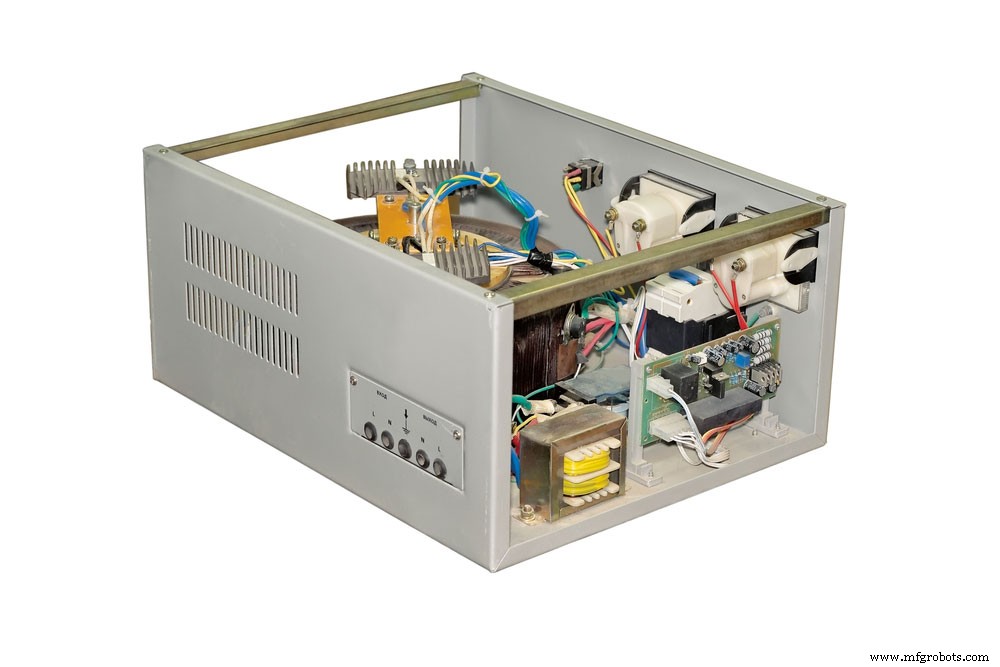
(a picture of a voltage regulator.)
Summary
The +15v voltage regulator is a piece of crucial electronic equipment found in the LM78XX series. We have already learned how to work it to achieve the best results.
We hope this article has been of help to you. For any questions regarding our articles don’t hesitate to contact us.
Industrial Technology
- How Manufacturers Leverage Industry Credentials to Attract and Hire Skilled Talent
- Step-by-Step Guide to Building a Reliable Rectifier for Power Systems
- Mastering the IR Blaster: How to Use Infrared Remotes on Your Phone
- The IRF740 MOSFET: Comprehensive Overview & Practical Applications
- Comprehensive Guide to Voltage Sensors: Accuracy, Reliability, and Eco-Friendly Solutions
- The Ultimate 9V Voltage Regulator Guide: How to Use and Maximize Performance
- TIP122 Pinout Guide: Features, Functions, and Practical Usage
- 2N5089 Transistor Pinout & Specifications: A Comprehensive Guide for Audio and Switching Applications
- 2N3055 Transistor: Comprehensive Guide, Features, and Applications
- 78L05 Pinout Guide: Features & Wiring Instructions