



Respirator Fit Testing Explained: Choosing Between Quantitative and Qualitative Methods
Whether you work on an oil rig, in a body shop or in a factory, there are conditions that require your workers to be protected with a respirator of some kind. In fact, about 5 million employees in the U.S. should be wearing respirators on a regular basis. Those who are exposed to harmful dusts, fogs, mists, gases, vapors, paints, chemicals and dangerous oxygen levels are at increased risk of serious illness or death.
What’s unsettling is that despite all the information we have about these dangers, there were 2,599 citations and over $3 million in penalties to companies who failed to enforce effective respirator programs in 2018!
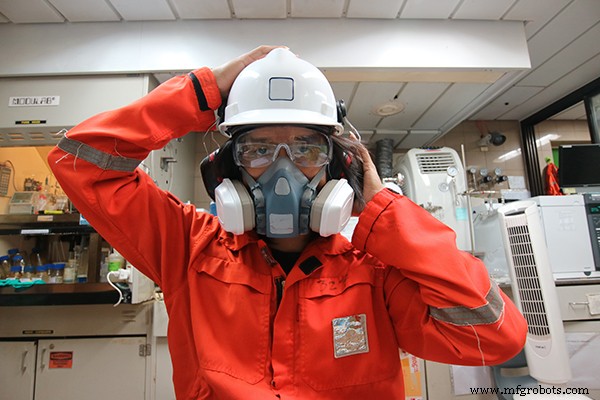
These citations also include those companies that fail to regularly test the effectiveness of a worker’s respirator. We thought it was high time to share a few best practices on fit testing requirements so that your company stays complaint and your workers stay safe.
How often and why to perform respirator fit testing?
There’s a few certain ground rules that apply to when and how workers need to perform a fit test. Not only should workers be tested at least every 12 months with the respirator they wear, they should be tested any time there are significant changes that could impact the fit and effectiveness of their respirator. These are just a few examples of changes that may warrant a retest. They include:
- New respirator equipment
- Large weight gain or loss
- Major dental work
- Facial surgery that may have changed the shape of your face
- Scarring in the area of the seal
What’s the Difference Between Qualitative and Quantitative Fit Testing?
Quantitative Fit Testing can be performed on any kind of tight-fitting full-face respirator and measures the actual amount of leakage into your facepiece.
It doesn’t rely on any of your senses or response to irritation and instead uses a probe attached to the facepiece to measure leakage. There are three different types of quantitative fit tests:
- Generated Aerosol: An aerosol is dispensed into a booth or test chamber and measures any leaks in the respirator.
- Ambient Aerosol: Uses lasers to measure concentrations inside and out of a mask. No test chamber is needed to test.
- Controlled Negative Pressure: A fixed vacuum is created on the facepiece with special adapters that measure air flow or leak rate.
Qualitative Fit Testing is simply a pass or fail test that uses your sense of smell or taste, or your reaction to a known irritant. It doesn’t measure the amount of leakage into your respirator, it will just let you know there is a leak present.
It’s usually used when testing half-mask respirators that cover your nose and mouth such as filtering facepiece respirators (N95). There are four different types of fit test methods that OSHA approves:
- Isoamyl Acetate: Smells like banana
- Saccharin: Leaves a sweet taste in your mouth
- Bitrex: Leaves a bitter taste in your mouth
- Irritant Smoke: Causes you to cough
➤ For more information on respirator fit testing and training videos from OSHA, click here.
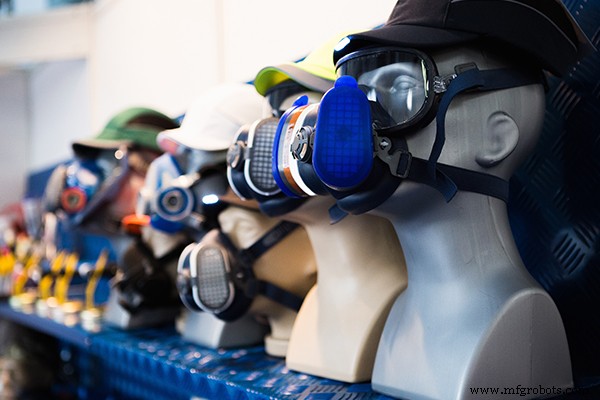
It’s important to remember that not everyone should be wearing a respirator, either.
Sometimes, a person’s facial hair or medical conditions can hinder the performance of their respiratory protection. These are some examples of instances where employers may need to use alternative protective measures:
- Our bearded brothers may not be able to properly wear a respirator if they have a beard, stubble or long sideburns. The facial hair can form a gap in the seal, limiting the protective capabilities of the respirator. For facial hair to be allowable it must not interfere with sealing surface of the facepiece or the valve function. (See: 29 CFR 1910.134(g)(1)(i)(A) for more information)
- Eyeglasses are another thing to consider when testing how well a respirator fits because it can prevent an effective seal on a half-face respirator. The alternative is a full-face respirator that has a corrective lens insert or to wear contacts.
- Asthmatics may not be able to wear a respirator as they may experience greater difficulty pulling air through certain filters.
- People who are claustrophobic or have certain heart conditions may not be able to wear a respirator
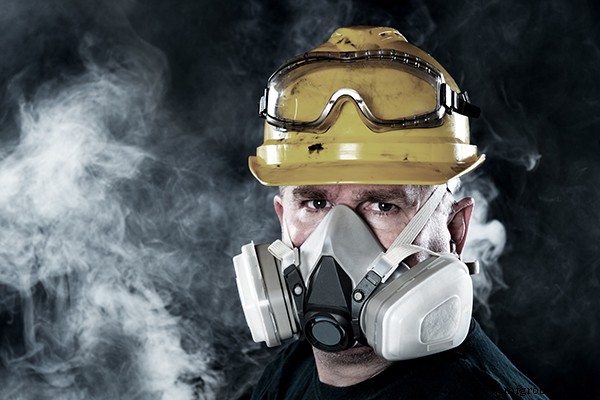
OSHA is very clear about the use of respirators on the job.
Just in case there’s any confusion, here it is in black and white. According to OSHA 29 CFR 1910.134, any employee who is exposed to harmful airborne agents or has the potential to breathe in contaminated or oxygen deficient air must wear a respirator, unless effective engineering controls are in place.
When it comes to requirements for workers in the construction industry, OSHA 29 CFR 1926.103 offers additional guidance. There’s simply no excuse to not take these risks seriously. Engineer out the dangers you can and protect against what you cannot.
If you are looking for additional information on how to care and maintain your respirator, check out our blog titled “How to Clean and Maintain Your Respirator in 3 Simple Steps”.
We Want to Help
If you need help designing and implementing your occupational respirator program, stop in to Rocky Mountain Industrial Supply, visit our website or give us a call at 307-472-5519. We’d love to help get you and your team in the gear they need to work safely.
We’re here to help keep the American workforce safe everyday.
Industrial Technology
- Python 2 vs Python 3: Key Differences and Choosing the Right Version
- Carbon Steel vs Stainless Steel: Key Differences Every Fabricator Should Know
- Industry 4.0 vs Industry 5.0: What’s Changing and Why It Matters
- Fillet vs Chamfer: Key Differences Every Designer Must Know
- Understanding DC vs AC Motors: Key Differences and Buying Guide
- CNC vs NC: Understanding the Key Differences in Numerical Control Technology
- Die Casting vs. Stamping: Key Differences Explained
- Jigs vs. Fixtures: Key Differences and Impact on Manufacturing Efficiency
- Understanding Pressure vs. Flow in Compressed Air Systems
- Understanding Welding Defects vs. Discontinuities: Key Differences and Quality Impact