



Networked Economy & Industry 4.0: Debunking Common Myths
Which is bigger – the earth, the networked economy, or Industry 4.0? It’s a rhetorical question, but it invites us to compare the sheer scale and impact of these transformative trends.
Vivek Bapat, SAP’s Global Vice President for Portfolio and Strategic Marketing, predicts that over the next 10 – 15 years the networked economy could double the world’s gross domestic product. While Industry 4.0’s exact economic contribution is still unfolding, its influence on manufacturing is already profound.
What the networked economy is – and is not
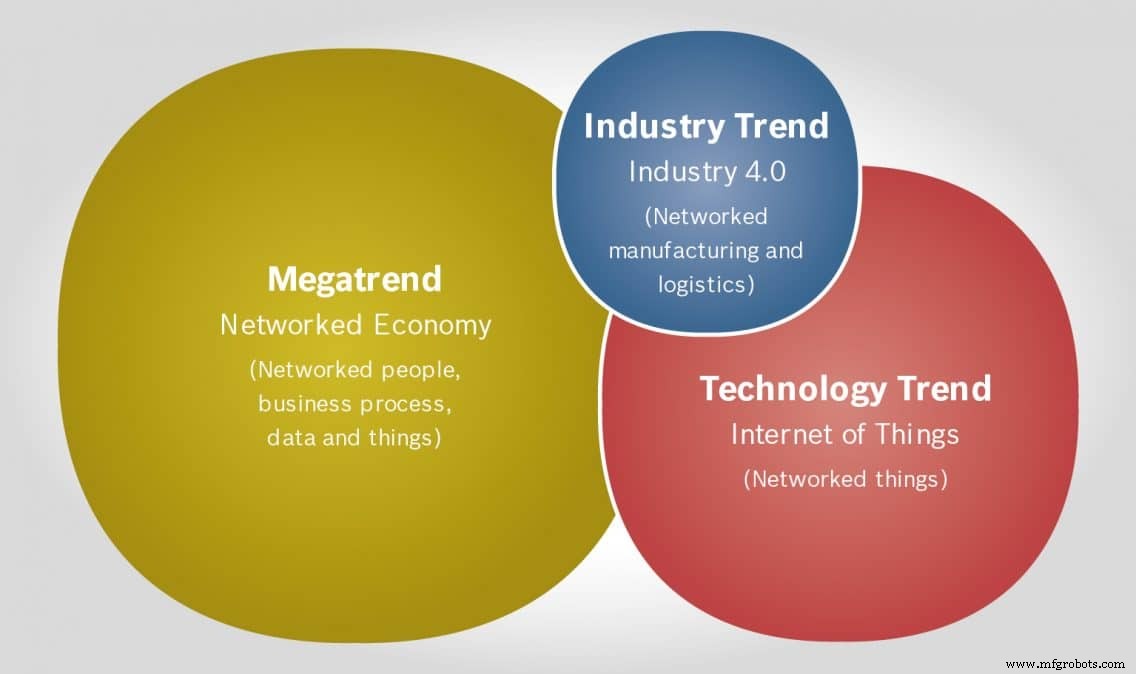
The most common misconception is that the networked economy and Industry 4.0 are the same thing. In reality, the networked economy refers to the hyper‑connectivity between people, devices, and businesses, enabling real‑time collaboration across all sectors. Forms of this economy include the collaborative and shared economies.
At its core lies the Internet of Things (IoT), which connects physical devices, people, and enterprises via the Internet. Industry 4.0 is the sector‑specific application of the networked economy to manufacturing, combining technology with new guidelines, best practices, workflows, organizational design, and social engineering to help companies thrive in the digital age.
Source: Bosc.IO
The networked economy in action
Manufacturing leads the way in harnessing the networked world. Here are a few standout examples:
Trumpf, a global leader in laser systems, has deployed “social machines” that track every step of a component’s production. The system shares capacity data across facilities, automatically optimizes manufacturing schedules, and even streams real‑time machine images to customers for feedback during the build.
Siemens has revolutionized medical engineering with an Industry 4.0 solution that cuts the time to customize artificial knee and hip implants from days to just three or four hours, thanks to smart software and steering controls.
John Deere offers remote diagnostics through its JDLink infrastructure. With customer permission, dealers can access machine data, warranty records, and performance metrics, enabling proactive service and component delivery before a failure occurs.
These stories illustrate how the networked economy turns people and business networks into a single, intelligent ecosystem—powered by IoT as the connective tissue. SAP believes this shift will transform business operations at a pace unmatched by any previous economic transition.
How are you experiencing the networked economy and its impact on manufacturing through Industry 4.0?
Industrial Technology
- Industry 4.0 Demystified: Debunking Four Common Myths
- Industry 4.0 Unpacked: Debunking Common Myths
- Debunking the Biggest Myths About Advanced Manufacturing Robotics
- The Rise of the Revenge Economy: How Post‑Pandemic Spending is Reshaping Markets
- Debunking Manufacturing Myths: The Real Impact of Automation & Career Opportunities
- Cyber‑Physical Systems: The Driving Force Behind Industry 4.0
- Industry 4.0 & Sustainability: Navigating Environmental Challenges
- Industry 5.0: Redefining Manufacturing for the Future
- Implementing a Quality Strategy to Drive Industry Competitiveness
- How Industry 4.0 Revolutionizes Manufacturing: Benefits & Opportunities