



AI Surpasses Experienced Dermatologists in Skin Cancer Detection Accuracy
- Researchers trained a convolutional neural network to detect skin cancer.
- It outperformed an international group of experienced dermatologists.
- The AI won’t replace doctors but can serve as an aid for more accurate decision‑making.
For the first time, an international team has shown that artificial intelligence can detect skin cancer more accurately than experienced dermatologists.
Malignant melanoma cases are rising—over 230,000 new diagnoses worldwide and 59,800 deaths in 2015. Early detection is critical; at stage IV, the 5‑ and 10‑year survival rates drop to 15% and 10%.
The European Society for Medical Oncology team trained a Convolutional Neural Network (CNN) on more than 100,000 dermoscopic images of malignant melanomas and benign moles.
In a head‑to‑head comparison, the CNN missed fewer positive cases than 58 dermatologists from 14 countries.
Artificial Neural Network
The researchers employed Google’s Inception‑v4 architecture, training it on dermoscopic images and their diagnoses. Neural networks learn by example, progressively improving as they are exposed to more data.
Images were magnified 10‑fold to provide the CNN with a detailed view. Each training iteration sharpened the model’s ability to distinguish malignant from benign lesions.
CNN vs. Doctors
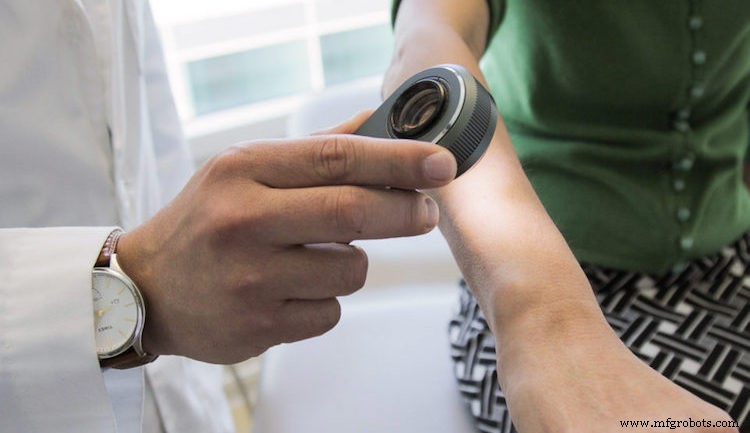
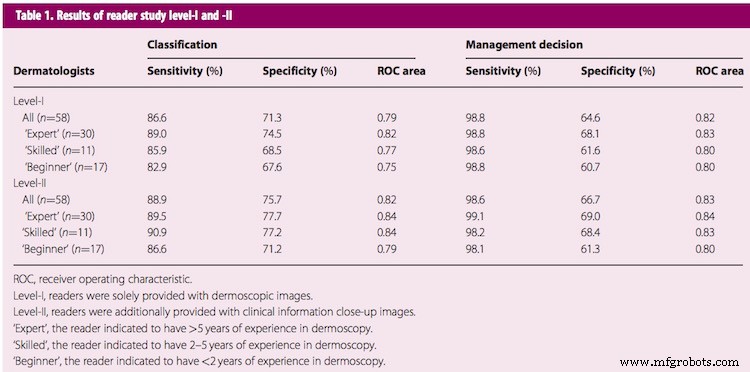
Two test sets were created: Level‑I (dermoscopic images only) and Level‑II (dermoscopic images plus clinical information). Both CNN and the dermatologists measured specificity, sensitivity, and the area under the ROC curve.
In Level‑I, dermatologists achieved an average 86.6% sensitivity for melanoma and 71.3% specificity for benign moles. The CNN reached 95% sensitivity for melanoma while maintaining the same 71.3% specificity for benign moles.
In Level‑II, performance improved for both groups, but the CNN still demonstrated higher sensitivity and specificity, missing fewer cancers and misclassifying fewer benign lesions.
Results also matched the top three algorithms from the 2016 International Symposium on Biomedical Imaging (ISBI) challenge.
Conclusion
The data indicate that a CNN can outperform even highly experienced dermatologists in identifying skin cancer.
While the technology is not intended to replace clinicians, it offers a powerful decision‑support tool that can enhance diagnostic accuracy.
Read: Google Develops AI That Predicts Heart Disease By Scanning Your Eyes
Future improvements will come from larger training sets and advances in imaging technology, potentially transforming dermatologic diagnostics in the near future.
Reference: Annals of Oncology | doi: 10.1093/annonc/mdy166
Industrial Technology
- 13 Cutting-Edge Police Technologies Every Officer Should Adopt
- Conformal Cooling: Boosting Part Quality and Reducing Injection Molding Cycle Times
- Effective Advertising & Growth Tactics for Industrial Cleaning Companies
- Maintain CNC Tool Changer Plastic Gripper Forks for Optimal Performance
- Streamline Asset Management: 6 Proven Steps to Effective Asset Tagging
- Understanding Boolean Algebra: From Logic Foundations to Digital Circuits
- Practical Considerations in Transformer Design: Power, Losses, and Performance
- Optimizing Work Instructions for Industry 4.0: Enhancing Efficiency and Compliance
- Mastering 6061 Aluminum Machining: Properties, Pricing, and Comparison with 6063 & 7075
- Double-Throw Relay Explained: How It Works, Circuit Diagrams, and Practical Applications