



Russia Approves 70‑MW Floating Nuclear Power Plant to Power Chukotka
- The Russian State Expert Examination Board (Glavgosexpertiza) has approved a $232 million floating nuclear power plant project.
- The station will house two advanced KLT‑40S naval propulsion reactors, delivering 70 MW of electricity or 300 MW of thermal output.
- It is slated to replace the aging Bilibino power plant in Chukotka by 2021.
The floating power plant project, named Akademik Lomonosov, received final approval from Glavgosexpertiza on 9 December 2017. The project is financed by Rosenergoatom, a subsidiary of Rosatom, and was first authorized by local authorities in Pevek, Russia’s northernmost city.
Akademik Lomonosov is the first Russian floating nuclear facility and carries the name of Academy of Sciences laureate Mikhail Lomonosov. It features two 35‑MW KLT‑40S reactors fueled with low‑enriched uranium (14.1 % U‑235).
Glavgosexpertiza reviewed the design documents and engineering studies, concluding that the facility meets all regulatory requirements and that the cost estimate is justified.
The Unified Energy System of Russia covers nearly 15 % of its territory, and nuclear power remains the most reliable means to supply heat and electricity to remote, sparsely populated regions that occupy half of the country.
Akademik Lomonosov
The floating plant measures 144 m in length and 30 m in width, with a displacement of 21,500 t and a crew of 69. Its two KLT‑40S reactors generate 70 MW of electricity or 300 MW of heat—enough to support a population of 200,000.
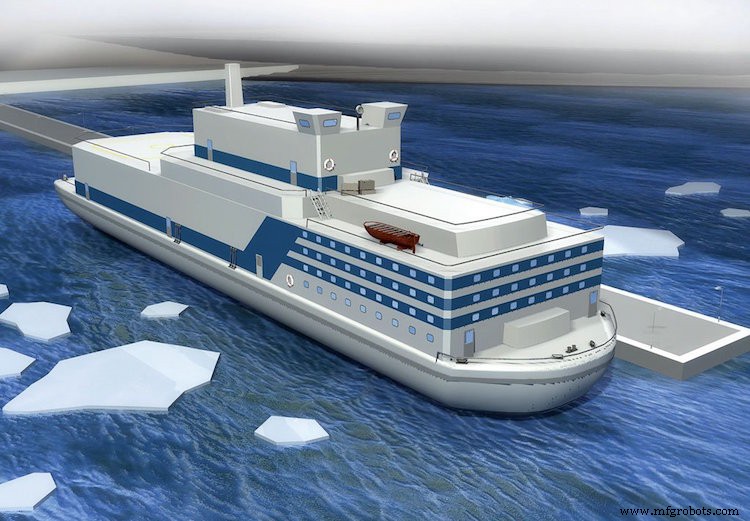
The vessel can be converted into a desalination facility, producing approximately 240,000 m³ of freshwater per day. In that configuration, Akademik Lomonosov would be fitted with two modified ABC‑6M reactors, delivering 18 MW of electricity.
Potential reactors such as the RITM‑200 (55 MW) and VBER‑300 (325 MW) have also been considered for future deployments.
FuelingThe reactors require refueling every three years, saving the region up to 100,000 t of fuel oil and 200,000 t of coal annually. With an expected operational life of 40 years, the entire vessel will be transported back to its construction yard for a comprehensive overhaul every 12 years.
Nuclear waste management and routine maintenance will be handled by the manufacturer and the Russian nuclear industry, ensuring that no radioactive residues remain at the production site.
Initially proposed in 2007 to power Severodvinsk in Arkhangelsk Oblast, the project was later relocated to the Baltic Shipyard in Saint Petersburg. The total budget is $232 million, with construction slated for completion in 2019.
Next Phase
In October 2017, support cargo for the plant was shipped to Pevek, then towed to Murmansk in mid‑2018. Fuel loading took place in October, and the vessel is expected to be commissioned in November.
The plant will replace the Bilibino power plant in Chukotka district, with shutdown of the old facility scheduled to begin in 2019 and finish by 2021.
Another Floating Nuclear Power Plant in China
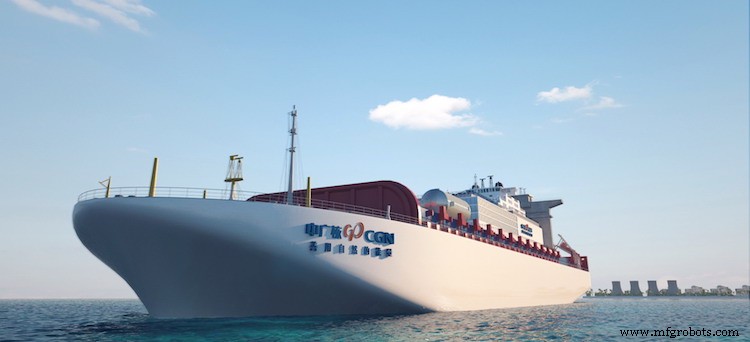
China General Nuclear Power Group (CGN) is advancing its ACPR50S project—a 200‑MW floating reactor that delivers electricity, heat and desalination—targeted for completion in 2020.
The ACPR50S employs a Generation II+ pressurized water reactor designed by China National Nuclear Corporation (CNNC) and is intended for coastal areas, islands, and offshore resource development.
Read: NASA Is Testing A Space Nuclear Reactor | Kilopower Project
Industrial Technology
- Understanding Ohm’s Law and the Real Risks of Electrical Shock
- Daycare and Entrepreneurship: Catalysts for Manufacturing Recovery
- CubeSats Achieve Faster Data Links with Laser Technology, Cutting Onboard Resource Needs
- Precision Machining Series – Part 1: Definition, Processes, and Material Compatibility
- Economist: Bigger Ships Won’t Cut It—Intermodal Shipping Is the Future
- How Voltage Dividers Set Gain in Non‑Inverting and Inverting Op‑Amp Amplifiers
- Mastering OSHA Compliance: Key Focus Areas for Manufacturers
- Binary Overflow: How Sign Bits Affect Binary Addition
- Automatic Fire Suppression Systems: Safeguarding High-Risk Industries and Employees
- How to Secure Internal Buy‑In for IIoT: Proven Strategies for Manufacturing Leaders