



Understanding 5G NR: Frequency Bands, Standards, and Core Technologies
Explore 5G NR: Frequency Bands, Use Cases, and Enabling Technologies.
5G—short for fifth‑generation wireless—has become a buzzword in consumer marketing, promising faster downloads, lower latency, and more reliable connections. From an engineering standpoint, 5G NR (New Radio) represents a fundamental overhaul of radio access technology, bringing together new spectrum, advanced antenna systems, and cutting‑edge signal processing.
This article walks through the core components of 5G NR, from its regulatory and technical specifications to the three principal service categories and the key technologies that make high‑speed, low‑latency wireless possible.
5G Standards
The 3GPP (3rd Generation Partnership Project) oversees all 5G specifications. The project’s first public release, Release 15, was published in December 2017, and subsequent releases (e.g., Release 16 and 17) extend the standard with new features such as enhanced URLLC, network slicing, and extended‑coverage low‑power operation.
Within 3GPP, Technical Specification Groups (TSGs) define the standard at multiple abstraction levels:
- Radio Access Network (RAN) – specifies the physical layer, modulation, duplexing, beamforming, and error‑control mechanisms.
- Services & Systems Aspect (SA) – covers architecture, charging, accounting, network management, and security.
- Core Network & Terminal (CT) – details user equipment specifications, handover procedures, and QoS mapping.
Three Frequency Bands of Tiered 5G Service
With each generation, the spectrum allocation has expanded, moving from sub‑GHz bands to the millimeter‑wave (mmWave) range. 5G NR spans two main frequency ranges:
- FR1 (Low‑Band) – 450 MHz – 6 GHz, providing broad coverage and adequate capacity for mobile broadband.
- FR2 (High‑Band) – 24 GHz – 100 GHz, enabling ultra‑high bandwidth (up to 400 MHz) and sub‑millisecond latency for specialized use cases.
See Figure 1 for a visual comparison of spectrum evolution across generations.

Figure 1. Evolution of frequency spectrum allocations for 2G, 3G, 4G, and 5G networks. Image courtesy of Ericsson.
Figure 2 illustrates how bandwidth, latency, and coverage trade‑offs differ across FR1 and FR2, informing operator decisions on spectrum use.

Figure 2. Relationships between bandwidth, latency, and coverage for the 3 bands of 5G NR. Image courtesy of Advantech.
Early deployments focus on FR1, where coverage is strongest. FR2, with its high frequency and large bandwidth, supports the most demanding applications such as VR, autonomous vehicles, and ultra‑low‑latency services.
Orthogonal Frequency‑Division Multiplexing for 5G NR
5G NR’s air interface is built on OFDM, which combines quadrature amplitude modulation (QAM) with frequency‑division multiplexing. OFDM’s orthogonal subcarriers prevent mutual interference, allowing a dense packing of data streams.
The NR specification supports configurable carrier spacing of 15 kHz to 480 kHz, up to 3,300 subcarriers, and QPSK, 16‑QAM, 64‑QAM, or 256‑QAM modulation. These options give operators flexibility to tailor spectral efficiency and robustness to the propagation environment.
Figure 3 shows the OFDM spectrum and illustrates how subcarrier peaks align with the nulls of neighboring carriers.
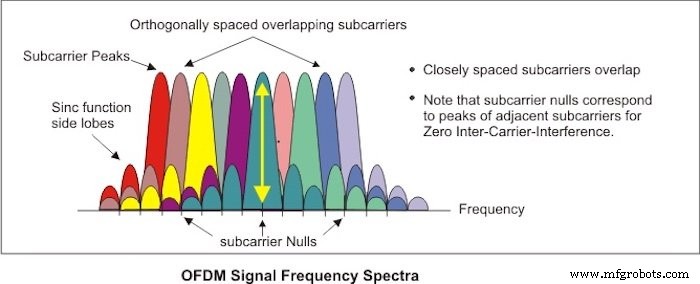
Figure 3. The frequency spectrum of orthogonal frequency‑division multiplexing. Image courtesy of Keysight.
5G Performance Compared to 4G
Compared with 4G, 5G delivers:
- Peak data rates of 10–20 Gb/s and average throughput exceeding 100 Mb/s.
- Up to 100× higher capacity through densification, massive MIMO, and dynamic spectrum sharing.
- Latency as low as 1 ms, a tenfold improvement over 4G.
Beyond higher speed, 5G is engineered for diverse mission profiles, including mission‑critical communications, massive IoT connectivity, and support for all spectrum types (licensed, shared, unlicensed). Emerging deployment models—hotspots, device‑to‑device links, and multi‑hop mesh—further expand the network’s flexibility.
5G Use Models
5G NR supports three primary use cases, each represented by a distinct service category:
- eMBB (Enhanced Mobile Broadband) – consumer‑grade high‑speed broadband, video streaming, and AR/VR.
- URLLC (Ultra‑Reliable Low‑Latency Communications) – real‑time industrial automation, remote surgery, and autonomous vehicles.
- mMTC (Massive Machine‑Type Communications) – large‑scale IoT deployments such as smart cities, logistics, and environmental sensing.
Figure 4 visualizes typical applications across these three categories.
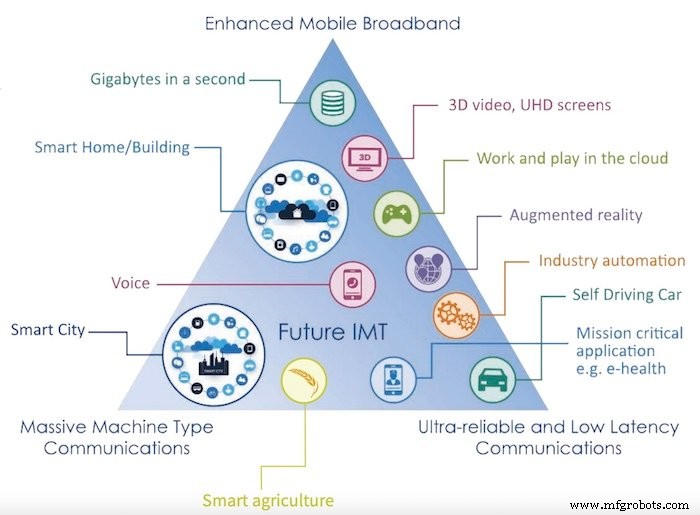
Figure 4. Example applications of the three 5G NR use models. Image courtesy of 3GPP.
eMBB (Enhanced Mobile Broadband)
eMBB focuses on delivering immersive media experiences and high‑density data services. In urban stadiums, conference centers, and corporate campuses, eMBB enables near‑line‑speed broadband to thousands of concurrent users.
URLLC (Ultra Reliable Low‑Latency Communications)
URLLC requires sub‑millisecond round‑trip times and near‑zero packet loss. These stringent demands underpin autonomous vehicle platooning, industrial robotics, and telesurgery, where every millisecond matters.
mMTC (Massive Machine‑Type Communications)
mMTC leverages the extensive bandwidth of 5G NR to support millions of low‑rate devices. Typical use cases include smart‑metering, traffic management, fleet telemetry, and city‑wide sensor networks.
Technologies that Enable 5G
Achieving the promised performance hinges on several advanced technologies that are reshaping radio hardware.
Advanced Transistor Technology
As silicon CMOS scales to sub‑10 nm nodes, complementary materials such as silicon‑germanium (SiGe), gallium‑arsenide (GaAs), gallium‑nitride (GaN), and silicon‑carbide (SiC) are increasingly used for high‑frequency, high‑power components. In particular, GaN and SiC dominate base‑station power amplifiers operating in FR2, delivering the required linearity and efficiency at 24–100 GHz.
Figure 5 displays the power‑frequency characteristics of wide‑bandgap semiconductors.

Figure 5. Power vs. frequency of wide‑bandgap (WBG) materials. Image courtesy of Analog Devices.
Beyond the die, interconnects and packaging must also adapt. At millimeter‑wave frequencies, bond wires become parasitic antennas, so manufacturers employ flip‑chip packaging and advanced PCB routing to maintain 50 Ω impedance and minimize loss.
Massive Multi‑Input Multi‑Output Antennas
Phased‑array antennas are essential for millimeter‑wave operation due to the short wavelength. Qualcomm’s 5G prototype demonstrates a 4 × 2 phased array per section, enabling directional beamforming and increased antenna gain.
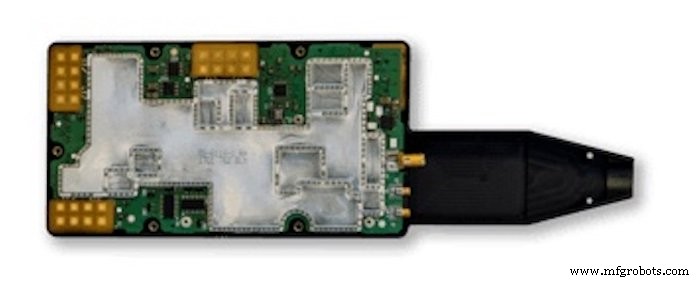
Figure 6. 5G NR millimeter‑wave handset prototype. Image courtesy of Qualcomm.
Base stations deploy massive MIMO arrays, often comprising dozens or hundreds of antenna elements. Combined with sophisticated digital‑analog hybrid beamforming, massive MIMO provides spectral efficiency, energy efficiency, and spatial diversity. Users can also equip devices with multiple antennas to mitigate multipath fading.

Figure 7. Massive multi‑input multi‑output communication for millimeter‑wave 5G. Image courtesy of Alemaishat et al.
Summary
5G NR is far more than a faster smartphone network. Its architecture supports eMBB, URLLC, and mMTC, opening doors to immersive media, mission‑critical automation, and massive IoT ecosystems. As operators roll out the full spectrum of 5G services, the convergence of new hardware, signal processing, and network design will unlock unprecedented connectivity for both consumers and industry.
Industrial Technology
- Carbon Fiber Weaves: Types, Properties & Industrial Applications
- Understanding STL Files: The Backbone of 3D Printing
- Mastering Trochoidal Milling: A Comprehensive Guide
- Machining Fundamentals: Mastering Speeds & Feeds in Fusion 360
- Microwave PCB Design: The Ultimate Solution for High‑Frequency Applications
- Understanding G-Code and M-Code: A Beginner’s Guide to CNC Programming
- Understanding Failure Analysis: Key Insights for Manufacturing Excellence
- Master CNC Machine Programming: A Comprehensive Beginner's Guide
- Press Feeders: Boost Efficiency & Safety in Press Operations
- Exploring Metal Additive Manufacturing: A Beginner’s Guide to Direct Metal Laser Sintering (DMLS)