Industrial manufacturing
Industrial Technology


Translating mathematical equations into code is part of, but also removed from, the development of automation projects involving computer solutions. We must consider the efficacy of the mathematical equations relative to the needs of the project being developed. We must also consider the so
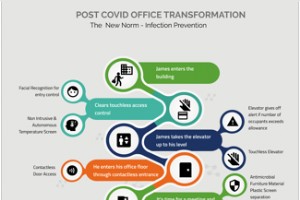
A vision of how smart technology can change the way buildings are designed and maintained to safeguard occupant health and well-being COVID-19 has dramatically transformed how society thinks and interacts. Extended lockdowns around the world have resulted in working, studying, and shopping
While COVID-19 has accelerated developments in smart buildings, these building trends and innovations will move in new directions post-COVID. With COVID, the primary focus of smart building innovations and transformations has been infection containment and social distancing, where empty spa
The influence of digital technology on automation began with the introduction of distributed control systems—in place of panel-based instruments and controllers—into process plants in the early 1960s. This was followed by the introduction of programmable logic controllers in late 1960s, rep
What is an HMI? Human machine interfaces, more commonly known as HMIs, have been used since a personal computer arrived on the plant floor. Most people think of them as the screens used in a production environment. In a broader sense, they are a form of user interface (UI) between people an
To define IIoT, we first must define IoT. The Internet of Things (IoT) is a network of intelligent devices, computers, mobiles, and applications that are connected to the Internet. IoT collects a large amount of data, stores and processes it in the cloud, and shares it with the end user. Th
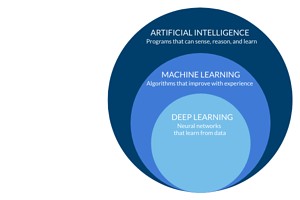
Artificial intelligence (AI) is one of the biggest buzzwords for 2020 and will only continue to become more popular in the future as we start to fully capitalize on its potential. For those new to the subject, you might wonder why you almost always see the concept “artificial intelligence”
It’s a myth that the adoption of Industry 4.0 means getting rid of legacy machines. To begin with, let’s define what legacy machines mean in this context. These are machines or industrial assets that do not intrinsically support real-time communication with a third-party system. In other w
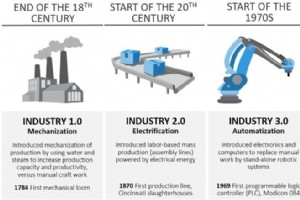
Industry 4.0 and smart manufacturing. What do these terms mean? Can they be used interchangeably or not? It is nearly impossible today to be in the manufacturing industry or the industrial automation industry and not have heard these buzzwords used in one form or another. They seem to be e
Consider the electric grid. It blankets most of the world. Its existence and reliability have defined the modern world for far longer than most of us have been alive. We owe most, if not all, of a centurys worth of new technology to the grid. The grid can only operate today thanks to milli
COVID-19 was first discovered in China less than a year ago. Since then, it has rapidly spread across the world, causing untold misery. Lives and livelihoods have been lost, the global economy has taken a severe blow, and the world is experiencing a type of crisis never witnessed in our liv
The use of artificial intelligence techniques, and more specifically machine learning, has been increasingly seen as a revolutionary tool. But what is machine learning? An interesting description was proposed by Francois Chollet. In his book, Deep Learning with Python, he defines machine
If youre interested in the vast potential of the Industrial Internet of Things (IIoT), you may not have time to keep up with new developments minute-by-minute. Thousands of IoT blogs and news sources exist, and the quality varies. Many dont even address the industrial side. So were go
ISA95, a series of standards that defines enterprise and control system integrations for manufacturers, is a product of the mid-1990s. The International Society of Automation (ISA), the series namesake, developed ISA95 in a multi-part effort to: The series originated in the era of Industry
Over the past decade, unprecedented occurrences have challenged industrial operations. Of course, the recent COVID-19 pandemic is one glaring example. In addition to the impact it has had on society, the virus has shattered the conventional process of working in industry. To cope with the
A Working Philosopher Considers the Future of Automation When most people think of “automation,” we’re initially likely to think of efficient robots, machine tools, and control systems. Then, if we’re still thinking about it, we may—as we should—move on to the questions around how those sor
In this occasional series, were bringing you a curated selection of recent articles on topics influenced by the automation community. International Society of Automation (ISA) members and blog readers have a wide range of interests and expertise, and we want to help shine a spotlight on the
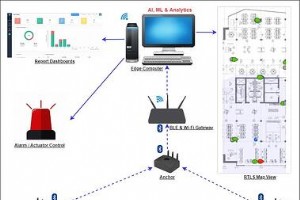
What Is RTLS? A real-time location system (RTLS) is a type of indoor positioning system that is gaining popularity in industries for improving efficiency, productivity, and safety. Using these systems, we can accurately track and locate assets and people inside industrial premises. RTLS is
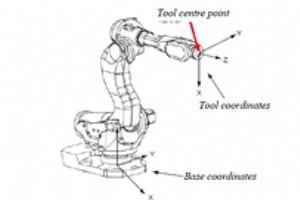
Part I The driver behind digitalization is the growing demand for accuracy, enhanced quality, and reliability. The market dynamics have compelled the manufacturing industry to bring in new products, modified designs to match changing consumer sentiments, customizations, and faster deliverie
COVID-19 has created an unprecedented global need for ventilator machines. As medical suppliers scramble to prevent shortages, other companies are stepping in to do what they can. Automation professionals around the world are going above and beyond to help fight the spread of COVID-19. The
Industrial Technology