Industrial manufacturing
Industrial Technology

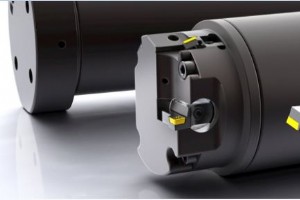
A number of current trends in manufacturing are magnifying the difficulty of creating precision bores and performing turning operations with extended-length tools. Demand for tighter tolerances and unfailing repeatability grows continuously. New high-performance workpiece materials a

When machine shops buy milling tools, they have two primary considerations: tool life and productivity. Those parameters, unfortunately, have what engineers refer to as a negative connection. Which is a technical way of saying that when one increases, the other decreases. “You gene
Tired of burning through diamond-shaped cutting tools for lead angle work? We explore the problems created by lead angles—and we talk to cutting-tool manufacturers on the best ways to optimize for your needs. For general-purpose turning work, CNMG-style, 80-degree diamonds have long
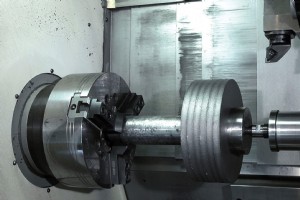
This challenging material makes unique demands on cutting tools, but a combination of R&D, lab tests and the results of real world applications is leading to effective solutions.
With manufacturers looking to do more with less in order to stay profitable, remote measuring is vital. Here’s what you need to know about the tools that collect critical measurement points from practically anywhere. Metrology is the science of measuring. It’s a deeply technical top
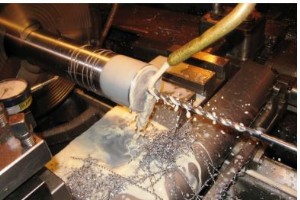
Many manufacturers that have been in operation for decades struggle with similar questions when it comes to their older machines. Regular maintenance is a must, of course. But what about bringing your equipment back to that prime efficiency and quality it had when it was new? Rick M
A top goal of every operations manager is to reduce error on the shop floor, whether it be mechanical error or human error. While 0% error rates are pretty hard to achieve, the reality is that even a small percentage of error can quickly add up. An article from Competitive Productio
Whether for cost-savings or to reduce the volume of waste product, metalworking manufacturers are reaping the benefits of recycling coolants and fluids on their own. We talk to fluid and filtration system makers to better understand what you need to know. Given all the attention le
Hitting the sweet spot for upgrading tools is tricky. Go all in, and you might not get the best return on your investment. Go too cheap, and you might stymie productivity. Here’s a look at how to decide if or when to pop for a more high-end end mill. Poor tool life. Can’t make that
Inspection data—when collected in a consistent manner—offers a wealth of information on the manufacturing process, allowing operators to be proactive rather than reactive and head off a variety of quality problems before they can rear their ugly heads. We speak with one of the major
In difficult times, you want your business to survive, and if possible, thrive, but doing so isn’t always straightforward. Here’s how Guhring helps its customers improve their productivity. As manufacturers deal with the demand disruption from the COVID-19 pandemic, many are looking
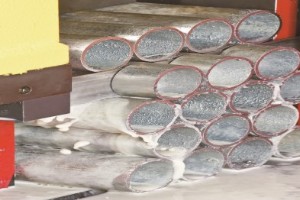
For best sawing results, know how material characteristics and sizes affect the cut. Jay Gordon, North American Sales Manager/Saws & Hand Tools, The L.S. Starrett Company All materials present unique cutting issues. Understanding the material characteristics before starting t
The COVID-19 pandemic has shown the need for automation inside manufacturing facilities. Here’s how innovations such as collaborative robots are helping companies improve business processes. While most industries have been affected by the COVID-19 pandemic, some have suffered more
A closely watched quarterly survey shows super-positive sentiment for manufacturing while a key monthly report highlights peaks and valleys in cutting-tool activity—though year-over-year industry tool growth is up 3.5 percent overall. An impressive 93 percent of manufacturers are ov
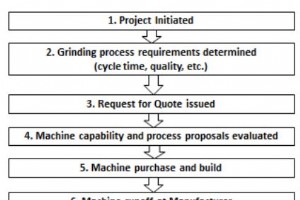
Generally new high volume lines producing complex parts that include grinding processes, such as automotive engine or aero engine blade and vane, proceed through various stages from machine procurement to actual production as outlined in Figure #1. If these lines include a process co
They may not be critical-for-flight hardware yet, but 3D-printed parts for commercial and military aircraft and spacecraft are making it easier to reduce weight and material costs. Translation: There is ROI here for very specific use cases—and functional gain from the savings being p

From easier, faster setups to tighter tolerances and better control options, performing 3+2 machining on a 5-axis system can help ensure some of the most accurate and efficient part-making in today’s manufacturing. There are many reasons for using 3+2 machining on a 5-axis machine.

Fiber reinforced plastics (or FRPs) are used in applications where high specific strength and low weight are essential. To machine FRPs and stacks (FRP/metal-layer composite) without component damage, cutting edge quality and wear resistance are of absolute importance.
In any application, properly preparing metal for welding is key to producing high-quality results, maintaining consistent productivity levels, and minimizing costs — especially costs related to rework and downtime. Starting with the cleanest possible surface greatly increases the ch
By Tony Hufford, Category Manager – Metal Fabrication, Weiler Abrasives Group People use stainless steel for several reasons, including its mechanical properties and appearance. However, if you’re like most, the first thing that comes to mind is its corrosion resistance, which make
Industrial Technology