



Fruit Leather: Production, History, and Quality Control Explained
Background
Fruit leather, also called fruit rolls or Fruit Roll‑Ups, is a dried fruit snack that balances convenience with nutrition. It is produced by pureeing fruit (often a commercial concentrate), cooking the puree, drying it, and then rolling or cutting it into convenient shapes. The resulting product is firm yet pliable, making it easy to package and transport. Because fruit leather can be stored at room temperature, it has become a popular choice for on‑the‑go snacking. Many consumers believe it offers a healthier alternative to candy, as it typically contains real fruit, added vitamins such as vitamin C, and minimal artificial ingredients.
While mass‑manufacturers dominate the market, homemade recipes abound in cookbooks and online forums. These recipes call for fresh fruit, natural sweeteners (such as honey), and simple dehydration methods using ovens or food dehydrators.
History
Historical records suggest that peoples of the Middle East pioneered fruit leather as a preservation technique. Early versions were made from apricots and other locally available fruit. Armenian cookbooks refer to the treat as bastegh and detail traditional methods that involve drying pureed fruit on muslin sheets under the sun. Modern recipes have adapted these principles by using wax paper, cheesecloth, and mechanical drying to achieve consistent results.
In recent decades, major food manufacturers have expanded the range of flavors—watermelon, mango, strawberry, and more—often adding vitamins and artificial colors to appeal to children. Packaging frequently features cartoon characters or licensed movie icons to boost marketability.
Raw Materials
Commercial fruit leather typically contains three main components: fruit puree, a texturizing agent called maltodextrin, and a sweetener (corn syrup or sugar). Maltodextrin, a modified starch, imparts the characteristic soft texture and prevents the product from becoming brittle. Sweeteners contribute flavor and bulk, while additional additives—such as pectin, gums, artificial and natural colors, and flavor enhancers—vary by brand.
In some cases, the fruit puree accounts for only about one‑third of the final product, with the remainder comprising these functional additives.
The Manufacturing Process
Cooking
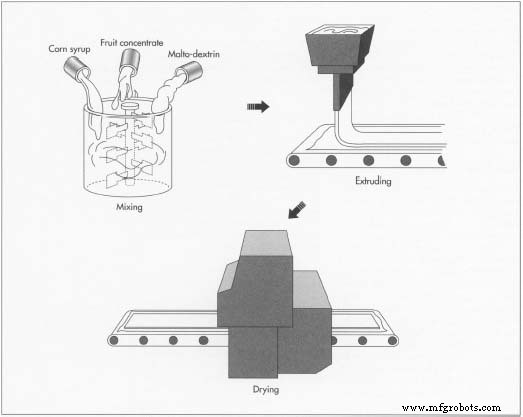
- Fruit concentrate is mixed with water in a vat. Corn syrup, maltodextrin, flavorings, and colors are added. The mixture is cooked for approximately five minutes to achieve the correct viscosity.
Extruding the Puree
- After cooking, the slurry is transferred to a secondary vat. A metal die forces the hot mixture onto a thin, waxy paper, forming a continuous sheet. The die shape determines the width of the final product.
Drying
- The still‑viscous sheet passes through a cool‑air drying tunnel. This step removes moisture quickly while preserving the product’s pliability. At the tunnel’s exit, the sheet is rolled into a spool, often with a strap for stability.
Pouching
- Rolled spools are fed into a pouching machine, where each strip is sealed in foil or paper wrappers. The machine automatically seals the pouch, ensuring a moisture‑free environment.
Packaging
- Sealed pouches are bundled into cardboard cartons. The cartons are labeled with nutritional information, ingredient lists, and marketing graphics—including vibrant colors and child‑friendly characters—to enhance shelf appeal.
Quality Control
Quality assurance starts with sourcing high‑grade fruit concentrate from reputable processors. Throughout production, the following controls are enforced:
- Accurate calibration of maltodextrin and sweetener levels to achieve consistent texture.
- Strict monitoring of cooking and drying temperatures to maintain optimal moisture content.
- Precision weighing of each roll to ensure uniform portion sizes.
- Regular sampling and laboratory testing for nutrient levels, microbial safety, and allergen compliance.
Manufacturing process
- Patent Leather: History, Production, and Environmental Impact
- Jam and Jelly Production: History, Ingredients, and Modern Manufacturing
- Fruitcake: History, Production, and Cultural Significance
- From Ancient Hides to Modern Luxury: The Art and Science of Leather Jacket Production
- Leather Dyes: Key Components Driving Modern Leather Fashion
- How the Dye Industry Delivers Vibrant, Sustainable Colors to Everyday Life
- Expert Guide to Leather Dyeing: Colors, Techniques, and Quality Control
- Optimizing Operator‑Led Lubrication: Practical Guidance for High‑Speed Machines
- Carbon Fiber Leather Cushioning Case for MacBook Pro – Discontinued, Explore the New Ion CarbonShell
- Advanced CMCS/PEO Nanofiber Membranes via Electrospinning for Enhanced Fruit Freshness Preservation