


Industrial manufacturing
Industrial Technology

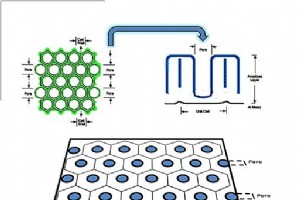
Anodizing is among the most common post-processing operations performed on aluminum parts. It is an electrochemical process that involves immersing an aluminum part in a series of tanks, converting the aluminum surface into a durable and corrosion-resistant finish. To determ

Chrome plating is a popular finish for metal objects, but it can be difficult to remove if you need to change the color or appearance of the metal underneath. There are a few different methods to remove chrome plating, depending on the type of metal and the amount of chrome
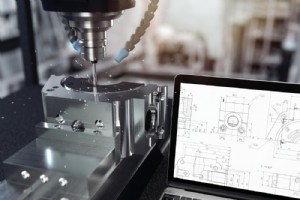
Aluminum’s desirable physical properties and excellent machinability make it one of the most preferred metal choices among product designers. However, even after you’ve come up with the design for an aluminum component or part, you don’t want to get all the way to manufactur
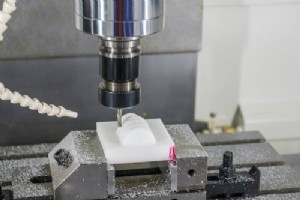
Plastics’ versatility and numerous advantages make them some of the most important engineering materials today. BMW saved up to 100 kg in weight after ditching metals and relying on thermoplastics and composites for the rear boot lid and front wings of its 6-Series Coupe. Wi
Hopefully, our previous article on rapid prototyping has enlightened you about the advantages of rapid prototyping in the engineering and design process. But even after you decide to take the plunge, you’re still likely to be at a crossroads; either you choose CNC machining
Have you recently come up with a product (or part) design, or do you have a new product idea that you believe will be the next big thing? If so, you’d agree that prototyping is a vital process in the product development process; it allows you to discover design flaws early a
The sheet metal fabrication industry is one of the largest industries in the world. In fact, its global market size was valued at USD 265 billion in 2018 and projected to have a CAGR of 5% from 2019 to 2025. As a product designer, especially of consumer products, there’s a p
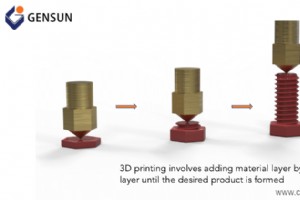
If you’ve recently come up with a product design, then you’ve probably answered some common questions your manufacturer might have for you. For instance, what are your choice of material, the dimensions, strength, and tolerance requirements, and how many units are you lookin
Computer numerical control (CNC) machinesㅡwhich utilize a rotating cylindrical tool to create cuts in a workpiece autonomouslyㅡhave completely revolutionized the manufacturing industry. This manufacturing technology eliminates the human error common in conventional manufactu
Are you an engineer looking to turn your product design into a reality, or do you have parts you’re looking to assemble using fasteners? If so, you’d agree that rivets are among the most commonly used fasteners for assembly because of their supreme fastening capabilities for
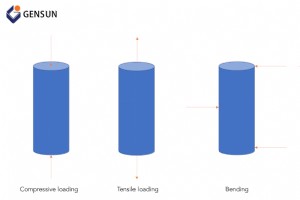
What is the ideal metal (or metal alloy) for my project? Product designers commonly ask this question during the product development phase. And while many factors contribute to the success of a metal alloy for a product development project, the alloy’s mechanical properties
Modern machinery usually comprises several parts assembled to make a fully-operational product. However, these pieces of machinery usually generate huge forces and experience vibrations large enough to disassemble the parts and cause failure. Fasteners are essential pieces o

Springs are mechanical components that elastically absorb applied loads. By “elastically,” we mean that these springs will return to their original position once you remove the applied load. This makes them useful in applications that demand energy storage or shock-absorbing
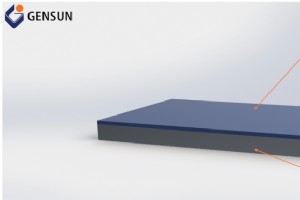
Are you a product designer looking to create parts or components that will make contact with other parts or assemblies, or do you plan to create products that will be exposed to harsh chemicals or environments? If so, you must choose a material with high wear and chemical re

Have you recently come up with a product idea, or do you need to manufacture parts with special requirements? If so, you’re likely looking to create high-quality parts while reducing manufacturing costs and improving aesthetics and ease of assembly. One essential design feat
You don’t need to be an MIT graduate to know that electronic devices and machines generate heat when operating. When left unsupervised, this situation can quickly lead to the device overheating, causing it to malfunction. Then, unless you react quickly enough, this malfuncti
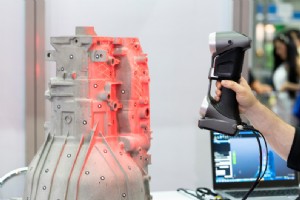
In order to innovate and improve a technology or process, designers must have an in-depth knowledge of existing systems, either because they had a hand in the design of the originals or because they applied reverse engineering principles. Reverse engineering as a methodology

Since the advent of numerically controlled lathes in the 20th century, traditional machining using cutting tools have played a major role in fabricating different components used in a broad range of industries. But just like in every innovation (or technology), traditional m
In the late 15th century, Leonardo Da Vinci sketched a simple rolling mill that demonstrated the possibility of bending sheet metals. However, it wasn’t until 1590 that this sketch became a reality as metal workers started using two heavy cylinders to press metals, altering
A bead blast is a process that uses tiny beads to smooth and polish the surface of a material. After CNC machining, bead blasting is the final finishing process that gives a part its desired finish. In this comprehensive guide, we’ll answer all your questions about bea
Industrial Technology

Understanding Phone Circuits: Core Components and Their Functionality

Significant Enhancement of Single‑Photon Emission via Optimized Coupling of InAs/GaAs Quantum Dot to Micropillar Cavity
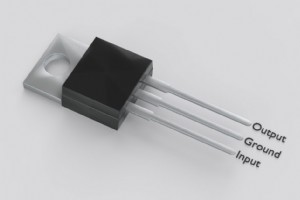
Comprehensive Guide to the LM7815 Voltage Regulator: Usage, Features & Applications

Japan Launches Quantum Computer Prototype 100× Faster Than Current Supercomputers
