



Mastering the Art of Ship‑in‑a‑Bottle Modeling
Background
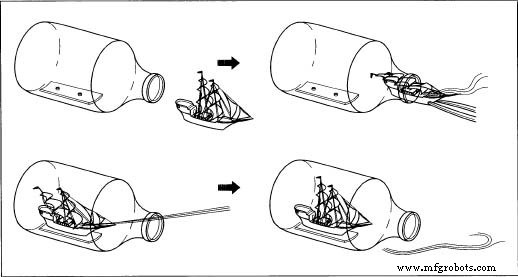
In a ship‑in‑a‑bottle, the hull is engineered to pass through the bottle’s neck, while the sails, masts, and rigging are collapsible. The sails and spars are constructed from paper, thread, and thin wooden or bamboo supports, allowing them to be unfolded inside the bottle with precise control threads.
History
The tradition of miniature ship modeling spans roughly four millennia, with evidence from Egyptian tombs and Greco‑Roman murals. The practice of sealing these models in glass bottles began in the 18th century, evolving as glassmaking improved. The first ship models appeared in bottles around 1850, coinciding with the era of the great clipper ships.
Raw Materials
Choose hardwoods such as spruce or fir for the hull—ideally close‑grained, flaw‑free wood. For spars, bamboo skewers or small dowels work well; they should be sanded to a fine finish. Other essentials include:
- Thread, fine wire, and clear nail polish for rigging.
- Model enamels and fine brushes for painting.
- Medium‑weight bond paper for sails.
- Linseed oil putty or plasticene clay for the sea.
- Corks, sealing wax, and cotton fishing line for sealing.
Tools such as an Exacto knife, hobby drill, miniature screwdrivers, and tweezers are indispensable.
Design
Historical accuracy is paramount. Begin with a well‑researched ship—its name, era, and appearance. Recreate the figurehead, paint colors, and national flag. Consider the bottle’s size and shape; slender bottles suit long‑masted vessels, while shorter bottles accommodate sloops or schooners.
The Manufacturing Process
- Measure the bottle and the collapsed ship to ensure a perfect fit. Clean the bottle thoroughly.
- Prepare the sea: mix linseed oil putty with paint, shape waves, and allow to dry before inserting the ship.
- Carve the hull from a block of hardwood, sand, seal with clear polish, and paint with two coats of enamel.
- Add deck details—lifeboats, hatches, and railings—using wood or wire.
- Build spars (masts, bowsprit, yards, booms, gaffs) from bamboo or dowels, sand, and coat with polish. Drill pivot holes.
- Install 30‑gauge wire pivots at each mast base, creating hinges for folding.
- Secure the bowsprit to the hull; drill holes for rigging.
- Assemble each mast with its spars; tie rigging with appropriate knots.
- Mark mast positions, drill pivot holes, and glue spars into place.
- Attach controlling lines to masts, ensuring they run clear of sails.
- Run shroud lines from the bulwark to each mast; secure with polish.
- For square‑rigged vessels, add lifts and braces to allow yard movement.
- Cut and crease medium‑weight bond paper sails; glue them with partial bonding to allow folding.
- Insert the collapsed ship into the bottle; use tweezers to guide it in.
- Raise the masts inside the bottle, aligning spars, and secure rigging.
- Once the sea dries, secure masts permanently; trim excess rigging.
- Seal the bottle with a cork, optionally adding a screw‑on cap, wax, and a decorative knot of fishing line.
- Finish with a wooden display stand or wall mount that complements the model.
Quality Control
Every stage—from research to final display—must be double‑checked. Accurate dimensions, secure pivots, and realistic painting ensure the model’s authenticity and durability.
Byproducts / Waste
Minimal waste is generated; wood shavings can be disposed of, and the craft remains environmentally friendly.
The Future
Ship‑in‑a‑bottle modeling continues to attract enthusiasts worldwide. Competitions, museum exhibitions, and kit releases keep the hobby vibrant, offering a tangible link to maritime heritage.
Where to Learn More
Books
Donald Hubbard – Ships‑in Bottles: A Step‑by‑Step Guide to a Venerable Nautical Craft (New York: McGraw‑Hill, 1971)
Jack Needham – Modelling Ships in Bottles (Wellingborough, England: Patrick Stephens, 1985)
Vic Smeed – The World of Model Ships (Secaucus, NJ: Chartwell, 1979)
Other Resources
Nautical Gift Shop – https://www.nautical-gift.com/enindex.htm
Langfords Marine Antiques – https://www.langfords.co.uk/gallerysb.htm
Uptown Sales – Authentic Ship‑In‑A‑Bottle Kits – https://www.hobbyplace.com/woodmodels/shipinbotl.html
Gillian S. Holmes
Manufacturing process
- Titanium Alloys in Maritime Applications: Enhancing Ship Performance and Durability
- The Evolution and Science Behind Modern Insulated Bottles
- The History, Production, and Recycling of PET Soda Bottles
- Antenova Launches Raptor – Ultra‑Precise GNSS Antenna for Centimetre‑Level Positioning
- Smart Arduino Water Bottle – Real-Time Monitoring & Alerts
- Overcoming Challenges in Ship Lightweighting with Composite Materials
- Seamless Integration of Composite Materials with Steel Structures
- Understanding Ship Bulwarks: Definition, Height, and Construction
- Key Differences Between Ships and Boats Explained
- Can 3D Printer Resin Be Reused? A Comprehensive Guide