



Titanium Alloys in Maritime Applications: Enhancing Ship Performance and Durability
Titanium alloys—combining titanium with strategic alloying elements—offer low density, high specific strength, corrosion resistance, excellent heat and low‑temperature performance, non‑magnetic behavior, impact resilience, and weldability. These attributes make titanium a prime material for critical ship components, enhancing speed, endurance, and safety.
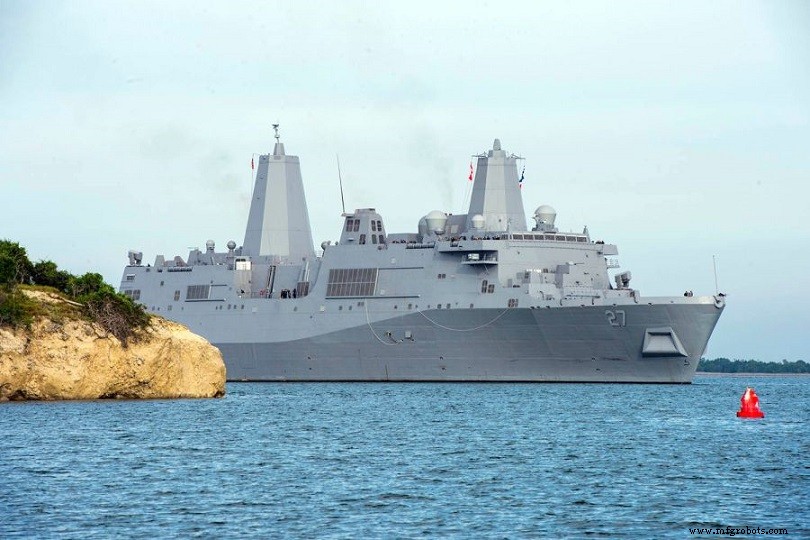
Titanium Alloys in Maritime Applications
Titanium alloys have become essential in naval engineering, delivering weight savings, superior strength, and unmatched corrosion resistance that translate into faster, quieter, and more reliable vessels.

Titanium alloys in ship construction
Their use is most prominent in Russia, the United States, Japan, and China—countries that have invested heavily in naval technology.
1. Russia
Russia pioneered the deployment of titanium in naval vessels with the 1970 ALFA‑class nuclear submarine, which incorporated approximately 3,000 t of titanium. Subsequent ALFA models, each capable of diving to 914 m, benefited from reduced weight and enhanced maneuverability.
The Typhoon‑class submarines further exemplify Russian expertise: their double‑shell hulls, constructed from 9,000 t of titanium, achieve non‑magnetic signatures, deep‑diving capability, high speed, low acoustic footprint, and reduced maintenance.
2. United States
U.S. marine titanium alloys are adapted from aviation grades and specifically engineered for seawater resistance. Key compositions include Ti‑6Al‑4V, Ti‑6Al‑4V ELI, and specialized marine grades such as Ti‑5Al‑1Zr‑1Sn‑1V‑0.8Mo‑0.1Si.
High‑performance titanium has markedly improved ship mobility, stability, and hull weight reduction. During the 1990s, the U.S. Navy certified titanium use across a wide range of vessels—aircraft carriers (CVN), guided‑missile cruisers (CG‑47), frigates (FFG‑7), minesweepers (MCM), amphibious landing craft (LSD‑41CV), hovercraft (LVCA), assault ships (LHD), munitions supply ships (AOE‑6), surveillance ships (SWATH T‑AGOS 19), coastal explorers (MHC‑51), and destroyers (DDG‑51). Components such as seawater cooling systems, fire suppression, structural members, thrusters, sewage treatment, electrical assemblies, and fasteners have benefited from titanium’s properties.
3. Japan
Japan’s Deep Sea 2000 and Deep Sea 4000 research vessels, launched in 1981, adopted titanium for hull frames, pressure‑equalizing chambers, and piping, enabling operations at extreme depths.
Japanese marine titanium grades—pure titanium, Ti‑6Al‑4V, and Ti‑6Al‑4V ELI—are widely used in pressure‑resistant submersibles and civilian vessels, such as cruise ships and fishing boats.
4. China
China’s marine titanium research dates back to the 1960s. Over the decades, a comprehensive alloy system has emerged, covering low‑strength (≤490 MPa), medium‑strength (490–790 MPa), and high‑strength (>790 MPa) grades suitable for hulls, propulsion, power, electronics, and auxiliary systems.
Conclusion
Titanium alloys continue to drive maritime innovation, offering unparalleled performance for today’s demanding naval and commercial vessels. For deeper insights into titanium technologies, visit Advanced Refractory Metals (ARM), a leading global supplier of high‑quality refractory metals, headquartered in Lake Forest, California.
Metal
- Titanium Alloys in Modern Civil Aircraft: Applications and Impact
- Titanium in Watches: Innovation, Allergy‑Free Design, and Lightweight Performance
- Titanium Alloys: Evolution, Applications, and Industry Impact
- Molybdenum‑Rhenium Alloys: High‑Temperature Performance for Aerospace, Nuclear, and Electronics
- Titanium Alloys Revolutionize Orbital Fracture Repair
- Titanium in Building Materials: Innovative Applications & Global Use
- How Titanium Alloys Transform Golf Club Performance
- Titanium and Alloy Anodizing: Process, Coloration, and Applications
- Titanium’s Role in Energy Materials: From Batteries to Geothermal Power
- W Tungsten & Alloys: High‑Performance Applications in Steel, Heat‑Resistant Alloys, and Electronics