



Comprehensive Overview of Modern ECG Machines: Technology, Manufacturing, and Future Innovations
Background
A contemporary electrocardiogram (ECG) records the heart’s electrical activity in a clear, graphical format, enabling clinicians to identify both normal and abnormal rhythms. First described in the early 1900s by Willem Einthoven, the ECG has become an indispensable diagnostic tool worldwide.
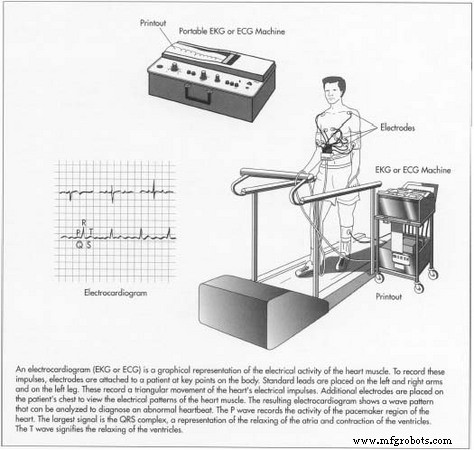
The heart’s four chambers—two atria and two ventricles—are driven by electrical impulses generated in the sinoatrial node. Calcium, sodium, and potassium ions propagate these impulses, causing atrial contraction, ventricular depolarisation, and subsequent repolarisation. The ECG captures these events as distinct waveforms: the P wave (atrial depolarisation), the QRS complex (ventricular depolarisation), and the T wave (ventricular repolarisation).
Because the human body conducts electricity, electrodes placed on the skin pick up minute voltage changes. These signals are then amplified, filtered, and displayed as a time‑dependent waveform, providing vital data on heart rate, rhythm, and potential structural abnormalities.
Key clinical applications include:
- Heart‑rate calculation by measuring inter‑peak intervals.
- Detection of hypertension‑related QRS amplitude changes.
- Identification of myocardial injury via altered Q‑wave morphology.
- Arrhythmia monitoring with Holter devices.
- Assessment of coronary artery blockages by examining ST‑segment depressions.
History
The journey began with Aloysius Luigi’s 1787 discovery that living tissue generates electrical potential. Subsequent studies revealed the heart’s rhythmic electrical activity in 1856, yet practical measurement awaited Willem Einthoven’s invention of the string galvanometer in 1903. This device translated heart‑generated currents into mechanical deflections captured on photographic paper, marking the birth of the modern ECG.
Early machines were large and fragile, but incremental innovations—smaller electromagnets, skin‑contact electrodes, and electronic amplifiers—enabled portability and real‑time recording. Today, microelectronics and digital interfaces have supplanted the original design, yet the core principles remain unchanged.
Raw Materials
An ECG system typically comprises:
- Electrodes (leads) – classified as bipolar or unipolar. Bipolar limb leads record voltage differences between wrists and ankles, forming a triangular path across the heart. Unipolar leads compare body surface potentials to a reference electrode, providing detailed regional data.
- Lead wires and connectors – insulated copper or gold alloys ensuring low‑noise transmission.
- Amplifier circuit – a buffer amplifier (gain 5–10×) followed by a differential pre‑amplifier (gain 10–100×). Optical isolators separate patient‑side circuitry from mains power to eliminate shock risk.
- Output interface – historically paper‑strip recorders; now predominantly digital displays, printers, or networked storage.
- Electrolyte paste – a chloride‑rich gel that bridges skin and electrode, enhancing conductivity.
Image reference:
Manufacturing Process
Electrode Production
Silver‑silicon chloride electrodes dominate due to their stable potential when in contact with biological tissue. Manufacturers perform stringent quality checks to ensure compliance with industry specifications before shipment.
Internal Electronics Assembly
Printed circuit boards are fabricated with precision component placement, followed by wave‑soldering that uses molten solder to secure components via capillary action. This process guarantees consistent electrical performance and durability.
Display and Output Unit Fabrication
Components such as microprocessors and memory modules are designed in‑house, while larger items like magnetic tape recorders may be sourced externally. Integration with the mainboard occurs during final assembly.
Final Assembly and Packaging
All modules are mounted within a robust metal chassis, sealed, and accompanied by consumables—extra electrodes, paper stock, and user manuals. The completed units undergo rigorous testing before distribution.
Quality Control
Quality assurance spans visual inspections, electrical performance checks, and environmental stress testing (heat, humidity, vibration). Manufacturers also benchmark against standards from the American Heart Association, ISO 13485, and FDA guidelines, focusing on input‑signal fidelity, frequency response, calibration accuracy, and recording duration.
The Future
Emerging ECG technologies promise greater portability, higher resolution, and deeper diagnostic insight:
- Wearable ECG monitors that transmit data via Bluetooth or cellular networks to cloud‑based analytics.
- Ultra‑low‑amplitude sensors capable of detecting fetal heart rates or subtle arrhythmias.
- 3‑D cardiac mapping that reconstructs electrical propagation for advanced modeling.
- Integration with pharmacodynamics studies to monitor drug efficacy in real time.
One notable advancement is a handheld ECG patch that attaches to the patient’s upper arms and streams signals directly to a smartphone, where specialized software converts the data into a clinically actionable ECG trace. This innovation enables early detection of cardiac events in remote settings.
Manufacturing process
- EEG Machines: Design, Manufacturing, and Emerging Applications
- Vending Machines: A $36.6B U.S. Industry Powerhouse
- Artificial Heart: Technology, History, and Future Prospects
- Voting Machines: History, Technology, and Standards
- Expert Guide to Modern Change Machines: Design, Components, and Future Trends
- Pacemaker: Modern Life‑Saving Technology for Heart Rhythm Disorders
- The Evolution and Manufacturing of Sewing Machines: From 19th‑Century Innovation to Modern Automation
- Pantyhose: The Ultimate Guide to Elegant Women’s Hosiery
- Machine Tool Spindles: The Core Component Driving Precision Manufacturing
- JW Machine: Precision CNC Contract Manufacturing Services