



Soft Drinks: From Ancient Mineral Waters to Modern Production
Background
Soft drinks—carbonated beverages sweetened with sugar or its substitutes—are a global phenomenon. Every year, consumers in nearly 200 countries pour more than 34 billion gallons of these sparkling drinks into glasses. In the United States, they dominate the beverage sector, accounting for 25 % of total sales. During the early 1990s, Americans consumed an average of 49 gallons of soft drinks per person, 15 gallons more than any other beverage, including water.
The concept dates back to ancient Greece and Rome, where mineral springs were prized for their therapeutic properties. By the late 18th century, Europeans and Americans began mixing sparkling mineral water with acids to create the first “soda water.” In 1809, an American pharmacist patented the first imitation mineral water, mixing sodium bicarbonate with acid to generate effervescence. Pharmacists experimented with a wide range of ingredients, believing flavored soda waters could cure headaches, hangovers, and nervous disorders.
Pharmacy soda fountains soon became social hubs, and the popularity of flavored soda waters grew, not only for their perceived health benefits but also for their refreshing taste. The 1830s saw soda water sold in glass bottles, a challenging feat until 1850 when a manual filling and corking machine was invented. The term “soda pop” emerged in the 1860s, named for the popping sound released when a bottle was opened.
Throughout the late 19th century, new flavors—ginger ale, sarsaparilla, root beer, lemon, and various fruit flavors—appeared on the market. In the 1880s, pharmacists began adding stimulants such as cola nuts and coca leaves, inspired by the fatigue‑curing habits of Bolivian coca‑leaf chewers and West African cola‑nut users. In 1886, John Pemberton combined coca with cola, creating the world’s most iconic beverage, Coca‑Cola. A few years later, Caleb Bradham introduced Pepsi‑Cola in North Carolina. While Coca‑Cola marketed its drink as a “French Wine Cola—Ideal Nerve and Tonic Stimulant,” Pepsi focused on refreshment rather than therapeutic claims.
As demand grew, manufacturers sought a name that reflected the drinks’ gentle nature compared to hard liquor. The term “soft drink” was coined, and it remains the industry standard.
Until the 1890s, production was a manual process—blowing, filling, and packaging bottles by hand. The next two decades introduced automation, dramatically boosting productivity. A pivotal invention was the crown cap in 1892, which effectively sealed carbon dioxide in glass bottles for 70 years. The rise of automobiles spurred the deployment of vending machines at service stations, and in the late 1950s, aluminum cans with pull‑ring tabs entered the market. Lightweight, break‑resistant plastic bottles appeared in the 1970s, but widespread PET (polyethylene terephthalate) usage began in 1991.
Consumer preferences have guided product innovation: diet colas debuted in 1962 amid the thin‑girl trend; the 1980s saw caffeine‑free and low‑sodium options as health awareness rose; the 1990s introduced clear, preservative‑free colas.
Raw Materials
Carbonated water makes up 94 % of a soft drink. Carbon dioxide not only creates the signature fizz but also acts as a mild preservative. Its inert, non‑toxic nature and low cost make it ideal for beverage production.
Sugar, comprising 7–12 % of the mix, provides sweetness, body, and a desirable mouthfeel that balances acids and flavors. During World War II, sugar shortages prompted manufacturers to experiment with high‑intensity sweeteners—saccharin first, later aspartame and other “Nutra‑Sweet” blends. Because these substitutes sometimes lack the full mouthfeel of sugar, they are frequently blended with sugar and additional flavor enhancers.
The overall flavor profile depends on a precise balance of sweetness, tartness, and acidity. Citric acid, the most common acid, imparts a lemony sharpness while lowering pH to mildly preserve the beverage. Small amounts of other additives—natural or artificial flavorings, emulsifiers for visual appeal, saponins for foaming, and antioxidants like BHA and ascorbic acid—complete the formulation.
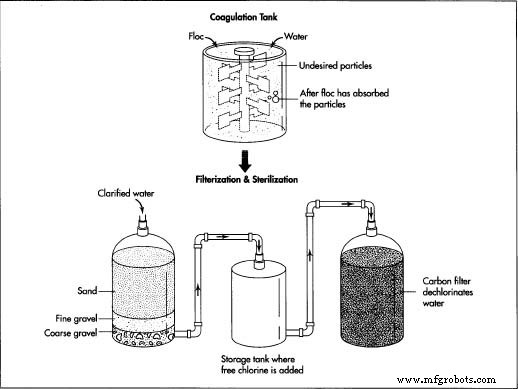
Water purity is critical. Impurities are removed through coagulation (adding flocculants such as ferric or aluminum sulfate), filtration (sand and gravel beds), and chlorination (small chlorine doses). A subsequent dechlorination step with activated carbon restores taste and safety.
The Manufacturing Process
Most soft drinks are produced at local bottling and canning facilities under strict franchise agreements. These facilities must adhere to brand‑specific recipes and manufacturing protocols.
Clarifying the Water
- Water quality determines the final product’s taste, color, and consistency. Suspended particles, organic matter, and microbes are eliminated via coagulation, filtration, and chlorination. Flocculants bind particles, making them easier to filter, while lime adjusts alkalinity to the target pH.
Filtering, Sterilizing, and Dechlorinating
- Clarified water passes through sand and gravel filters to capture fine debris.
- It is then stored in tanks and dosed with free chlorine to kill bacteria and organic contaminants, remaining for about two hours.
- Activated carbon filters remove residual chlorine and organic matter; a vacuum pump de‑aerates the water before dosing.
Mixing the Ingredients
- Sugar and flavor concentrates are injected into a dosing station in a predetermined sequence, ensuring compatibility and preventing unwanted aeration.
- The syrup undergoes sterilization—either ultraviolet or flash pasteurization—to eliminate microbes, especially for fruit‑based syrups.
- Proportioners blend the syrup with water under controlled pressure, using carbon dioxide to prevent aeration and maintain product integrity.
Carbonating the Beverage
- Carbon dioxide is typically added after mixing, though some plants introduce it earlier. Temperature control is essential; colder liquids hold more CO₂. The pressure applied varies by drink type—fruit beverages require less carbonation than mixer drinks like tonics.
Filling and Packaging
- The finished beverage is filled into bottles or cans at high flow rates and sealed immediately with pressure‑resistant closures—tinplate, steel crowns, twist‑offs, or pull tabs.
- Because the product is chilled during manufacture, containers are warmed and dried before labeling to avoid condensation damage. Labels (typically paper or plastic film) provide brand, ingredient, and shelf‑life information.
- Finished containers are packed into cartons or trays and shipped to distributors on pallets or crates.
Quality Control
Manufacturers enforce strict water quality standards—controlling dissolved solids, alkalinity, chlorides, sulfates, iron, and aluminum—to protect public health and maintain consistency. Microbiological testing is routine, and agencies like the National Soft Drink Association set ingredient standards. Sugar quality is monitored to prevent spoilage and ensure a smooth mouthfeel.
All tanks, pumps, and containers undergo rigorous sterilization and continuous monitoring. Cans are internally lacquered to prevent corrosion. Retailers receive storage guidelines to preserve product quality, and most soft drinks have a shelf life of at least one year.
Recycling
The soft‑drink sector, valued at $27 billion, produced roughly 110 billion containers in the early 1990s—half aluminum cans, half PET bottles. Nearly 60 % of these containers were recycled, the highest rate among U.S. packaging. Ongoing environmental concerns drive innovation in refillable and reusable packaging.
The Future
With over 450 drink varieties in the 1990s, the industry continues to innovate new flavors and sweeteners. Emerging technologies promise greater efficiency across all production stages, from advanced water treatment and pasteurization to reduced reliance on preservatives. Health, safety, and environmental stewardship will remain key drivers shaping the soft‑drink landscape.
Manufacturing process
- How Lawn Sprinklers Work: Design, History, and Modern Manufacturing
- Dishwasher Technology: History, Design, and Future Innovations
- The Evolution of Pump‑Action Water Guns: From Invention to Global Market Leader
- The Evolution, Materials, and Manufacturing of Modern Toilets
- Fire Hydrants: Design, Manufacturing, and Their Role in Urban Fire Safety
- Water: History, Types, and Modern Treatment Processes
- The Science Behind Shampoo: Ingredients, Manufacturing, and Future Trends
- Salt: Production, Uses, and Health Impact
- CuZn37 Soft Brass: Antimicrobial, High Strength & Versatile
- Everything You Need to Know About Soft Drink Vending Machines