



Avoiding Measurement Pitfalls in CNC Machining: A Quality Inspector’s Guide
In CNC machining, precision is only half the battle—consistent verification of those tight tolerances is equally critical. For quality inspectors, measurement errors are a leading, yet frequently ignored, source of part rejection, assembly mishaps, and customer complaints.
Even with well‑controlled machining operations, faulty measurement practices can misrepresent part quality. Often, parts are wrongly accepted or unnecessarily scrapped because of measurement mistakes, not real machining defects.
Recognizing these common pitfalls—and learning how to sidestep them—is vital for preserving precision, cutting waste, and delivering dependable production results.
Misinterpreting Engineering Drawings and Tolerances
The most fundamental error starts even before inspection: misreading the engineering drawing.
Inspectors must accurately read dimensions, GD&T specifications, and datum references. Misinterpreting a tolerance zone or using an incorrect datum can produce faulty measurements.
For instance, taking a measurement from the wrong datum can flag a part as out of tolerance when it actually complies with the design.
Based on hands‑on experience, rigorous GD&T training and a meticulous pre‑inspection review of drawings are non‑negotiable.
Using the Wrong Measurement Tool
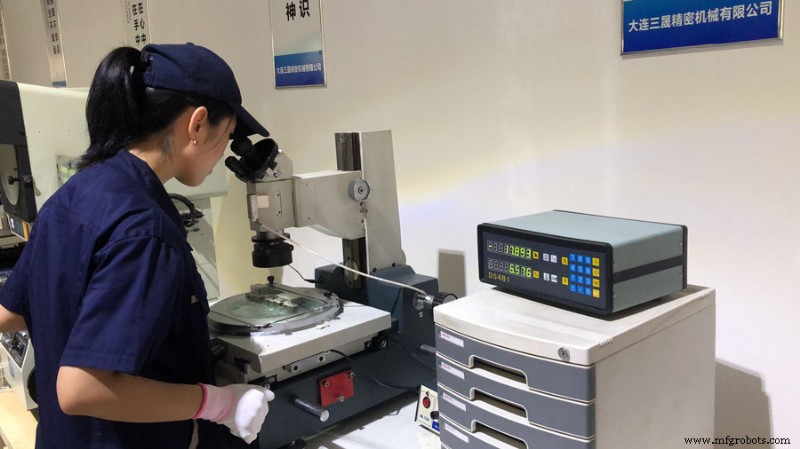
No single tool fits all features. A frequent blunder is relying on general instruments like calipers for tasks demanding higher precision.
While calipers suffice for rough dimensions, they fall short of the accuracy needed for tight tolerances. Likewise, measuring intricate geometries with basic tools often yields unreliable data.
High‑precision parts demand dedicated instruments—micrometers, bore gauges, or CMMs—to deliver reliable results.
Choosing the right instrument—guided by tolerance demands and feature geometry—is essential for accurate inspection.
Ignoring Calibration and Tool Condition
Accurate measurements hinge on proper calibration, yet busy production lines sometimes neglect this critical step.
An out‑of‑calibration tool injects systematic error into every reading, while worn or damaged instruments produce erratic results.
Regular calibration schedules and routine tool inspections are mandatory to sustain accuracy. In quality control, measurement equipment must be regarded with the same reverence as machining tools.
Applying Inconsistent Measurement Force
Manual measurements frequently suffer from operator‑induced force variability.
For instance, over‑applying force on a micrometer can deform the part or compress the measuring faces, while insufficient force may prevent full contact, both skewing results.
The problem is amplified when measuring softer materials like aluminum or plastics.
Employing force‑controlled instruments—ratchet‑stop micrometers, for example—and maintaining consistent technique mitigates this error source.
Measuring at the Wrong Location
Another frequent error is measuring a feature at the wrong location.
Surface irregularities, tool marks, or subtle taper can create variations across a single feature. Measuring at inconsistent points yields dimensions that may not reflect the true value.
For example, taking a shaft diameter at a single point can miss out‑of‑roundness or taper problems.
Best practice dictates measuring multiple points and adhering to defined inspection protocols to guarantee consistency and reliability.
Neglecting Environmental Factors
Temperature and environmental conditions profoundly influence measurement accuracy, particularly in high‑precision machining.
Materials expand and contract with temperature changes; even minor variations can skew tight tolerances. Measuring a freshly machined, still‑warm part can produce inaccurate readings.
Humidity and vibration further affect measurement outcomes.
Minimize these effects by conducting inspections in controlled environments and allowing parts to equilibrate at ambient temperature before measurement.
Improper Fixturing During Measurement
Just as in machining, proper fixturing is crucial during inspection.
A poorly supported or misaligned part can deform or shift during measurement, yielding incorrect readings—especially for thin‑walled or flexible components.
Employing suitable fixtures, supports, and datum alignment guarantees that measurements represent the part’s true geometry.
Overlooking Surface Condition and Cleanliness
Surface contamination is an often underestimated determinant of measurement accuracy.
Oil, coolant residue, chips, or dust on a part’s surface can interfere with measurement tools—particularly under tight tolerances—where a single particle can introduce significant error.
Prior to inspection, parts must be meticulously cleaned and visually verified to confirm that measurement surfaces are debris‑free.
Lack of Repeatability and Verification
Reliable measurement hinges on repeatability. Assuming a single measurement is correct can propagate errors.
Variations between repeated measurements can reveal operator inconsistency, tool instability, or part variability.
From a quality perspective, measuring critical dimensions multiple times and verifying consistency is best practice. Automated systems like CMMs further enhance repeatability and reduce human error.
Failing to Document and Analyze Measurement Data
Measurement is more than dimension checks; it’s about uncovering trends.
Without recording and analyzing measurement data, opportunities to detect process issues—tool wear, machine drift, fixture misalignment—are lost.
Tracking measurement data over time lets manufacturers spot patterns and implement corrective actions before defects arise.
Proper documentation underpins traceability, vital for quality audits and customer confidence.
Conclusion
Measurement accuracy remains a cornerstone of CNC machining quality control. Even when machining processes are optimized, measurement errors can trigger wrong decisions, higher scrap rates, and diminished customer satisfaction.
From a quality inspector’s viewpoint, sidestepping common measurement mistakes demands proper training, appropriate tool selection, controlled environments, and consistent inspection procedures.
Focusing on measurement reliability and repeatability lets manufacturers guarantee that parts meet design specifications and perform as intended in real‑world applications. Precise measurement is the bedrock of precision manufacturing.
Manufacturing process
- Build Your First Arduino Robot: A Comprehensive Beginner's Guide
- Understanding Four Key Types of Grinding Machines and Their Applications
- Bicycle Shorts Explained: Design, Materials, and Production Process
- Create a Smart Talking Humanoid Robot Using Arduino UNO
- Sheet Metal Stamping Explained: A Beginner's Comprehensive Guide
- The Evolution and Production of Comic Books: From Ancient Art to Modern Industry
- Your Complete Guide to Multifunction Circular Saws
- Smart Shower Regulator - Reliable Solenoid Valve for Precise Temperature Control
- CNC Copper Machining: Precision, Applications & Industry Benefits
- Recliner: From Classic Design to Modern Manufacturing