


Industrial manufacturing
Manufacturing process


Compressive strength is a constrained level of compressive stress that causes ductile failure (infinite theoretical yield) or brittle failure in a material (rupture as the result of crack propagation, or sliding along a weak plane). On materials, parts, and structures, compressive streng
Elasticity in physics and materials science refers to a body’s capacity to withstand a force that causes distortion and to recover its original dimensions once the force has been withdrawn. When sufficient loads are applied, solid objects will deform; if the material is elastic, the obje
The stress level below which an unlimited number of loading cycles can be given to material without inducing fatigue failure is known as the fatigue limit or endurance limit. Aluminum and copper, on the other hand, do not, and eventually fail even from small stress amplitudes. Some metal
Many applications required flexibility in order to be able to retain the original shape. Flexibility is the capacity of a material to elastically bend and then recover its original shape after the application of a load. When elastic strain is applied, flexible materials can be reversibly
Just like other types of pressure gauges, the Bourdon pressure gauge is used to measure pressure. The Bourdon-tube gauge, which was invented in 1850, is still one of the most extensively used instruments for measuring the pressure of various types of liquids and gases, including steam, wate
A diaphragm is a material that is elastic and will displace if pressure is applied to it. The elastic property of the diaphragm will be used to determine the difference between the reference and unknown pressures in this sort of pressure gauge. The bourdon gauge’s functioning principle i
The Pirani gauge is a reliable thermal conductivity gauge that is used to monitor pressures in vacuum systems. Marcello Pirani came up with the idea in 1906. By effectively using a resistance thermometer as the heated element, the Pirani gauge eliminates the use of a thermocouple to det
A passive transducer, such as a strain gauge, transforms mechanical displacement into a change in resistance. It’s a thin, wafer-like device that measures applied strain and may be connected to a variety of materials with an appropriate adhesive. The ensuing strain deforms the strain gau
A metal is a material that is good at conducting electricity and heat. Metal has a brilliant appearance when it is freshly created, polished, or shattered. Metals can be pulled into wires or hammered into thin sheets (malleable) (ductile). Metals have a high melting point and are less pr
A clamp is a workshop tool that holds material in place or holds numerous materials together. They aid in the accurate cutting or connecting of various materials. These are mostly utilized in woodworking, metalworking, and construction applications. Even while all clamps accomplish the s
Sheet metal embossing is a stamping technique that creates raised or sunken images in sheet metal. This procedure can be accomplished using matched male and female roller dies, or by sliding a sheet or a strip of metal between the desired pattern’s rolls. It’s frequently used in conjunct
A file is used to cut, trim, or finish a metal or wood project in order to form it to our specifications, such as making it round, square, or angular. High carbon steel is used to make the file. The file is a cutting device made of strong steel with several cutting points. A file is used
In an engineering workshop, after you’ve finished drawing lines on a work with a scriber or a surface gauge, you’ll need a variety of punches to make these markings permanent, because the lines drawn with a scriber may be damaged. For a long time, numerous types of punches have been used
Wrenches come in a variety of forms and sizes and are used to grip, fasten, turn, tighten, and loosen items such as pipes, pipe fittings, nuts, and bolts. The majority of these wrenches are adjustable and have various opening ranges. In this article, you’ll learn the various types of wre
The term “coupling” is common in the engineering world, it is known as a part that connects two shafts together in order to accurately transmit power. The transmission is done from the drive side to the driven side while absorbing the mounting error (misalignment), etc. of the two shafts
In the automotive world or most industrial applications that utilize tires. Tube or tubeless tires are employed depending on the type of application and specific property required. A TIRE (American English) or TYRE (British English) is a circular-shaped component designed to transfer a l
Quick return mechanism is a common principle on shaper and slotter machines. This principle helps to change circular motion into reciprocating motion which in return move the ram forward and backward. In this article, you’ll get to know the definition, applications, diagram, parts, types
Machining is a metal removing process. It removes a material & decreases the material mass hence this is a subtractive process. The conventional machining process is also known as a traditional machining process. It is the basic method of the metal removing process that removes a mat
There are various ways or techniques of machining which are categorized into conventional and non-conventional. Production or manufacturing can be simply defined as value addition processes in which low utility and value raw materials are converted into high utility and valued products w
Machining is a controlled material-removal technique that cuts a material (typically metal) to a specified final form and size. Subtractive manufacturing refers to the procedures that have this common pattern, as opposed to additive manufacturing, which involves the controlled addition o
Manufacturing process
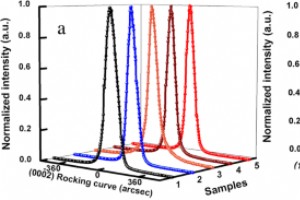
Impact of Threading Dislocation Density on the Refractive Index of AlN: Nanoscale Strain Field Effects

BreakThru Technology Cuts Free Formaldehyde in Phenolic Resins to Below 0.1%
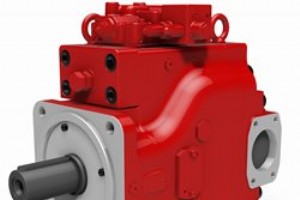
Kawasaki K7VG Hydraulic Pump – High‑Pressure, Water‑Cooled, 2,000 PSI Performance
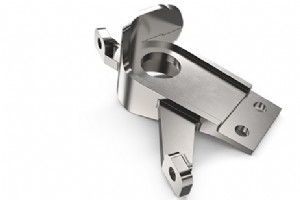
Titanium: The Lightweight, Durable Choice for Aerospace Components
