Industrial manufacturing
Manufacturing process


Engineers depend on coffee. In our studio we have a diner‑style machine that pumps out gallons of warm, bitter coffee—an essential energy source that has powered projects from the Osborne computer to modern Hatch‑Baby series. Yet, as coffee lovers, we demand better quality. I keep an electric kettl
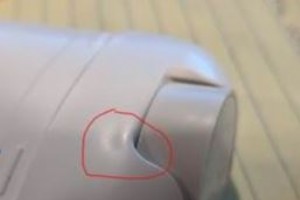
In product development, flawless injection‑molded parts are essential for both aesthetic appeal and efficient production. A prominent sink mark on the front A surface of an early article can jeopardize a shiny finish and delay the launch. Rather than masking the defect with a logo badge, a more effe

Designing for the world’s most demanding consumers—infants—requires a blend of creativity, technical rigor, and a relentless focus on safety. Unlike adults, babies do not have brand loyalty or clear feature preferences, but they are highly perceptive and will test every flaw in a product’s design. T
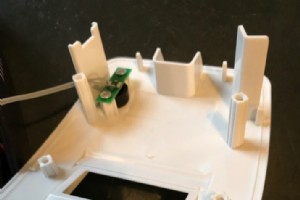
Injection‑molded parts are an excellent choice for medium‑to‑high volume products. When the design incorporates molded plastic bosses, you can achieve a low‑cost solution that aligns components and provides robust mounting points for fasteners and enclosures. However, careful design and placement of
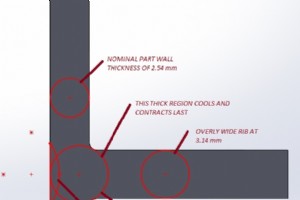
In this fourth installment of our injection‑molded part series, we focus on a common yet often overlooked defect: warpage. Warpage arises from differential cooling across a freshly molded part, typically caused by uneven wall thickness, internal features, or complex aspect ratios. While 3‑D mold‑flo

Drafting is essential for injection‑molded parts. By angling sidewalls slightly, the part can be released from the metal mold without sticking or damaging freshly formed surfaces. Tapered sides – drafted – allow the formed part to be easily removed from its metal mold. Drafting impacts a part’s ap
Previous installments have explored the technical nuances of injection‑molded part design. That knowledge is crucial for launching products that delight customers rather than causing delays, cost overruns, or returns. A key factor often overlooked is the relationship between the product‑developmen

Everyone has heard the classic napkin‑sketch story. A breakthrough idea, first sketched on a napkin, communicates a concept quickly and effectively. One of the earliest examples dates back to pre‑World War II, when an engineer at North American Aviation spotted a napkin sketch of what would become t

During the COVID‑19 pandemic, the dramatic drop in Bay Area traffic unexpectedly opened new opportunities for outdoor recreation. This change allowed me to take a shorter, scenic route to work that passes by Vasona Reservoir in Los Gatos, sparking an idea to combine my commute with evening fishing

Corrosion can undermine the integrity of stainless steel components in manufacturing, medical devices, aerospace, and more. While stainless steel alloys inherently resist rust, machining and handling often leave oils, debris, and chemical residues that compromise this protection. Passivation is the
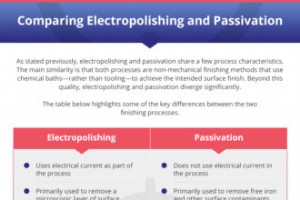
Metal finishing is essential for enhancing both performance and appearance of metal components. In stainless steel, electropolishing and passivation are the two most widely adopted methods.While both methods rely on chemical baths, they differ fundamentally. Electropolishing uses an electrical curre

Fiber lasers have been a game‑changer since 1998, gaining mainstream traction in 2011 with the release of high‑power nanosecond units. While gas lasers still dominate the market, fiber laser marking systems are rapidly eclipsing them thanks to a clear set of advantages. What Is Fiber Laser Marking?
A shaft is a toothed wheel that meshes with another shaft’s teeth, enabling continuous transmission of rotational power. Engineers mix and match gears and shafts of varying diameters to tailor torque and speed for specific applications. Shifts in aerospace, agriculture, automotive, consumer goods, t
CNC machining is a subtractive manufacturing technique that employs computer‑controlled cutting tools to transform raw materials into precise end products. With fully automated programming, CNC systems achieve tight tolerances at high throughput, enabling facilities to produce complex metal, plastic
In Swiss machining, a workpiece is precisely mounted on a CNC‑controlled rotating slide. This slide places the material very close to the cutting tool while enabling several functions via a series of multi‑axis tools. As a result, parts are carefully machined so that they move in concert with the cu
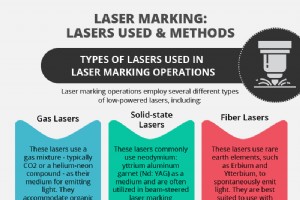
Laser Marking Operations Types Benefits Applications Materials Differentiation Services Laser marking is a precision, non‑contact, non‑subtractive process that uses focused laser energy to create permanent or semi‑permanent impressions by altering the surface coloration of an object. Because it do
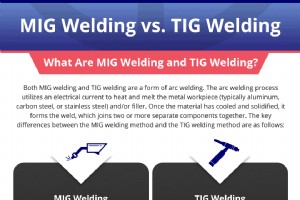
Welding is a versatile manufacturing process that fuses metal components across industries. The choice between MIG and TIG welding depends on part design, material, and production goals. This article outlines each method’s fundamentals, strengths, and ideal applications. Understanding MIG and TIG We
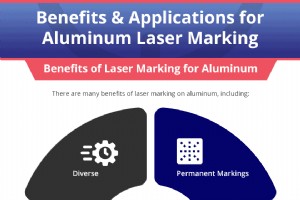
Laser marking delivers high‑precision, semi‑permanent or permanent labels to aluminum components without removing or damaging the material. Unlike engraving or etching, it preserves the structural integrity of the part, making it an indispensable tool across automotive, aerospace, electronics, and m
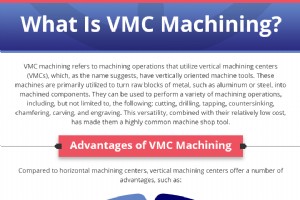
Machining is a broad family of manufacturing processes that use machine tools to remove material from a workpiece, sculpting it into a finished part. These processes span manual to CNC, three‑axis to five‑axis, and vertical to horizontal configurations, each offering unique advantages and trade‑offs
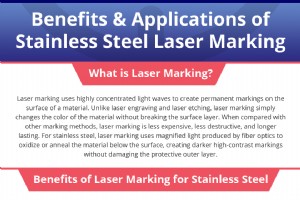
Stainless steel’s corrosion‑resistant chromium oxide layer can be compromised by abrasion, chemical etching, or ink wear. To preserve integrity while ensuring legible identification, FZE Manufacturing Solutions employs precision laser marking technology that delivers lasting, high‑contrast marks wit
Manufacturing process