Industrial manufacturing
Manufacturing process


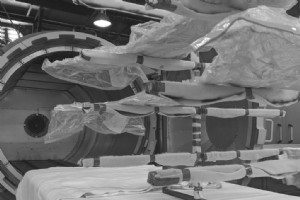
Background A bank vault is a secure enclosure designed to protect money, valuables, records, and documents. Modern vaults combine reinforced concrete, steel, and advanced lock systems to deter both traditional burglary tactics and sophisticated technological threats. History The concept of secure
Background Artificial turf is a synthetic surface engineered to mimic natural grass. It is widely used in places where real grass cannot thrive or would be impractical to maintain, such as sports stadiums, arenas, playgrounds, and urban rooftops. History The tufting process, invented in the early
Background Earth’s atmosphere weighs approximately 6.5 × 10²¹ kg (5.98 × 1024 g). Distributed across the planet’s surface, it exerts a mean barometric pressure of about 14.7 psi (101 kPa) at sea level. However, pressure varies dramatically with altitude and weather systems: at Mount Everest’s summit
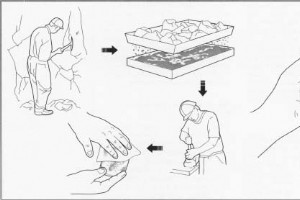
Background Amber is a wholly‑organic fossil resin formed from the secretions of extinct tree species. Between 10 and 100 million years ago, resin‑laden trees fell, were transported by rivers to coastal zones, and became buried under sediment. Over geological time, the resin polymerised into amber, p
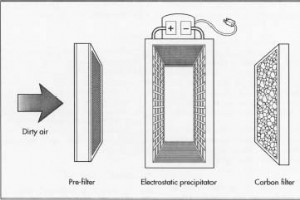
Background Air purifiers were developed to combat allergens such as pollen, animal dander, dust, and mold spores—agents that can provoke sneezing, runny nose, itchy eyes, and in severe cases, asthma attacks. With more than 17 million Americans suffering from asthma, these devices play a critical r
\n\nCreating a new product—whether it’s a novel feature, a fresh customer interaction, or a groundbreaking experience—poses significant challenges. Streamlining the development process can dramatically reduce time, cost, and the risk of costly rework. In this article we examine the most common hurdl
To the general public, product development may seem simple—just a burst of ideas and a sketch. In reality, it’s a sophisticated process that demands deep expertise, rigorous testing, and a relentless focus on user needs. Understanding these realities is essential for choosing the right path for your

Silicon Valley’s rise as a software powerhouse has eclipsed the era when local factories churned out the physical products we touch. The region’s 3‑D manufacturing footprint has contracted, with much of it moving overseas or becoming more specialized. When StudioRed launched in 1981, the Valley wa
Designers constantly seek inspiration, and one enduring source lies in natural and traditional materials. I’m particularly drawn to projects that repurpose uncommon or ultra‑traditional materials in novel ways—enhancing both aesthetics and functionality. In recent years, natural materials have incre
In a recent conversation, we sat down with Soyun Kim, Senior Product Designer at StudioRed, to explore her design methodology and glean seasoned advice on UX, UI, product design, and branding. What’s your product design process? Every project has a unique character, so the process must adapt accordi
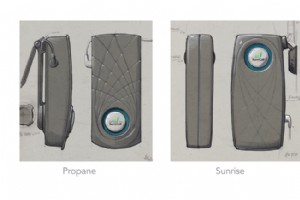
Allen Wilson brings more than a decade of industrial design experience and nearly a dozen co‑inventor patents to StudioRed. In this interview we explore his career path, creative inspirations, and how he tackles the most pressing design and cost challenges facing product teams today. How did you get

The consumer buying journey is evolving, but many product designs still lag behind. Previously, shoppers relied on reviews and chose items that matched their needs, with products featuring straightforward, minimal controls. Today, almost every product ships with a companion app that now shapes purch
Is Your Product Truly Ready for Launch? Render vs. Reality What does “production‑ready” actually mean? Across crowdfunding platforms, countless projects flaunt polished renders that claim to be launch‑ready, yet many still fall short of delivery or deviate dramatically from their prototypes. Why doe
Designing connected hardware is complex, and even small missteps can inflate budgets and delay launch. With 37 years of experience helping clients navigate the full product lifecycle, we’ve distilled the key practices that keep projects on track and within budget. Define specifications early and c
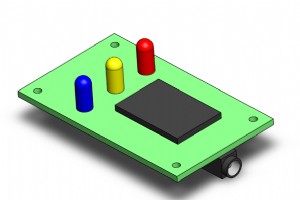
Injection‑molding tooling is often the single largest expense in a product’s life‑cycle. While many engineers know molds are pricey, the real shock comes when a quote arrives. The good news: many cost‑driving elements stem from design choices that can be refined without sacrificing functionality. In

While a polished ad campaign can capture attention, it often fails to translate into lasting engagement with millennials. This cohort, the largest generation by headcount, is projected to comprise 50% of the global workforce by 2028, according to PWC. Their media literacy and skepticism toward tra
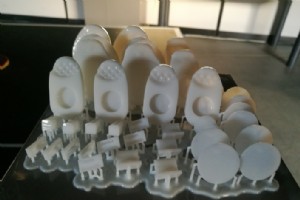
Virtual design tools have transformed the way we conceive products, yet the leap from CAD model to production-ready item remains a complex journey. While some narratives claim a fully virtual design can bypass prototyping, reality shows that early, tangible mock‑ups are indispensable for uncovering
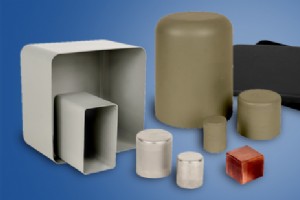
In entrepreneurial circles, “fail fast” is a well‑known mantra. The idea is to push a concept to its limits quickly so you can decide whether to keep investing or to pivot—saving time, energy, and budget. When it comes to consumer devices, that means conducting early market tests with a working, yet
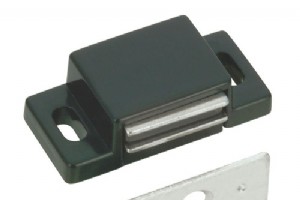
Magnets can add remarkable functionality to a product when engineered correctly, but their performance depends on subtle design details that can make or break a feature. Latching: Magnetic latches are inexpensive and effective for applications where the door or panel is guaranteed to reach a fully c
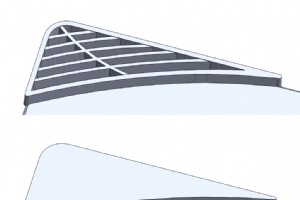
Prototyping is a critical step in product development. Validating designs outside of CAD—by building physical parts—reveals issues that are invisible on screen. For most human‑scale components the choice boils down to two dominant methods: machining or 3D printing. Historically, 3D‑printed parts wer
Manufacturing process