



Inside Bank Vaults: History, Design, and Future of Security
Background
A bank vault is a secure enclosure designed to protect money, valuables, records, and documents. Modern vaults combine reinforced concrete, steel, and advanced lock systems to deter both traditional burglary tactics and sophisticated technological threats.
History
The concept of secure storage dates back to ancient Egypt, where simple padlocks protected valuables. The Romans introduced warded locks, and similar innovations emerged independently in India, Russia, and China. In the United States, banks relied on iron safes with key locks until the mid‑19th century, when the Gold Rush spurred a wave of bank robberies that exposed key‑lock vulnerabilities.
Linus Yale Jr.’s 1861 combination lock marked a turning point. Although robbers eventually breached it by force, drilling, or kidnapping the bank manager, the lock’s adoption led to the development of the “theft‑proof” time lock by James Sargent. This dual‑control system prevented forced entry during a preset period, reducing kidnapping incidents.
As robbers adapted—using explosives, cutting torches, and liquid nitroglycerin—vault manufacturers responded with thicker walls, stair‑stepped grooves, and copper‑alloy reinforcements that melt and reseal under heat. By the 1920s, banks favored massive vaults with several‑foot‑thick walls, designed to withstand not only armed robbery but also mob violence and natural disasters.
Today, the security arms race continues with heat sensors, motion detectors, and sophisticated alarm systems, while thieves develop new tactics. Bank robberies have declined dramatically, yet the threat persists.
John Dillinger: A Case Study in Bank Crime
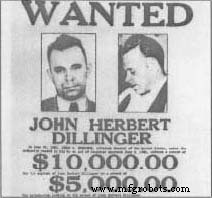
John Dillinger (1903–1934) exemplified the era’s high‑profile bank robbers. After serving 10–20 years for attempted robbery, he escaped in 1933 and led the infamous Dillinger Gang. Their meticulous planning—timed heists, pre‑identified escape routes, and coordinated getaway cars—challenged law enforcement. Despite increased FBI efforts, Dillinger was eventually killed during a shootout in Chicago. His legacy remains a cautionary tale of how evolving bank security prompted equally sophisticated criminal strategies.
Raw Materials
Vault walls and doors are built from high‑strength concrete, steel reinforcement rods, and proprietary additives that enhance compressive and impact resistance.
Design
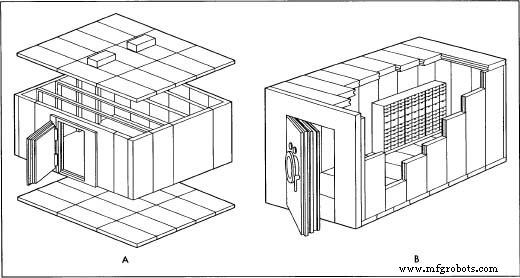
Vaults are custom‑designed as the foundational element of new bank buildings. The process begins with a detailed design phase where size, shape, door location, and security features are finalized. After approval, the manufacturer fabricates the components and delivers them for on‑site assembly.
Manufacturing Process
The Panels
- Concrete with zero slump is poured into specialized molds and hardened in 6–12 hours.
- Reinforcement steel rods are manually positioned within the damp mix.
- Molds are vibrated to eliminate air pockets and then finished with a trowel.
- Panels are demolded, inspected, and transported to the construction site.
The Door
- The door uses the same high‑strength concrete but includes a lock aperture and a stainless‑steel cladding.
- Manufacturers either cast the concrete directly against the steel cladding or cast the core and then attach the cladding.
The Lock
- Modern vaults employ dual‑control combination locks linked to a time‑lock system that delays opening until a preset period elapses.
- These lock assemblies are produced by a handful of specialized manufacturers and are delivered pre‑assembled to the vault builder.
Installation
- Panels and doors are welded together on site, creating a seamless enclosure.
- Integrated alarm systems—such as listening devices, cameras, and tamper‑alert sensors—are installed concurrently.
Quality Control
Underwriters Laboratories (UL) now sets the industry standard. Vaults are classified by how long they can withstand a simulated break‑in: Class 1 (30 min), Class 2 (60 min), Class 3 (120 min). UL inspectors use torches, hammers, and other tools to attempt to breach the vault; failure to breach within the allotted time earns the certification.
Byproducts and Waste
Modern modular vaults generate minimal manufacturing waste. However, removing older, massive vaults requires specialized demolition equipment and can be costly. Some companies refurbish and resell retired vault doors, extending their useful life.
The Future
Recent advances in concrete technology and lock mechanisms have reduced bank robbery incidents, yet new threats—such as the high‑temperature “burning bar”—remain a concern. Vault manufacturers collaborate with banking institutions and law enforcement to anticipate and counter evolving burglary techniques.
Where to Learn More
Books
Steele, Sean P. Heists: Swindles, Stickups, and Robberies that Shocked the World. New York: Metrobooks, 1995.
Tchudi, Stephen. Lock & Key. New York: Charles Scribner’s Sons, 1993.
Periodicals
Chiles, James R. “Age‑Old Battle to Keep Safes Safe from ‘Creepers, Soup Men and Yeggs.’” Smithsonian (July 1984): 35–44.
Merrick, Amy. “Immovable Objects, If They’re Bank Vaults, Make Nice Restaurants.” Wall Street Journal (5 February 2001): A1.
Manufacturing process
- Revolving Doors: Design, History, and Energy‑Saving Benefits
- The Evolution and Manufacturing of Modern Pin‑Tumbler Locks
- Combination Lock: Design, Manufacturing, and Historical Evolution
- Build a Smart Auto‑Locking Door Using Your Smartphone’s Bluetooth Proximity
- Secure Password-Based Door Lock with Arduino, Keypad & Linear Actuator
- Smart Keyless Door Lock – Arduino & Android Bluetooth‑Controlled Password System
- WiFi‑Enabled Smart Door Lock with Arduino & ESP8266 – Unlock via Phone
- Secure Your PC with an RFID‑Enabled Door Lock – Arduino Relay Project
- Arduino Keypad Door Lock with User-Defined Code
- Build an Arduino RFID Door Lock – Master RFID Technology with a Step‑by‑Step Guide