



Autoclave vs. Out‑of‑Autoclave Curing: Which Method Delivers Superior Composite Performance?
Carbon fiber, discovered in 1958, has long captivated engineers with its exceptional combination of strength, lightweight, and stiffness. It boasts ten‑times the tensile strength of steel while weighing only a fraction of the mass, making it indispensable in automotive and aerospace design.
In 1981 the McLaren MP4/1 pioneered a carbon‑fiber composite chassis, and today more than 60 % of the Team McLaren Mercedes Formula 1 car is constructed from these advanced composites.
Despite its performance benefits, the high production cost of carbon fiber drives scientists and engineers to seek more efficient, cost‑effective manufacturing routes. Two widely used approaches are autoclave curing and out‑of‑autoclave (OOA) curing. Which is the better choice?
Key Differences
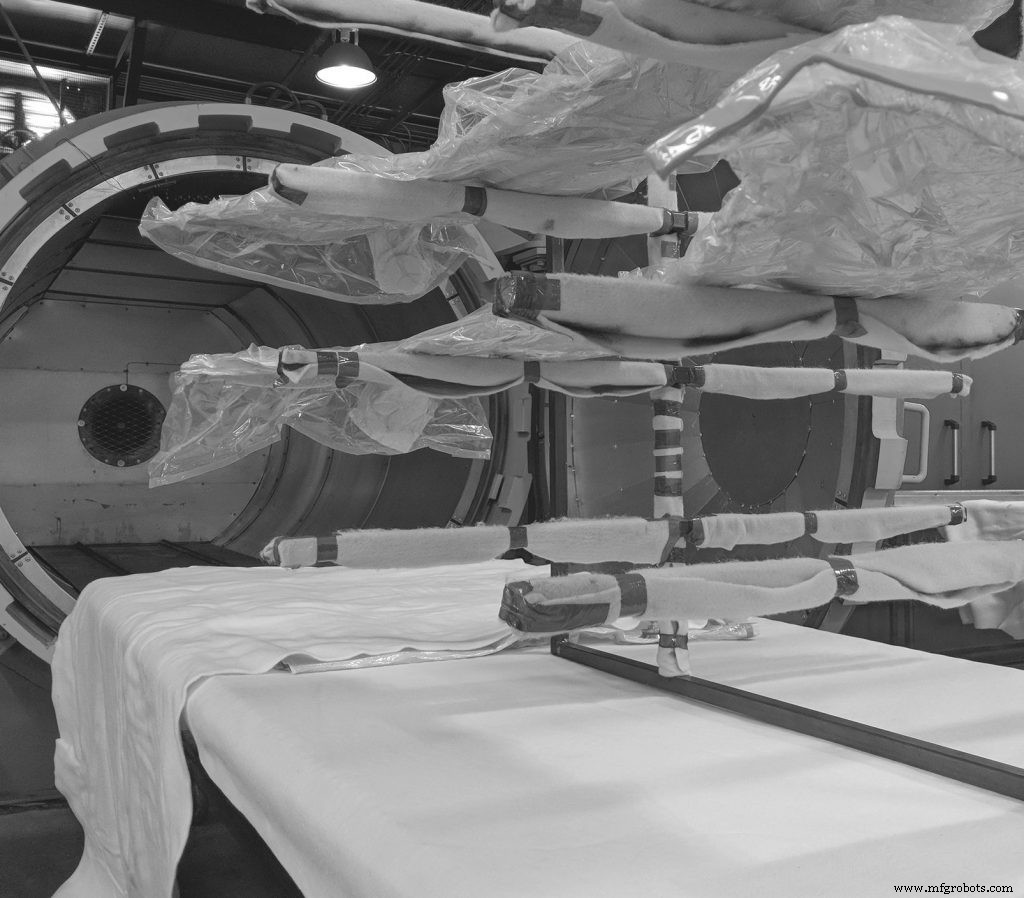
Autoclaves are the traditional workhorse: a pressure vessel that cures composites under high pressure and temperature. They demand significant capital investment, consume large amounts of energy, and restrict component size. Additionally, autoclaves offer limited in‑process adjustment of vacuum bags or tooling, and their slow cycle times cap production volume.
OOA curing replicates autoclave quality by sealing the lay‑up in a closed mold and applying vacuum, pressure, and heat through alternative means—eliminating voids and achieving the desired fiber content without an autoclave.
Out‑of‑Autoclave Prepreg Carbon Fiber
Prepreg carbon fiber is one of the most sophisticated techniques for composite fabrication. OOA prepregs feature a low resin content and a superior surface finish, delivering outstanding structural performance.
OOA prepregs cure at markedly lower temperatures—typically 93 °C or 121 °C—compared with the 177 °C required by conventional autoclave processes. The uncured prepreg is also easier to handle; it can be hand‑cut and precisely laid into intricate molds, making it ideal for smaller, complex parts.
OOA in Aerospace
NASA once evaluated the feasibility of a massive 40‑ft by 80‑ft (12 m × 24 m) autoclave to cure 10‑m‑diameter launch‑vehicle barrels. The projected cost exceeded $40 million to build, with an additional $60 million for installation, not to mention ongoing nitrogen and power expenses.
Such financial barriers prompted exploration of OOA methods for large‑scale composites. Lockheed Martin’s X‑55 Advanced Composite Cargo Aircraft (ACCA) exemplifies this shift: a 60‑ft (18 m) long fuselage entirely fabricated with advanced composite material using eight VBO‑cured MTM‑45 panels.
Choosing Between Autoclave and OOA
By combining innovative OOA techniques with traditional autoclave curing, SMI delivers highly customizable, high‑quality composite components. Our commitment to cutting‑edge technology ensures that the future of composite manufacturing remains both scalable and cost‑effective.
Curious about how much it would cost to manufacture your composite parts with SMI? Contact us today to learn more.
fiber
- Single‑Mode vs. Multi‑Mode Fiber Optic Cable: Key Differences Explained
- Wheels vs. Casters: Understanding the Key Differences
- O‑Rings vs. Gaskets: Understanding Their Roles and Key Differences
- Iron vs. Steel: Key Differences Explained
- Milling vs. Grinding: Key Differences Explained
- Washers vs. Gaskets: Key Differences Explained
- Java vs. Scala: Key Differences, Pros, and Cons for Modern Developers
- Python vs. Go: Which Language Wins for Your Project?
- Python vs. C++: Key Differences & Which Is Right for You
- DC vs. AC Motors: Key Differences and Choosing the Right One for Your Application