



Reliability in Maintenance: What It Is and Why It Matters
In the world of industrial operations, “reliability” is the cornerstone of productive, cost‑effective maintenance. It means that equipment, systems and processes consistently perform their intended function under specified conditions, minimizing unplanned downtime.
Reliability vs. Availability
While often used interchangeably, the two terms describe distinct concepts. Availability is the proportion of time an asset is ready for use – a simple uptime metric. Reliability, on the other hand, is the probability that an asset will operate without failure during a specified period. A machine can be 80 % available yet 100 % reliable if the 20 % downtime is planned and controlled.
The Evolution of Maintenance Thinking
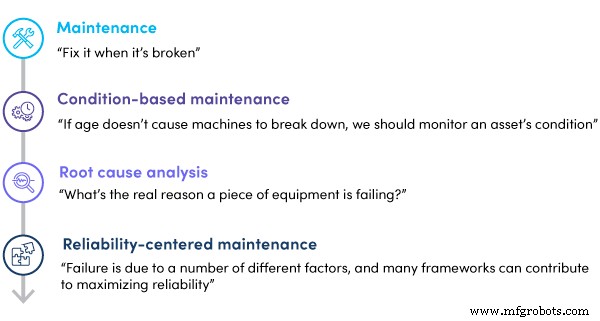
Historically, maintenance teams assumed that the longer equipment ran, the higher its likelihood of failure. Studies from the 1960s overturned this belief. Research in aviation found that only 11 % of failures were attributable to age; 89 % stemmed from other causes such as wear, environmental factors and design issues.
This insight sparked the rise of condition‑based maintenance, where failure prevention is linked to measurable changes in an asset’s condition rather than its age. Implementing this approach required systematic root‑cause analysis to identify the underlying reasons for failures.
Reliability‑Centered Maintenance
Condition‑based maintenance focused on the current state of equipment, but it did not account for the broader context that drives reliability. Reliability‑centered maintenance (RCM) emerged to address this gap. RCM integrates design, operation, technology and organizational culture to guide maintenance decisions that maximize long‑term reliability.
RCM is not a replacement for any single strategy; rather, it is a framework that selects the most appropriate method for each asset. For instance, a car might receive time‑based preventive oil changes, condition‑based tire inspections and run‑to‑fail treatment for bulbs, all under one RCM plan.
Why Reliability Matters
As technology, data analytics and design capabilities evolve, a holistic reliability approach becomes essential. By understanding the full spectrum of factors that affect asset performance, organizations can reduce downtime, lower maintenance costs and enhance overall operational efficiency.
In short, reliability is the culmination of decades of learning and innovation. It is the compass that guides us toward predictable, high‑performance operations.
Equipment Maintenance and Repair
- Enhancing Water Service Efficiency with eMaint at Creston Water Works
- How to Prolong Your Power Supply’s Lifespan: 6 Expert Tips
- Avoiding Common Pitfalls in Enterprise Technology Projects for Middle‑Market Manufacturers
- Urgent PLC Repair: Real-World Fixes for Festo Controllers on the Plant Floor
- Lockout‑Tagout (LOTO) Procedures: Safeguarding Your Workforce
- Fast Way Cover Repairs Keep Eaton Hydraulics Production Running Smoothly
- Unlocking Asset Value: How Asset Performance Management Maximizes ROI
- Southern Utility Modernizes Gas Turbines with Advanced Condition‑Monitoring Controls
- Top Reasons Companies Are Investing in Industrial Robots
- Key Factors for Choosing Cordless Power Tools in Plant Maintenance