



Lockout‑Tagout (LOTO) Procedures: Safeguarding Your Workforce
Consider a scenario where an HVAC system has unexpectedly ceased operation. You pause before attempting to re‑energize it and discover that a technician has already entered the unit to perform repairs.
That instinctive hesitation could have saved a life, but it also highlights the critical role of lockout‑tagout (LOTO) procedures in preventing accidental energization during maintenance.
This article explains what a LOTO program entails, when it should be implemented, how to craft an effective procedure, and how to maintain compliance with OSHA and your organization’s safety standards.
What is Lockout‑Tagout?
Lockout‑tagout, commonly abbreviated as LOTO or referred to as lock and tag, comprises a set of safety protocols and checklists designed to protect workers from the sudden start‑up of machinery or the release of hazardous energy during maintenance activities.
Hazardous energy includes electrical power, mechanical force, hydraulics, pneumatics, natural gases, chemicals, and thermal energy.
Origins of LOTO Standards
While the procedures may seem onerous, they were developed through collaboration between employers, unions, and industry bodies such as the National Safety Council, ANSI, and NFPA over the past five decades to address real workplace injuries.
When is LOTO Required?
Ask yourself: “Could a maintenance activity pose a risk of injury? Must the machine be shut down to perform this work?” If the answer is yes, LOTO is mandatory.
via GIPHY
Maintenance schedules can be planned or reactive, and in large facilities with complex machinery, the risk of accidental energization is significant. Without a LOTO program, the consequences can be catastrophic.
LOTO Program vs. LOTO Procedure
It is essential to distinguish between a LOTO program and a LOTO procedure:
- LOTO program: A comprehensive safety framework ensuring that LOTO procedures are properly written, implemented, and followed.
- LOTO procedure: A step‑by‑step checklist for locking out a specific piece of equipment.
Think of procedures as the actionable checklists, and the program as the overarching strategy that schedules and monitors their use.
Why LOTO is Non‑Negotiable
While compliance is critical, the paramount goal is employee safety. The absence of a LOTO procedure can lead to serious injuries or fatalities, as well as significant financial and reputational damage.
Tragic Losses
In 2006, a Wisconsin teenager named Dusty Babcock died after being pinned beneath a machine that had not been properly de‑energized. Investigations revealed multiple safety violations, including the failure to lock out the equipment before allowing access.
Such incidents underscore the importance of rigorous LOTO compliance.
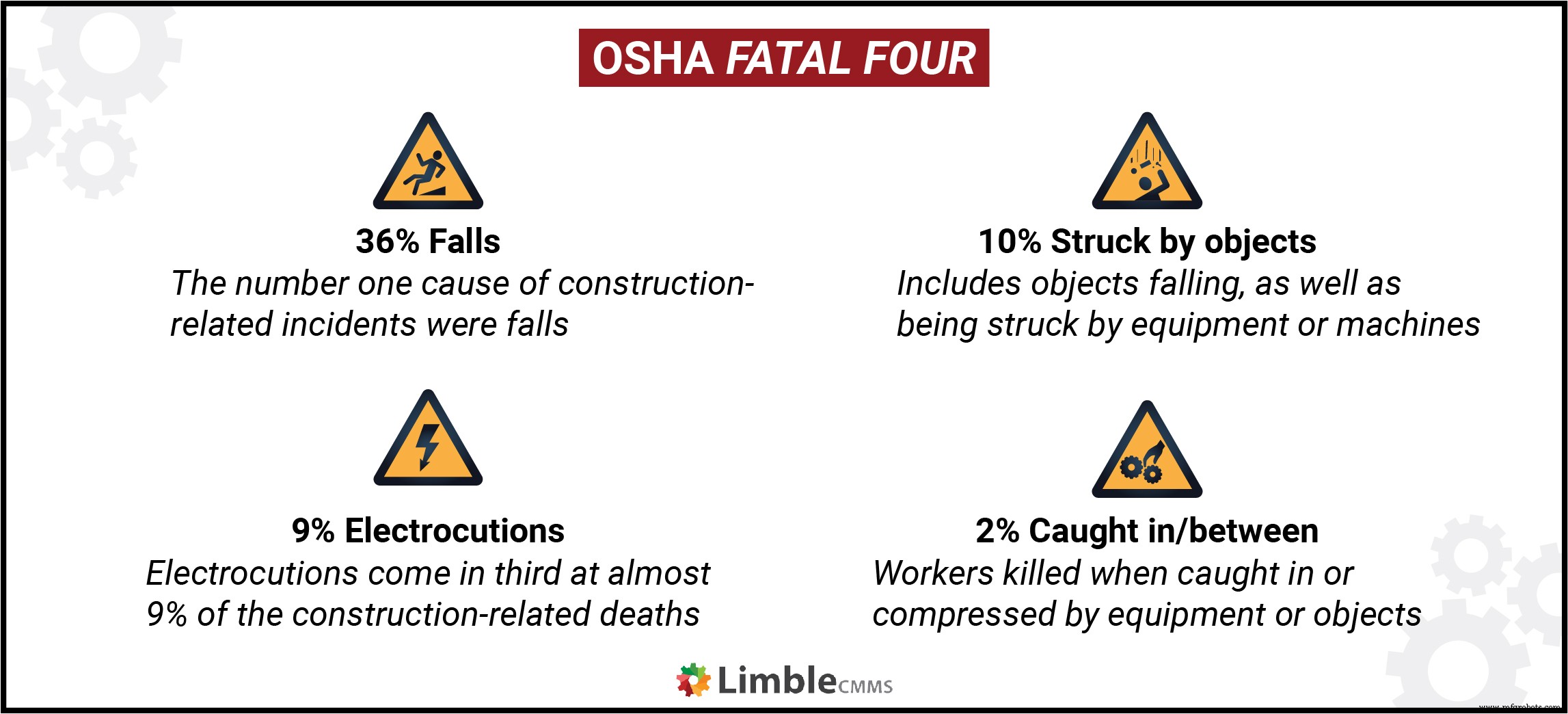
OSHA’s “Fatal Four”. Source: EHS Daily Advisor
Financial Consequences of Non‑Compliance
OSHA fines range from $12,653 to $136,532 per violation. These penalties can erode company profits and jeopardize employee trust.
OSHA’s standard on hazardous energy control requires employers to establish a LOTO program to prevent accidental energization. Failure to comply can trigger severe penalties.
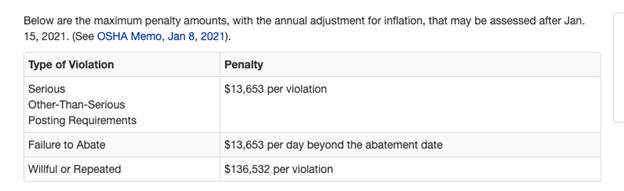
Example of OSHA penalties. Source: OSHA Penalties
Legal and Reputational Risks
OSHA’s enforcement actions can lead to costly settlements, operational shutdowns, and media scrutiny. A notable case involved a metal‑stamping plant that paid $1.5 million to settle claims stemming from LOTO violations.
Incidents like these not only damage financial standing but also erode employee confidence and attract negative public attention.
Employee Retention Challenges
When safety protocols fail, employees often lose faith in the organization, leading to higher turnover and diminished productivity.
Key Elements of an Effective LOTO Program
Developing a robust LOTO program requires a systematic approach that balances compliance with practicality.
Prioritize Safety
Establish an energy‑control program that mandates lockout devices for all equipment capable of being locked out. If lockout is infeasible, implement a tagout system that provides equivalent protection.
Risk Assessment
Document all potential hazards whenever equipment is added or reconfigured. Keep energy‑isolation points updated to reflect changes in the facility.
Comprehensive Documentation
Maintain up‑to‑date, accessible LOTO procedures for every machine. Post them visibly near the equipment and protect them from environmental damage. For digital systems, ensure all staff have access to the latest versions.
Using a mobile CMMS such as Limble allows technicians to access LOTO checklists on‑site and update work orders in real time.
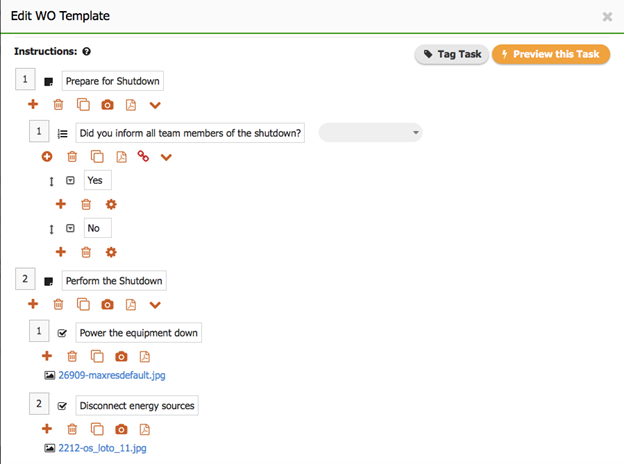
Creating a LOTO checklist in Limble CMMS
Maintain Company Integrity
A strong safety culture reinforces trust with employees, customers, and investors. Demonstrating commitment to safety showcases organizational integrity.
Ongoing Training
Implement a continuous training cycle covering authorized, affected, and other employees. Conduct shift briefings and annual refresher courses, especially after equipment changes or procedural updates.
Managers should conduct periodic audits to verify compliance and keep training materials current.
via GIPHY
OSHA Inspection Practices
OSHA may conduct inspections at least once a year. Common triggers include imminent danger, incidents, employee complaints, third‑party referrals, planned inspections, and follow‑up visits after prior citations.
1) Imminent Danger
OSHA responds when a site is deemed likely to experience a severe accident.
2) Incidents or Fatalities
Workplace injuries or workers’ compensation claims often prompt an investigation.
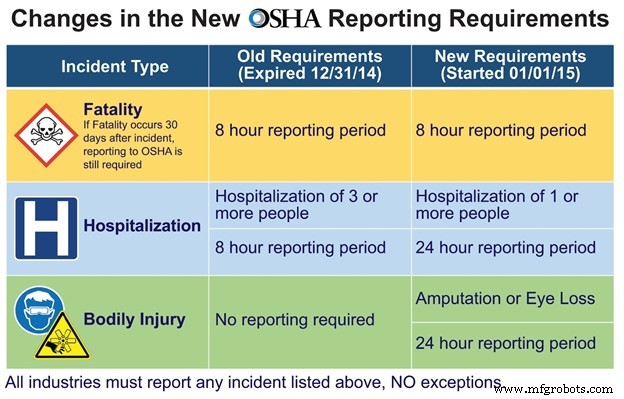
OSHA’s incident reporting requirements. Source: Conversion Technology
3) Employee Complaints
OSHA treats complaints confidentially and investigates based on severity.
4) Third‑Party Referrals
Referrals may arise from media reports, local agencies, or compliance officers.
5) Planned Inspections
High‑hazard industries receive surprise inspections to ensure compliance.
6) Follow‑Up Visits
Failure to correct cited violations can lead to additional penalties of up to $125,000.
Developing a LOTO Procedure That Meets OSHA
Below are key questions and guidelines for crafting procedures that satisfy regulatory expectations.
Does My Facility Need LOTO?
LOTO applies when unexpected energization could harm employees. Industries such as construction, agriculture, and oil drilling may have alternative standards.
When Do OSHA Standards Apply?
OSHA’s scope includes normal production and servicing/maintenance activities. LOTO is mandatory unless a machine guard is removed or a worker’s body enters a danger zone.
Training Requirements
OSHA expects training for authorized, affected, and other employees. Include hands‑on, machine‑specific instruction.
Procedures for Each Piece of Equipment
While similar units can share a template, each distinct machine requires its own procedure.
Locating Procedures
Many manufacturers provide LOTO procedures in operation manuals. If not, develop one and store it in a CMMS for easy access.
Exceptions
LOTO may not apply when employees only unplug an electrically powered machine or when no hazardous energy exists.
Step‑by‑Step LOTO Procedure
The following steps should be detailed in each procedure, leaving no room for ambiguity.
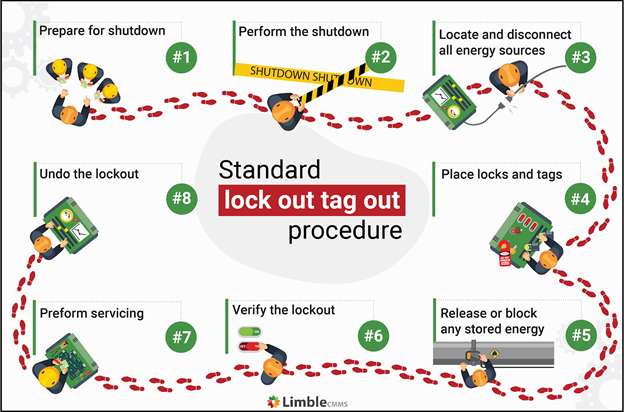
Step 1: Prepare for Shutdown
Notify all affected employees, explain the reason for lockout, and ensure the authorized worker reviews the specific procedure.
Step 2: Review the Procedure
Confirm that all shutdown, isolation, and lockout steps are understood and documented. Use visual aids and photos for clarity.
Step 3: Perform the Shutdown
Follow the machine‑specific stopping sequence. Verify that the equipment is powered down before proceeding.
Step 4: Isolate All Energy Sources
Identify and disconnect every primary energy source—electricity, steam, water, gas, compressed air—using the appropriate isolation devices.
Step 5: Apply Locks and Tags
Install lockout devices on all control points and affix lockout tags. Choose devices that match the machine’s specifications and provide sufficient security.
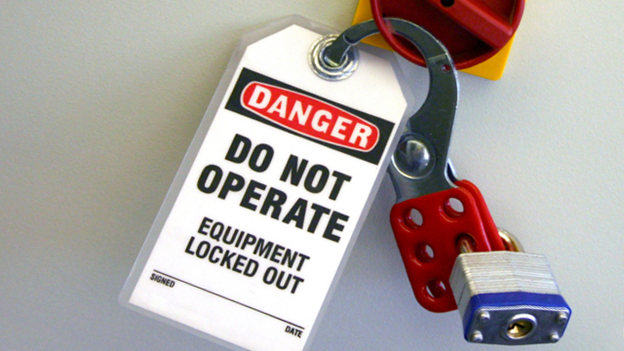
LOTO tag and lock. Source: Ara University
Step 6: Release or Block Stored Energy
Drain fluids, vent gases, dissipate heat, or release mechanical tension to eliminate residual energy.
Step 7: Verify Lockout
Attempt to start the machine. It should not move. Return controls to neutral or off position after verification.
Step 8: Perform Scheduled Servicing
Conduct maintenance tasks efficiently while the machine remains locked, minimizing downtime and preserving safety culture.
Step 9: Restore Equipment to Service
Re‑engage all energy sources, remove locks and tags, inspect the machine, and notify users that it is safe to resume operation.
Implementing a LOTO Program
Adopting a LOTO program involves strategic planning and stakeholder buy‑in.
Secure Management Support
Obtain executive approval for funding and resources. Highlight the ROI: reduced injuries, higher productivity, and compliance with OSHA.
Write a LOTO Policy
The policy should outline purpose, scope, definitions, responsibilities, detailed procedures, and training requirements. Incorporate state‑specific guidelines where applicable.
Invest in Quality Hardware
Purchase reliable lockout devices that can withstand environmental conditions. Keep an inventory log to facilitate replacements and consistency.
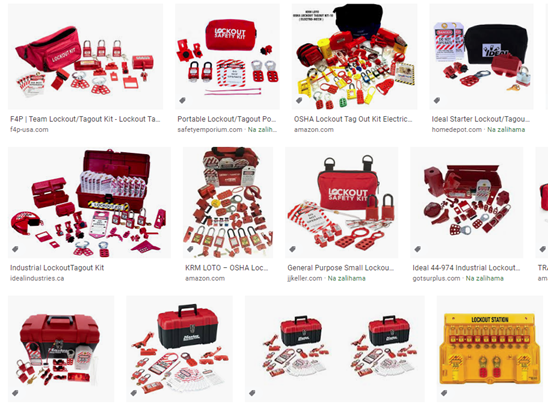
LOTO kits
Standardize Procedures
Use consistent templates, device types, and training modules across all sites to simplify scaling and auditing.
Provide Comprehensive Training
Offer role‑specific training: authorized, affected, and awareness levels. Leverage free resources from OSHA Academy and the National Safety Council.
Conduct Regular Audits
Annual audits align with OSHA guidance and identify opportunities for improvement, ensuring the program remains current.
Case Studies
University of Connecticut
The UConn LOTO program includes chapters covering equipment identification, energy isolation, and training. View full program.
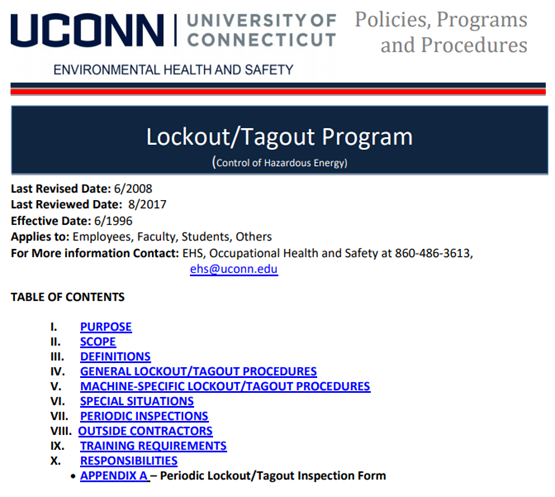
UCONN LOTO program content table
University of Colorado, Colorado Springs
UCCS provides a detailed LOTO framework suitable for academic facilities. Explore the program.
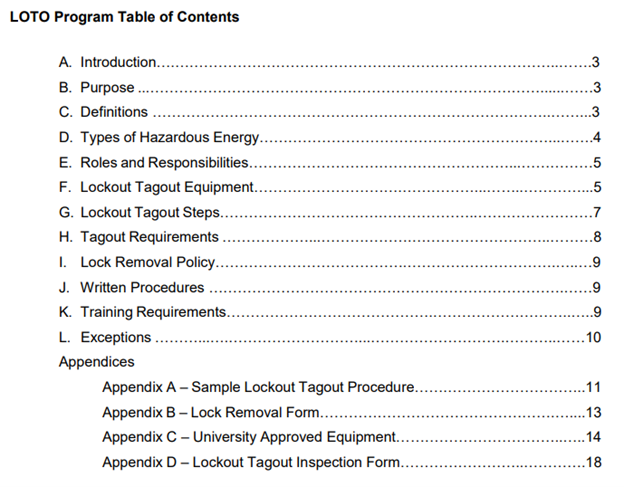
UCCS LOTO program content table
Common LOTO Mistakes to Avoid
- Insufficient detail in procedures
- Failing to shut down equipment before work begins
- Assuming short tasks don’t require LOTO
- Isolating only the circuit breaker, not the main switch
- Delegating lockout to unqualified personnel
- Leaving keys in locks
- Ignoring residual energy release
- Re‑starting equipment accidentally
- Not clearing the work area before restart
- Inadequate program implementation
Safety Drives Productivity
A well‑implemented LOTO program protects employees and enhances operational efficiency. Continuous improvement of LOTO procedures aligns with maintenance best practices and supports effective CMMS utilization.
Contact us to discuss how Limble CMMS can streamline your maintenance workflow and bolster your LOTO compliance.
1 Comments
-
Danstan September 6, 2021, 8:42 am
This is very thoughtful and helpful to someone in production Manufacturing like me.
Thank you so very much for sharing.

Equipment Maintenance and Repair
- 5 Proven Strategies to Motivate Your Maintenance Team
- Preventing and Managing Unplanned Downtime to Maximize Plant Efficiency
- 5 Proven Ways Maintenance Teams Can Boost Production Efficiency
- Accelerate Field Efficiency: Deploying Your Mobile CMMS App
- Why Lockout/Tagout Procedures Are Crucial for Maintenance Safety
- Essential Electric Motor Maintenance: Preventing Failures and Extending Lifespan
- Professional Storage Guidelines for Industrial Electronic Spares: Protect Your Components
- Proven Trailer Maintenance Tips to Maximize Efficiency & Longevity
- Safeguarding Workers: How to Ensure Safety in Human‑Robot Collaboration
- Ensuring Continuous Power for Critical Applications: Strategies to Keep Your Operations Running