



Standard Operating Procedures: The Blueprint for Unbreakable Efficiency
McDonald’s may not claim to craft the world’s finest burger, yet it still sells over $50 million worth daily. How? By delivering the exact same product, everywhere, every time. That consistency stems from a well‑crafted Standard Operating Procedure (SOP). When applied correctly, SOPs become the secret weapon of any organization—large or small.
In this guide you’ll discover:
- What an SOP truly is
- Concrete benefits that measurable impact your bottom line
- Common pitfalls that diminish SOP value
- The single practice that guarantees success
- Different SOP formats and when to use them
Imagine a team that completes every task with razor‑sharp precision and speed. That vision is within reach—let’s explore how.
What Exactly Is a Standard Operating Procedure?
Definition
A Standard Operating Procedure (SOP) is a formally approved, step‑by‑step manual that defines how to execute a specific task. Its purpose is to ensure every team member follows the same process, minimizing variation and eliminating guesswork.
When It Comes Into Play
With an SOP in place, employees know the "what," the "when," and the "how"—with no room for interpretation. It covers the practical details, often down to the exact tool or safety step required.
Who Can Benefit?
Every industry that repeats tasks—manufacturing, maintenance, food service, call centers, the military, and beyond—relies on SOPs. They’re essential for any business that wants to scale without sacrificing quality.
Benefits That Translate Into Dollars and Sense
Avoid Costly Mistakes
When everyone follows a single, proven method, the margin for error shrinks dramatically. Employees perform like your top performer, every time.
Proactive, Not Reactive
SOPs shift focus from firefighting to prevention, ensuring no step slips through the cracks. This proactive mindset can reduce reactive maintenance by up to 73.2%—see how Red Hawk achieved this with Limble.
Consistent Quality, No Surprises
By embedding SOPs into daily work, you guarantee that every output meets your quality standards—cutting rework and delays.
Unified Communication
With a single source of truth, miscommunication drops by up to 50%. Teams stay aligned, saving time and resources.
Legal & Safety Shield
Well‑documented SOPs provide a defensible record that processes were followed—critical for audits, fines, and incident investigations. They also embed safety steps that prevent accidents.
Accelerated Onboarding
New hires quickly become productive when they can consult a clear SOP rather than guessing. This frees seasoned staff to focus on higher‑value work.
Efficiency Gains
Rather than hunting for instructions, employees follow an SOP that gives them everything they need in one place. That time can be redirected toward value‑adding tasks.
Continuous Improvement
Once a standard is set, teams can identify improvement opportunities and share them easily—small tweaks that compound into big gains.
Flexibility in Staffing Changes
When SOPs live in a central system, cross‑training and temporary coverage become seamless, protecting against talent loss.
Regulatory Compliance Made Simple
Every SOP clearly states the required compliance steps, reducing the risk of violations and the associated penalties.
Career Growth Catalyst
Managers who deliver reliable, error‑free operations become valued assets—opening doors for promotion and higher responsibility.
Employee Satisfaction
- Clear expectations
- Ready resources
- Voice in process improvement
- Less micromanagement
- Visible impact on success
Why Many Teams Fail to Leverage SOPs
It’s easy to assume SOPs are a silver bullet, but the reality is they can backfire if mishandled. Common mistakes include:
- Overload: Teams are so busy they skip documentation.
- Obsolescence: Outdated SOPs become worse than none.
- Inaccessibility: SOPs stored in binders out of reach of frontline workers.
- Complexity: Long, dense documents that are hard to navigate.
- No accountability: No clear review or enforcement process.
- Leadership does not align with SOPs—creating conflict.
- Rigid SOPs that resist change, causing frustration.
Awareness of these pitfalls allows you to avoid them from the start.
Building a Fail‑Proof SOP: Digital, Interactive, Integrated
The most resilient SOPs share three characteristics:
- Digital: Easy to update, instantly available, and enriched with multimedia.
- Interactive: Users can check off steps in real time, providing immediate confirmation.
- Integrated: SOPs trigger tasks, notifications, and reports automatically.
1. Digital
- Instant updates propagate to all users.
- Embedded images, videos, and hyperlinks enhance clarity.
2. Interactive
- Step‑by‑step checklists that lock in progress.
- On‑the‑job access via mobile or desktop.
3. Integrated
- Automated alerts for upcoming or overdue tasks.
- Data entry in the SOP triggers subsequent actions.
- Automatic reporting of completed work, downtime, inventory levels, etc.
When you move beyond a static manual, your SOP becomes a living tool that guides every action.
Case Study: SOPs in Action with Limble CMMS
Meet Joe, a maintenance manager responsible for $2 million of equipment. Downtime costs the company $200 k per day. Joe’s goal: minimize downtime and extend asset life through preventive maintenance.
Getting Started
Joe uses Limble CMMS to build SOPs that are digital, interactive, and integrated. He can create all SOPs at once or add them incrementally as needs arise.
All‑At‑Once Approach
- Catalog each asset and attach manuals, contacts, and notes.
- Create SOPs for routine maintenance, problem reporting, task assignment, and material ordering.
- Link SOPs so that one triggers another automatically.
Incremental Approach
When a machine issues a fault, Joe creates an SOP on the fly. That single task becomes the template for future work, saving time and ensuring consistency.
Routine Maintenance SOP
Joe sets monthly preventive tasks for high‑risk equipment. The SOP is accessible on mobile, complete with images and video demonstrations.
Problem Reporting SOP
Operators use QR‑coded forms that enforce mandatory fields—eliminating vague reports. The forms feed directly into Joe’s dashboard.
Task Visibility
Joe can view all pending tasks, their status, and assigned personnel at a glance—making shift handovers smooth.
Automated Triggers
When a month passes without a scheduled inspection, Limble auto‑creates the task and assigns it to the appropriate technician.
Interactive SOP in Action
Technician Rick follows the checklist on his phone. He uploads photos of lock‑out tags, records machine hours, and indicates belt condition. Each entry can trigger follow‑up actions—like scheduling a replacement if a belt is frayed.
Linking SOPs
After detecting a frayed belt, Joe quickly adds a new SOP for replacement. Future inspections automatically include this SOP, and the inventory SOP tracks belt stock, triggering reorders when below threshold.
Continuous Updates
Rick suggests adding oiling to the inspection SOP. Joe incorporates the change instantly—Rick and the rest of the team see the updated version immediately.
Reporting & Analytics
Limble aggregates task data to show which assets consume the most time, enabling Joe to justify budget increases—like replacing a worn machine that costs $600 k in quarterly downtime.
Beyond a Document: SOP as a Management Tool
- Automation: Routine tasks and notifications handled automatically.
- Thoroughness: No step slips through the cracks.
- Insight: Identifies bottlenecks, cost drivers, and improvement opportunities.
For managers, technicians, and executives alike, a well‑integrated SOP delivers visibility, efficiency, and quality.
Common SOP Formats and When to Use Them
1. Step‑by‑Step Checklist
Best for simple, repeatable tasks. Clear, concise, and easy to follow.
2. Hierarchical SOP
Suitable for processes with nested steps—adds depth without losing structure.
3. Flowchart SOP
Ideal for decision‑heavy workflows. Visualizes pathways and outcomes.
4. Management SOP
Guides the creation of SOPs themselves—ensures consistency across an organization.
Structuring an SOP Document
- Title Page: Procedure name, ID, dates, author signatures.
- Revision History: Track changes over time.
- Table of Contents: For large documents.
- Purpose & Scope: Why it exists and what it covers.
- Roles & Responsibilities: Clear ownership.
- Procedures: Core step‑by‑step instructions with visuals.
- Health & Safety: Warnings, PPE, hazard mitigation.
- Resources: Training links, reference guides.
- Glossary: Define industry terms.
- Approval Signatures: Endorsement by relevant authorities.
Step‑by‑Step Guide to Writing an SOP
- Define Scope: Determine the depth required based on importance, audience, and complexity.
- Gather Information: Collect schematics, manuals, equipment lists, safety notes, and actual workflow steps from subject‑matter experts.
- Select SOP Type: Choose between step‑by‑step, hierarchical, flowchart, etc., based on process complexity.
- Draft: Use a clear, concise style. For flowcharts, tools like Lucidchart are recommended.
- Review: Get feedback from users at all levels to ensure alignment with real workflows.
- Publish: Test in a controlled environment, then roll out fully. Track effectiveness and refine.
- Train: Ensure all staff complete formal training and record completion.
Real‑World SOP Examples in Manufacturing
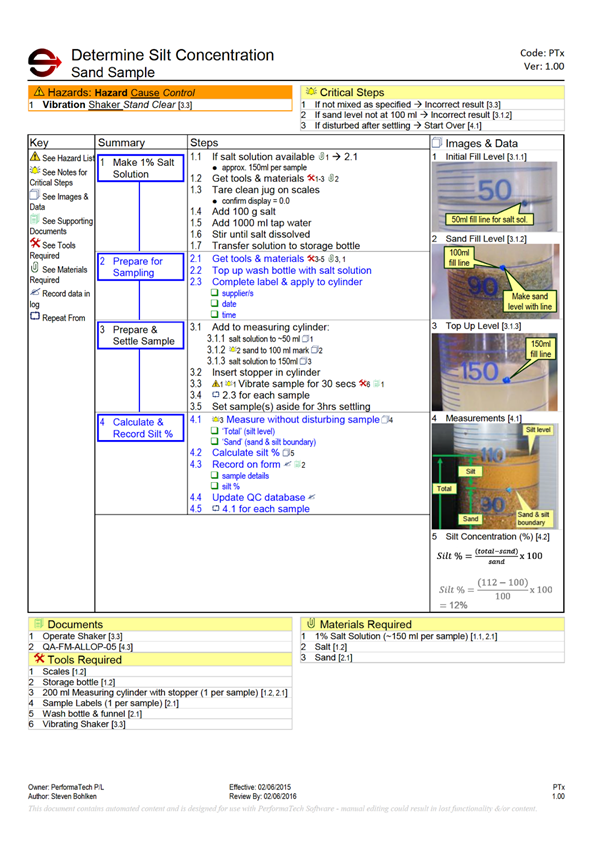
1. Determining Silt Concentration
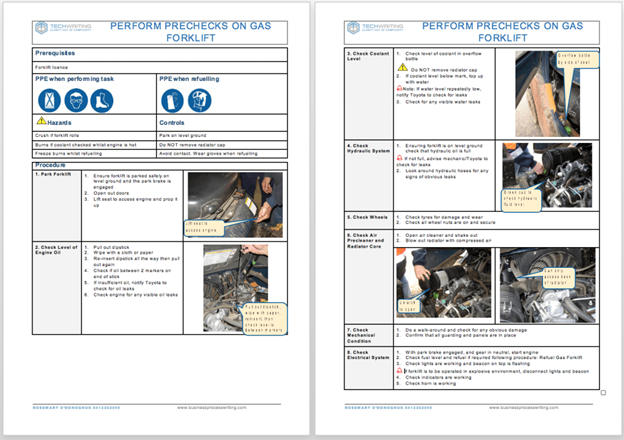
2. Pre‑Checks on Gas Forklift
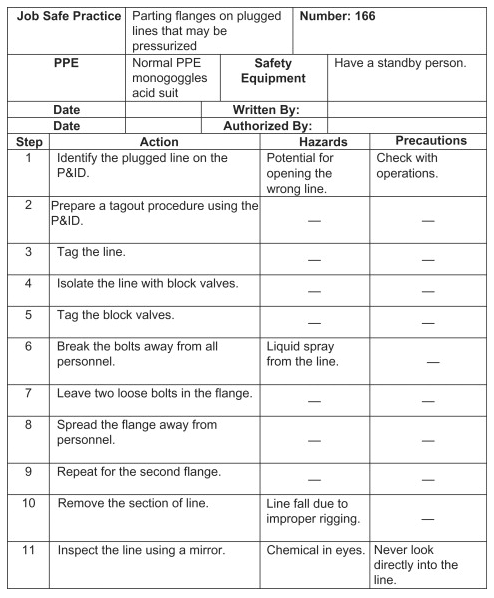
3. Testing Tanks for Vessel Entry
These examples illustrate that while format may vary, the core requirement is a comprehensive, accessible document.
Accelerate Your Team with Digital, Interactive SOPs
Standard Operating Procedures are the cornerstone of world‑class teams. They’re more than paperwork—they’re a living, breathing system that removes friction and empowers employees to deliver excellence effortlessly.
Still Short on Time?
Even if full SOP implementation feels daunting, a smart preventive maintenance plan can yield immediate savings. Download our free template today.
Equipment Maintenance and Repair
- RTI Announces OMG Adoption of the OPC UA/DDS Gateway Standard
- FRACAS: Unlocking Reliable Asset Performance
- The Hidden Key to Successful Condition‑Based Maintenance
- Understanding PAS 55: The Global Standard for Asset Management Excellence
- Why Lockout/Tagout Procedures Are Crucial for Maintenance Safety
- The Enduring Relevance of Standard Industrial Robots in Modern Manufacturing
- Proven Steps for Rapid, Affordable Industrial Touch Screen Repair
- How to Launch Your Career: Proven Strategies for Success
- Standard Procedure for Comprehensive Work Equipment Inspection
- Enhance Efficiency: Applying Lean Principles to SOPs