



Proven Techniques to Secure Funding for Your Maintenance Projects with Data & Storytelling
Securing budget for maintenance initiatives in a competitive environment can feel like a high‑stakes game. Everyone—from executives to line supervisors—sees the same fresh slice of funding. Your maintenance team is no exception.
With limited resources, you must demonstrate that the money you ask for will deliver tangible returns. That means standing out and convincing business leaders that your project is not just a maintenance request but a strategic investment.
Sound daunting? This guide gives you a proven formula that marries two powerful forces—hard data and compelling narrative—to win approval and secure the budget you need.
Follow the six‑step framework below. At each stage, we’ll show how to weave data and storytelling into a pitch that rises above the noise.
Download a ready‑made pitch deck template and fill it out using the tips below.
Step 1: Present a Problem
Why This Works
Your proposal is fundamentally a change. Change is uncomfortable. To get buy‑in, show that the cost of inaction is higher than the cost of change. Identify a clear problem your project will solve and open with that pain point.
How to Tell the Story
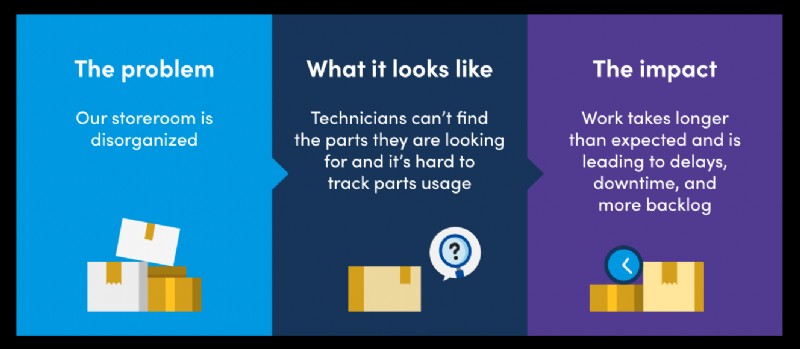
Tell the problem story in three simple moves:
- Describe the problem.
- Illustrate what the problem looks like in day‑to‑day operations.
- Explain the impact—time, money, safety, quality, or people.
What Data to Use
Quantify the problem wherever possible. For example:
- Average time to retrieve parts from the storeroom.
- Monthly count of emergency part requisitions.
- Downtime hours linked to an unorganized inventory system.
Need a template to tackle a cluttered storeroom? Check it out.
Other examples of quantifying a problem include:
- Cost: How much is the problem costing your team?
- Time: Are you spending more time than you should on a task? What is that keeping you from doing instead?
- Health & Safety: Are audit compliance tasks falling short, or are near‑miss incidents rising?
- Employee Retention: Is it hard to keep good talent? (If so, read our article on reducing turnover.)
- Quality: How does a maintenance deficiency affect the final product? (Not sure? See how maintenance impacts production.)
Step 2: Outline Your Solution
Why This Works
Once you’ve defined the villain—your problem—you can introduce the hero: your project. When stakeholders see a clear answer to a problem they’re worried about, they’re less likely to point out potential flaws.
How to Tell the Story
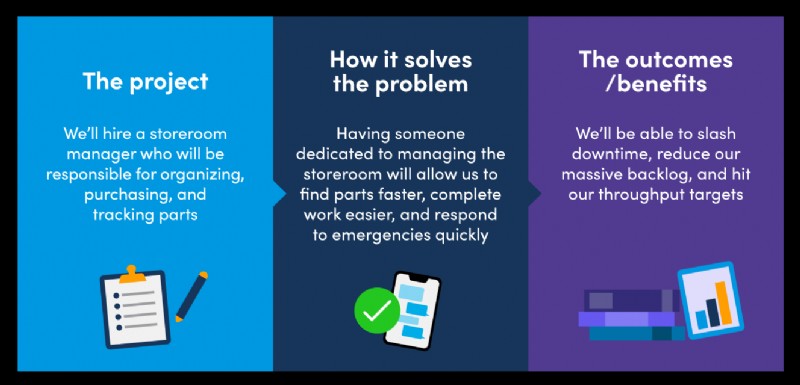
Describe your solution in three parts:
- What the project is.
- How it solves the problem.
- What benefits and outcomes it will deliver.
What Data to Use
Back your claims with numbers. For instance, calculate labor hours saved if technicians no longer spend time searching for parts. Even a small hourly saving can add up when multiplied across weeks, months, or years.
Consider this: cutting one hour per month per technician from search time could free up five additional production hours—an impactful return for the organization.
How to gather this data:
- Work Order Data: Record time or cost spent on each process and analyze trends. Learn what else you can extract from work orders.
- Peer Input: If you’re unsure of the value of an hour, consult the production team or OEM guidelines.
- Controlled Experiment: Pilot the solution on a low‑risk asset, measure before and after, and use the results in your pitch (see Step 4 for details).
Step 3: Align Your Solution with Business Goals
Why This Works
Everyone—from the CEO to the front‑line technician—has performance targets. When your project helps stakeholders hit those targets, they’re more likely to champion it. You transform a maintenance request into a business imperative, creating an emotional and financial investment.
How to Tell the Story
Structure the alignment story in three parts:
- Identify Business Goals: Is the focus on cost reduction, expansion, risk mitigation, or something else?
- Connect the Goal to Maintenance: Highlight the maintenance activities that influence that high‑level objective.
- Tie the Project to the Goal: Explain how your initiative closes the gap or improves the existing maintenance program.
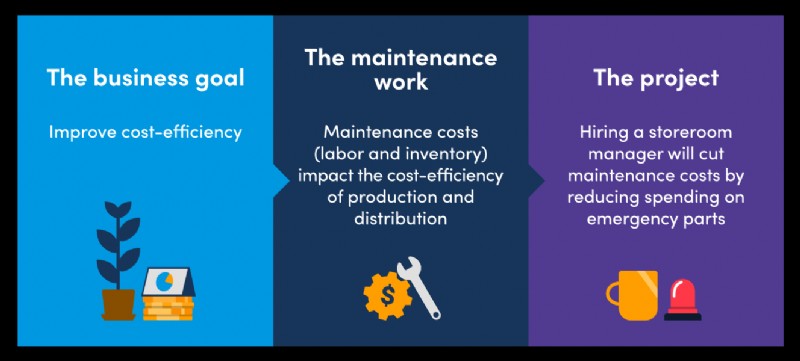
Use this template to map maintenance work to company goals.
What Data to Use
Show the magnitude of the impact with concrete figures:
- Cost Efficiency: Hiring a specialist could cut contractor spend by $100,000 annually and boost production time by 8 %.
- Expansion: New maintenance software could standardize processes, enabling a new team to launch in 30 days instead of 60. More tips for software investment.
- Risk Reduction: A dedicated inventory manager could forecast parts usage, cutting emergency purchases by 40 % and shielding the supply chain.
Step 4: Prove the Project Will Work
Why This Works
Risk is a hard sell in budget discussions. By demonstrating that similar initiatives have succeeded—either within your company or in the broader industry—you remove the unknown and build confidence.
How to Tell the Story
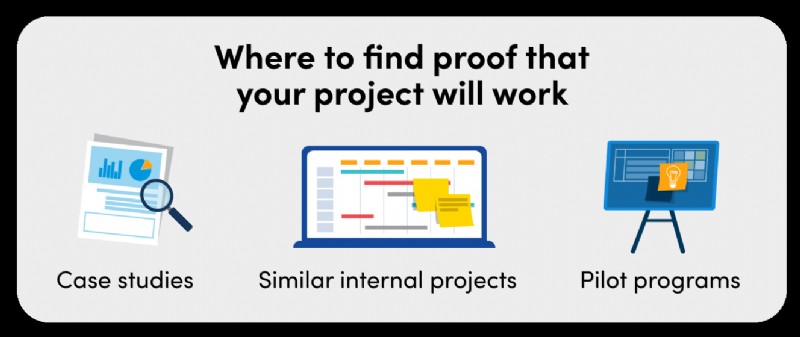
Choose one of these angles:
- Showcase case studies from other firms that achieved strong results.
- Leverage internal pilots or parallel projects and present their positive outcomes.
- Run a small‑scale experiment and report the findings directly.
What Data to Use
Translate external results to your context. If another company saw a 30 % drop in breakdowns after full sensor deployment, consider whether a targeted pilot on a few critical assets would yield similar benefits.
Example: a month‑long pilot that saved 20 administrative hours could translate to 240 hours saved annually—12 % of total workforce time.
Step 5: Identify Risks
Why This Works
Every project carries risk. Addressing potential pitfalls proactively shows you’ve thought through the implementation and reassures decision‑makers that the initiative is well‑managed.
How to Tell the Story
Pair each risk with a mitigation plan. For example:
- Risk: Technicians may resist new software.
Plan: Involve them in the selection process to build buy‑in. - Risk: New hires take longer than expected to onboard.
Plan: Provide concise, role‑specific tutorials to shorten the learning curve. - Risk: Work backlog grows during implementation.
Plan: Prioritize and complete backlogged items using a lightweight triage system (see template). - Risk: Project overspend.
Plan: Define a clear roadmap and monitor costs against a dedicated budget template (download it here).
What Data to Use
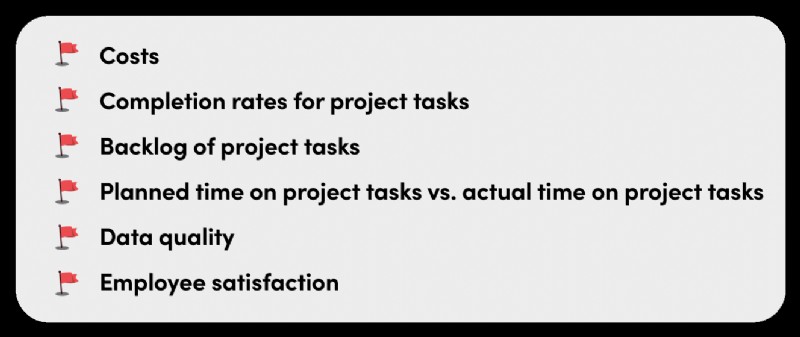
Use KPIs to spot red flags before they become problems. For instance, monitor software adoption rates; low uptake may trigger additional training.
Other red‑flag indicators include:
Step 6: Outline Your Plan and Requirements
Why This Works
Clarity about timelines, tasks, stakeholders, resources, and success metrics demonstrates that you’ll deploy the requested resources quickly and effectively.
How to Tell the Story
Instead of an exhaustive list, break the project into milestones and detail what you’ll need at each stage. Use the framework below:
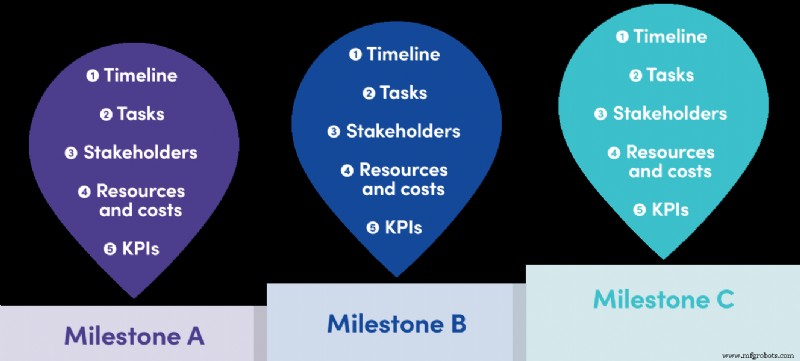
- Timeline: How long each milestone will take. If a phase stretches beyond two months, split it into smaller touchpoints.
- Tasks: Specific deliverables for the milestone.
- Stakeholders: Identify who is responsible, accountable, consulted, and informed (see RACI model).
- Resources & Costs: Labor, parts, software, and other expenses for each task.
- KPIs: Metrics that show progress and impact at every stage.
What Data to Use
When cost dominates focus, compare the project expense to what the company is currently spending or losing without the solution.
Example: Hiring a storeroom manager at $125,000 per year versus $250,000 currently lost to downtime and emergency parts.
For success metrics, set rolling averages:
- Define the metric (e.g., time to retrieve parts).
- Establish a baseline (average 20 minutes).
- Track 90‑day progress (e.g., a 33 % reduction to 6.5 minutes).
The Perfect Pitch: Data + Storytelling
Decision‑makers invest in problems, solutions, and outcomes—storytelling captures those elements, and data quantifies the stakes. Combine the two, and you command attention and funding.
Whether you’re revamping a maintenance system or requesting a contractor’s budget, this framework works. Next time you need to justify a spend, remember that a compelling narrative backed by solid data is your best ally.
Equipment Maintenance and Repair
- Expert Insights on Art Protection: Safeguard Your Artistic Treasures
- Total Productive Maintenance (TPM): A Comprehensive Guide to Zero Defects and Continuous Improvement
- Mastering CNC Machining of POM Plastic: A Comprehensive Guide
- T. Baker Smith Partners with eMaint to Deploy a Comprehensive CMMS Solution
- Industrial Automation vs. Robotics: Understanding the Key Differences
- ISA Releases Updated Third Edition of Control Systems Safety Evaluation & Reliability Book
- How to Pick the Ideal Wheel Loader for Your Waste Management Facility
- Applying Entropy to Drive Maintenance & Reliability Excellence
- NEMO® Progressive Cavity Pumps: Design, Operation, and Industrial Applications
- Elevate Your Revenue with Asset Infinity’s Affiliate Program